
📊 Full opportunity report: Forezai · TradingAgents: A Trading Firm Made of Agents on ThorstenMeyerAI.com — validation score, market gap, and execution plan.

Get business pricing on tech for your team
- Business-only prices and quantity discounts
- Tax-exempt purchasing
- Multiple users, one account, clear invoices
TL;DR
Forezai has launched TradingAgents, a multi-agent research framework designed to replicate a trading desk’s organizational structure. It emphasizes structured disagreement and oversight among specialized AI agents to improve decision-making and accountability in automated trading.
Forezai has introduced TradingAgents, a framework that organizes AI agents into specialized roles resembling a trading desk. This system emphasizes structured disagreement and oversight to improve decision-making in automated trading, addressing overconfidence issues seen in single-model approaches.
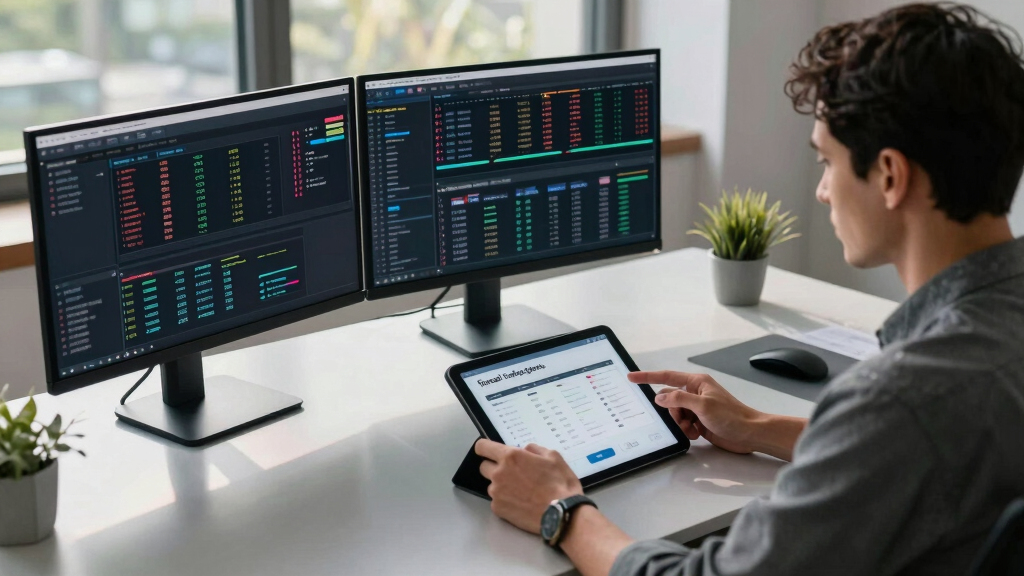
TradingAgents is designed as a multi-agent research environment where different AI agents perform distinct functions: analysts focus on fundamentals, news, sentiment, and technical signals; a bull researcher and a bear researcher debate opposing views; a trader agent proposes actions based on these debates; and a risk manager evaluates and potentially vetoes trades. This architecture aims to replicate the organizational structure of real trading firms, where multiple roles and checks prevent overconfidence and impulsive decisions. Learn more about how multi-agent systems improve trading decision-making.
The system is built to promote structured disagreement and explicit oversight, recording each decision step to ensure transparency and accountability. Each agent’s reasoning is documented, allowing users to review why particular actions were taken or rejected. The framework is provider-agnostic, enabling different models to be swapped into roles, and is designed to run on local compute for local-first deployment.
Forezai emphasizes that the value of TradingAgents lies not in the intelligence of individual agents but in the organizational architecture that enforces debate, vetting, and accountability. It completes the company’s Markets portfolio, complementing the earlier Polybot forecaster, which compares estimates to market prices. Together, they represent two disciplined approaches to AI in markets: one minimal, one structured.
TradingAgents — a firm made of agents
A single model is an overconfidence machine. So this isn’t one AI — it’s a whole desk: analysts, a bull and a bear who argue, a trader, and a risk manager who can say no.
Not financial, investment, legal or tax advice; not a recommendation or solicitation to trade, invest or use any software. Forezai · TradingAgents is an experimental research framework developed privately and not publicly available, provided “as is” without warranty of accuracy or profitability. Trading and automated trading carry a substantial risk of loss including total loss of capital; past or backtested performance does not indicate future results. Market and trading-software access is regulated or restricted in some jurisdictions — you are solely responsible for compliance with applicable law. Consult a licensed professional before any financial decision. Produced with AI assistance under human editorial oversight; independent commentary, the author’s own views. Product and company names are trademarks of their respective owners; mention does not imply endorsement.
Why Structured Disagreement Matters in Trading AI
TradingAgents demonstrates a shift away from reliance on single AI models for market decisions, highlighting the importance of organizational design and multi-agent debate to reduce overconfidence and improve decision quality. This approach aims to make automated trading more transparent, accountable, and resilient to model errors, which is critical given the high risks and potential for losses in financial markets.
By formalizing roles and debate within AI systems, Forezai’s framework could influence future development of AI-driven trading firms and risk management practices, emphasizing structured checks over solo judgment. This could lead to more robust, explainable algorithms that better withstand market volatility and model biases.
As an affiliate, we earn on qualifying purchases.
Background on AI in Market Decision-Making
Traditional automated trading systems often rely on single models or algorithms that generate buy or sell signals. However, these models can become overconfident, leading to risky decisions based on flawed assumptions or overfitting. Recent efforts, including Forezai’s Polybot, have explored the limitations of single-model AI forecasts. TradingAgents builds on this by structuring multiple specialized agents in a manner that mimics human trading desks, where debate, oversight, and role separation are standard practices to mitigate overconfidence and improve decision quality.
The concept of organizational structure in AI decision-making is gaining traction as a way to address the shortcomings of monolithic models. Forezai’s approach echoes principles from traditional finance, emphasizing layered checks, debate, and accountability, now implemented in a configurable framework for research and experimentation.
“The value of TradingAgents lies in its organizational architecture—structured disagreement and oversight outperform solo judgment, reducing overconfidence and increasing transparency.”
— Thorsten Meyer, Forezai
As an affiliate, we earn on qualifying purchases.
Unanswered Questions About TradingAgents’ Effectiveness
It is not yet clear how effective TradingAgents will be in real trading environments, as the framework is primarily a research tool. Its performance, profitability, and robustness under live market conditions remain untested and unverified. Additionally, the degree to which this organizational structure can prevent overconfidence or improve outcomes compared to traditional or single-model AI systems is still to be demonstrated through empirical results.
Further, it is unknown how adaptable the framework is to different asset classes, market conditions, or integration with existing trading infrastructure. The framework is customizable, but the practical limits of its deployment are still to be explored.
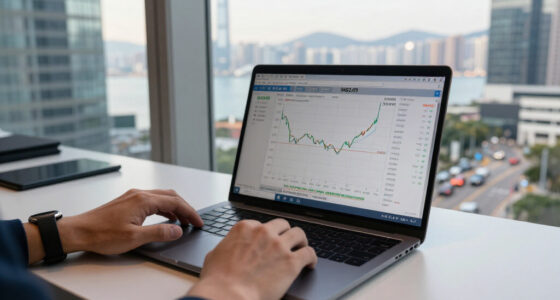
financial market analysis software
As an affiliate, we earn on qualifying purchases.
As an affiliate, we earn on qualifying purchases.
Next Steps for Validation and Adoption
Forezai develops TradingAgents privately, and it is not publicly available. The next milestones include conducting live backtests, gathering empirical data on decision quality, and exploring integrations with existing trading systems. Community feedback and real-world testing will be crucial to assess its practical utility and refine the architecture.
Further development may include incorporating additional agent roles, enhancing debate protocols, and integrating machine learning models tailored to specific market segments. The ultimate goal is to demonstrate that structured disagreement and layered oversight can meaningfully improve automated trading decisions.
As an affiliate, we earn on qualifying purchases.
Key Questions
What is TradingAgents?
TradingAgents is a framework that organizes AI agents into specialized roles—analysts, debate, trading, and risk management—to simulate a structured trading desk with built-in oversight and accountability.
How does TradingAgents differ from traditional AI trading models?
Unlike single-model systems that generate signals based on one perspective, TradingAgents employs multiple specialized agents that debate and vet decisions, mimicking human organizational practices to reduce overconfidence and improve transparency.
Can TradingAgents be used in live trading?
Currently, TradingAgents is a research framework designed for experimentation. Its effectiveness in live trading environments has not yet been demonstrated, and users should treat it as a tool for development, not a ready-to-deploy system.
Is TradingAgents open source?
No, TradingAgents is developed privately and is not publicly available.
What are the main benefits of this multi-agent structure?
The primary benefits include improved decision transparency, reduced overconfidence, accountability through detailed reasoning records, and organizational robustness that mirrors human trading processes.
Source: ThorstenMeyerAI.com
Columbus Day / Indigenous Peoples' Day Picks
long weekend sales
As an affiliate, we earn on qualifying purchases.