

As autonomous vehicles become more advanced, your ride-sharing and delivery jobs face significant change. These driverless systems can operate around the clock, reducing costs and increasing efficiency, which may lead to job displacement for many workers. While this technology creates opportunities for innovation, it also raises ethical questions and accountability concerns. If you want to understand how these changes could impact your future, keep exploring these critical issues.
Key Takeaways
- Autonomous vehicle technology threatens to replace human drivers in ride-sharing and delivery services, risking significant job losses.
- Increased efficiency and cost savings for companies may prioritize automation over human labor, impacting employment stability.
- Workforce displacement prompts the need for retraining and transitioning workers to new roles within the industry.
- Ethical and accountability concerns around autonomous vehicle accidents influence industry regulation and job security debates.
- Balancing innovation with social responsibility remains a challenge as automation advances, potentially reshaping the job landscape.
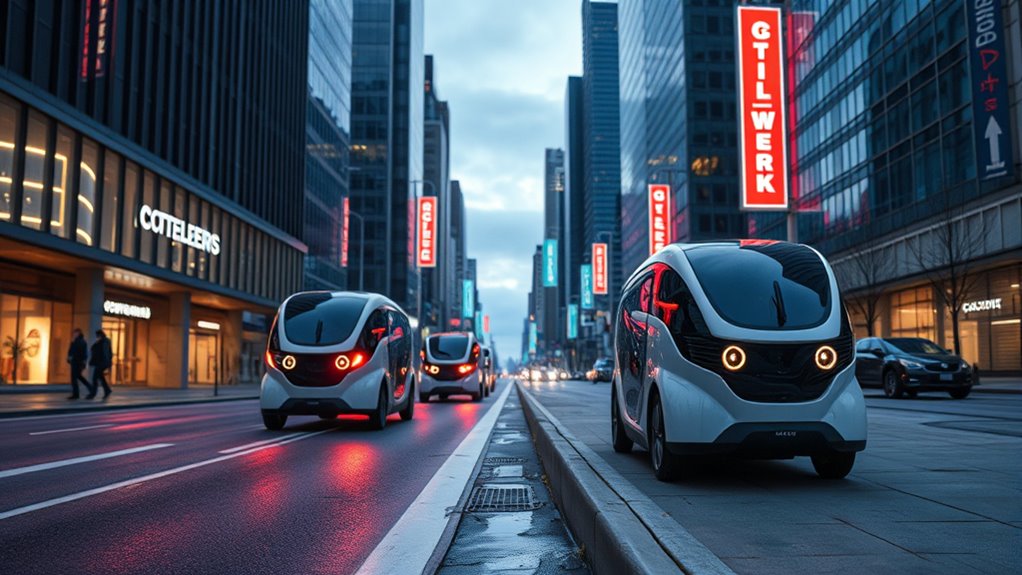
As driverless technology rapidly advances, the future of ride-sharing and delivery jobs becomes increasingly uncertain. You might be wondering how these technological advancements will reshape your work and the industry as a whole. The rise of autonomous vehicles promises efficiency and cost savings for companies, but it also raises significant ethical dilemmas. For instance, as these vehicles become more prevalent, decisions about how they prioritize safety and respond to complex moral situations come into play. Would a driverless car choose to protect its passenger at the expense of pedestrians? These questions highlight the moral gray areas that accompany rapid technological progress. Developers are racing to improve AI systems, but the ethical considerations aren’t always clear-cut, and public trust hinges on how these dilemmas are addressed. As a worker in this space, you might feel conflicted about the implications of these advancements, especially if your job is at risk. The rapid pace of technological innovation pushes companies to adopt autonomous systems quickly, often outpacing regulations and societal consensus. This creates a tension between innovation and responsibility, forcing you to navigate a landscape where safety, ethics, and economic interests collide.
The technological advancements fueling driverless technology also mean that your role could soon be replaced or fundamentally changed. Autonomous vehicles can operate 24/7 without breaks, reducing labor costs and increasing efficiency for ride-sharing and delivery services. As these systems become more sophisticated, your job could become obsolete, or at least drastically different. You might find yourself needing to adapt, retrain, or shift to other roles within the industry. Meanwhile, the companies pushing these innovations are focused on optimizing algorithms, sensor technology, and machine learning models to make driverless systems safer and more reliable. But despite these improvements, questions about accountability and reliability remain. What happens if an autonomous vehicle causes an accident? Who’s responsible—the manufacturer, the software developer, or the company deploying the vehicle? These issues are part of the ongoing ethical dilemmas that accompany technological advancements, and they demand careful consideration. As a worker, you’re caught between the promise of progress and the potential loss of your livelihood. While automation offers benefits like faster delivery times and lower costs, it also threatens to displace many jobs that humans currently hold. Understanding these complex dynamics helps you prepare for a future shaped by rapid technological change, even as it raises critical questions about the morality and fairness of replacing human labor with machines.
Frequently Asked Questions
How Will Drivers Transition to New Employment Opportunities?
You can shift to new employment opportunities through gig economy platforms, which often offer flexible jobs in areas like delivery, freelancing, or remote work. Driver retraining programs are essential, helping you develop skills for emerging industries such as tech, logistics, or customer service. Stay proactive by seeking out these opportunities and leveraging your experience, ensuring you adapt smoothly to the changing job landscape and secure sustainable employment.
What Safety Measures Are in Place for Autonomous Vehicles?
You can trust that autonomous vehicles have rigorous safety measures, including advanced sensor reliability and cybersecurity protocols. These sensors continuously monitor surroundings to prevent accidents, while cybersecurity protocols protect the vehicle’s data from hacking. Regular updates and testing ensure these systems stay secure and effective. Manufacturers prioritize safety, so you can feel confident that autonomous vehicles are designed to operate safely and securely on the road.
How Will Autonomous Tech Impact Urban Traffic Congestion?
You’ll find that autonomous technology could reduce urban traffic congestion by up to 30%, easing commutes markedly. With smarter urban planning, self-driving cars can optimize traffic flow, decrease stop-and-go patterns, and reduce emissions. This not only improves environmental impact but also makes city life more efficient. As these vehicles communicate and coordinate better, you’ll notice less congestion, shorter travel times, and a cleaner, more sustainable urban environment.
What Legal Regulations Govern Driverless Vehicle Deployment?
You need to understand that legal regulations for driverless vehicles focus on liability frameworks and insurance policies. These regulations specify who’s responsible in case of accidents, often requiring manufacturers or operators to carry specialized insurance. You should stay informed about local laws, as they can vary widely, and make certain that autonomous vehicle deployments conform to these rules to avoid legal complications and ensure safety on the roads.
How Might Passenger Privacy Be Affected by Autonomous Ride-Sharing?
You might notice your passenger anonymity is compromised because autonomous ride-sharing systems collect extensive data, including your location and preferences. This raises concerns about data security, as sensitive information could be vulnerable to hacking or misuse. To protect your privacy, ride-sharing companies should implement strong encryption and transparent policies, ensuring your passenger anonymity remains intact and your data is secure throughout your journey.
Conclusion
As the road ahead shifts with driverless technology, your job feels like a ship caught in a storm—tossed and uncertain. But remember, every storm passes, and with it comes new opportunities to navigate uncharted waters. Embrace change as your compass, guiding you to new horizons. While the current may threaten your familiar path, your resilience can steer you toward a future where innovation becomes your new destination. Stay adaptable; your journey isn’t over yet.