
📊 Full opportunity report: Why Pocket Voice Lab Is A Game-Changer For Prosumer Voice Coaching on IdeaNavigator AI — validation score, market gap, and execution plan.

Get business pricing on tech for your team
- Business-only prices and quantity discounts
- Tax-exempt purchasing
- Multiple users, one account, clear invoices
TL;DR
Pocket Voice Lab launches a mobile app providing real-time acoustic biofeedback for voice training, targeting individuals lacking access to in-person coaching. This innovation could reshape prosumer voice coaching by making objective feedback widely accessible.
Pocket Voice Lab has announced the development of a mobile app that delivers real-time acoustic biofeedback for voice training, targeting users who lack access to in-person speech-language pathologists or vocal coaches. This innovation aims to address a significant gap in affordable, continuous, and objective voice training, especially for transgender and gender-nonconforming individuals, as well as public speakers and singers.
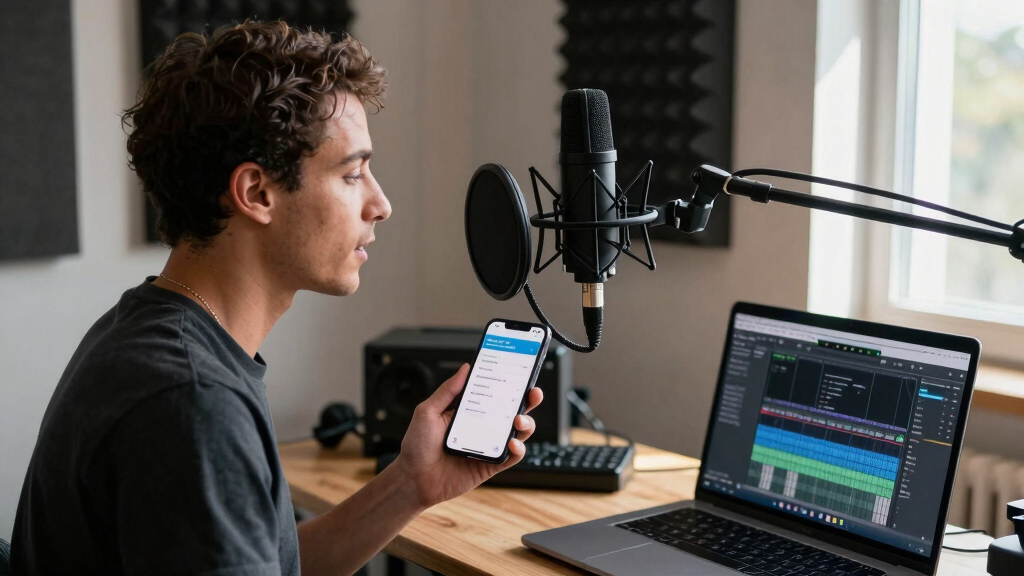
The app records a short voice sample and provides visual feedback on fundamental pitch and resonance against user-set targets. It also includes a basic strain indicator derived from harmonic-to-noise ratio. The initial version will feature 8-12 guided exercises tailored for gender-affirming voice work, along with a session log to track progress over time and shareable reports for clinicians.
This development leverages advances in smartphone microphone technology and on-device acoustic analysis, making real-time feedback feasible without lab hardware. It is built on a foundation of peer-reviewed research treating voice as a clinical biomarker, with existing prototypes like TruVox and Attuned validating the approach. The app is planned to operate on a freemium model, with free daily exercises and paid subscriptions for unlimited access and detailed progress reports. Market validation will involve a 4-week pilot targeting trans voice training and public-speaking communities, measuring engagement and willingness to pay.
Potential Impact on Accessibility of Voice Training
This innovation could significantly improve access to objective, ongoing voice training for underserved populations, especially those who cannot afford or reach in-person services. By providing real-time feedback and progress tracking, Pocket Voice Lab may enhance motivation, accuracy, and long-term results, transforming the way prosumer users engage with voice training and potentially reducing disparities in gender-affirming care and voice health.
As an affiliate, we earn on qualifying purchases.
Growing Demand and Technological Readiness for Voice Biofeedback
The need for accessible voice training solutions is well-documented, particularly within the transgender community, where the gender-affirming voice care gap is large. Advances in smartphone microphones and acoustic analysis have matured, enabling real-time feedback without expensive lab equipment. Academic research increasingly treats voice as a clinical biomarker, and prototypes like TruVox and Attuned have validated the demand and feasibility. Meanwhile, AI voice coaching apps such as Vocal Image have demonstrated that consumers are willing to pay for ongoing voice feedback, with over 4 million downloads.
“The integration of real-time acoustic biofeedback into mobile apps could democratize access to effective voice training, particularly for underserved populations.”
— an anonymous researcher
As an affiliate, we earn on qualifying purchases.
Uncertainties About App Adoption and Effectiveness
It remains unclear how effectively the app’s biofeedback will translate into real-world voice improvements across diverse users. The success of the pilot program and user engagement metrics will determine its viability. Additionally, questions persist about long-term adherence, data privacy concerns, and integration with professional clinical care.
gender-affirming voice training device
As an affiliate, we earn on qualifying purchases.
As an affiliate, we earn on qualifying purchases.
Next Steps in Validation and Market Launch
The team plans to conduct a 4-week pilot involving trans voice training and public-speaking communities, measuring engagement and willingness to pay. Based on pilot results, further development will refine features and expand multi-persona capabilities. A broader rollout and potential licensing to clinics and speech therapists are expected if initial testing proves successful.
As an affiliate, we earn on qualifying purchases.
Key Questions
How accurate is the app’s pitch and resonance feedback?
The app relies on smartphone microphones and on-device analysis, which have shown promising accuracy in peer-reviewed studies, but real-world effectiveness will be validated during pilot testing.
Can the app replace in-person speech therapy or coaching?
No, the app is designed as a supplement for ongoing practice and progress tracking, not a replacement for professional therapy. It aims to make objective feedback accessible between sessions.
Is the app suitable for all voice training goals?
Initially, it targets gender-affirming voice work and public speaking. Future versions may expand to other voice training areas, but the current focus is on fundamental pitch and resonance adjustments.
When will the app be available to the public?
The app is currently in prototype testing, with a pilot planned over the next few months. A broader release is expected after validation and refinement.
How will user data privacy be handled?
Details are still being finalized, but the developers plan to implement strict privacy measures, including local processing of voice data and secure sharing options with clinicians.
Source: IdeaNavigator AI
Halloween Picks
halloween
As an affiliate, we earn on qualifying purchases.