

Voice-enabled AI is transforming bedtime routines by replacing traditional stories with interactive, personalized experiences. These smart systems create unique narratives tailored to your child’s interests, adapting in real-time to their responses. They use advanced voice recognition and natural language processing to make storytelling more engaging and immersive. With features like voice cloning and visual elements, AI bedtime stories become a soothing, educational, and fun part of your evening. Keep exploring to discover how this technology is shaping modern households.
Key Takeaways
- AI bedtime stories are personalized, dynamic, and adapt in real-time based on children’s responses and preferences.
- Voice cloning and natural language processing create familiar, engaging, and interactive storytelling experiences.
- Integration with smart speakers enables seamless, hands-free bedtime routines at home.
- Stories incorporate educational themes and visuals, enhancing learning and imagination.
- Growing adoption and technological advancements are making AI stories a popular alternative to traditional bedtime tales.
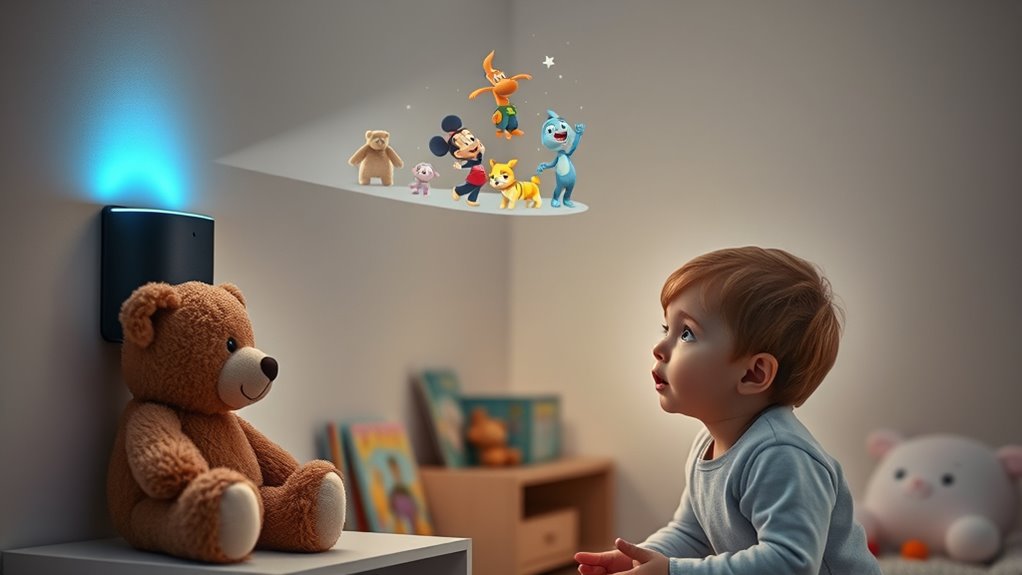
As technology advances, voice-enabled AI is transforming the way children experience bedtime stories, offering personalized, interactive narratives that keep kids engaged and enthusiastic for bedtime. Instead of traditional books or static recordings, AI systems generate unique stories for each session, guaranteeing children never hear the same tale twice. These dynamic narratives adapt in real-time based on your child’s preferences and responses, making bedtime stories more engaging and relevant. With conversational AI, kids can influence the story’s direction through simple verbal inputs, fostering decision-making skills and critical thinking as they choose characters or plot twists. Voice cloning technology adds an extra layer of comfort by mimicking your voice, creating a familiar, soothing storytelling experience without requiring your physical presence. Apps like Fabler demonstrate this by using minimal voice samples—sometimes just 25 sentences—to craft personalized audio content, making the process efficient and accessible. AI-powered storytelling systems are also increasingly incorporating visual elements and animations to enhance the immersive experience for children, making stories even more captivating. The market for AI-powered bedtime story creators is booming; valued at around USD 250 million in 2024, it’s expected to grow at a 30% CAGR through 2030. This growth is driven by increasing adoption of voice AI in everyday life, especially with over 100 million smart speakers in the U.S. alone. These devices make it easy to integrate AI storytelling into your child’s nightly routine, offering a seamless transition from passive listening to active participation. Voice recognition technology guarantees children can respond or make choices verbally with high accuracy, approaching human levels, which makes interactions feel natural and effortless. This multi-device flexibility—spanning phones, tablets, and smart speakers—allows you to customize bedtime environments, making storytelling more adaptable and engaging. Furthermore, advancements in natural language processing enable stories to become more context-aware, enriching the child’s experience and fostering deeper engagement. Beyond entertainment, AI storytelling offers educational benefits. Stories can incorporate themes from history, science, or geography, making learning fun and immersive. The interactive format encourages active listening, imagination, and curiosity, supporting cognitive development. Personalized narratives help sustain attention by aligning content with your child’s interests, fostering both engagement and curiosity. Additionally, these stories can complement traditional reading, promoting literacy while leveraging digital advancements. For children with special needs, customizable stories provide tailored content suited to their unique learning styles, making bedtime both enjoyable and educational. Underlying these innovations are advanced technologies like large language models and neural networks that enable real-time story creation and voice replication, enriching the storytelling environment with sound effects and visuals. As voice AI continues to evolve, it’s clear that traditional bedtime stories are being replaced by immersive, personalized experiences that captivate and educate your children in new, exciting ways.
Top picks for "voice enabl replac"
Open Amazon search results for this keyword.
As an affiliate, we earn on qualifying purchases.
Frequently Asked Questions
How Do Children Feel About Replacing Human Storytellers With AI?
You might find that children have mixed feelings about replacing human storytellers with AI. Some enjoy the interactive, personalized stories and the novelty they bring, feeling excited and engaged. However, others may miss the warmth and emotional connection that comes from a human voice, feeling less comforted or bonded during bedtime. Preferences vary, and while AI offers new opportunities, many children still value the personal touch of traditional storytelling.
What Safety Measures Are in Place for AI at Bedtime?
You’re protected by strict safety measures during AI bedtime stories. The system uses content filters to prevent harmful themes, and parents can customize story parameters to guarantee age-appropriate content. Data is encrypted and stored securely, complying with privacy laws like COPPA. Parental controls let you monitor usage, and ongoing updates improve AI accuracy. These safeguards work together to keep your child safe, engaged, and comfortable during bedtime storytelling.
Can AI Personalize Stories Based on a Child’s Preferences?
Did you know that roughly 44% of children actively engage with AI technologies? Yes, AI can personalize stories based on your child’s preferences. It adapts narratives to their interests, age, and reading level, making stories more engaging. With voice-enabled features, it creates a dynamic, interactive experience, including favorite characters and themes. This personalization boosts literacy, emotional connection, and confidence, turning storytime into a tailored, meaningful adventure for your child.
How Does AI Ensure the Stories Are Age-Appropriate?
AI guarantees stories are age-appropriate by analyzing your child’s developmental stage, adjusting vocabulary, sentence complexity, and themes accordingly. It filters out mature or harmful content using strict safety protocols, and content is curated with expert guidance to promote positive values and inclusivity. You can customize settings and provide feedback, helping the AI refine stories over time, ensuring they match your child’s emotional and cognitive needs for a safe, engaging bedtime experience.
What Are the Potential Long-Term Effects on Children’s Imagination?
They say, “Imagination is the only weapon in the war against reality,” and AI storytelling might dull your child’s creative edge. Relying heavily on AI can make children passive recipients of stories, limiting their ability to invent characters and worlds. Over time, this could weaken their narrative skills and patience for creative effort. To nurture imagination, balance AI use with active, human-led storytelling that encourages original thinking and emotional connection.
Conclusion
As you watch your child drift off to sleep to the gentle hum of a voice-enabled AI, it’s clear this technology has transformed bedtime routines. While it may seem like a simple change, it’s as if an entire universe of stories now lives inside that device. Though some may miss the warmth of a parent’s voice, this AI revolution is reshaping bedtime into a futuristic dreamscape where imagination and innovation collide—faster than you could’ve ever imagined.