

📊 Full opportunity report: The Twelve Real Complaints About AI Tools in 2026 — A Reddit, Twitter, and GitHub Synthesis on ThorstenMeyerAI.com — validation score, market gap, and execution plan.
TL;DR
In 2026, users across Reddit, Twitter, and GitHub report persistent issues with AI tools, including faster-than-advertised rate limits, degraded context windows, and hallucinations, revealing significant deployment friction. These complaints highlight real-world reliability challenges despite vendor marketing claims.
In 2026, users of AI tools on platforms like Reddit, Twitter, and GitHub report persistent reliability issues that contradict vendor marketing claims of steady improvement. These complaints include faster-than-advertised rate limits, degrading context windows, and hallucination rates that remain high, revealing significant deployment challenges.
Multiple sources, including GitHub issue trackers, Reddit threads, and official statements, confirm that AI vendors are experiencing operational friction. For example, Anthropic’s GitHub issue #41930, filed on April 1, 2026, details widespread rate limit depletion across paid tiers, with some users hitting quotas within minutes due to bugs and capacity constraints. Similarly, reports from Reddit and Twitter highlight that models advertised with 1 million-token context windows exhibit performance degradation at much lower usage levels, sometimes within 20-50% of the limit.
Further complaints include hallucination rates not improving as projected, with users noting increased instances of AI outputs containing false or misleading information. Status pages and incident reports from vendors often lack transparency during outages or degraded service periods, eroding trust among users and enterprise clients. These issues are documented with telemetry data, user reports, and official acknowledgments, establishing a pattern of operational friction that contrasts sharply with vendor marketing narratives of rapid capability improvements.
Twelve complaints.
One pattern.
AI tools in 2026 are more useful than ever and less reliable than their marketing implies. Both are true.
Documented sources only — Anthropic GitHub Issue #41930, the AMD Senior Director’s 6,852-session telemetry, the GPT-5 model-picker backlash, Cursor’s June 2025 billing change, the sycophancy-to-pushback paradox. The user-side reality check companion to the marketing-side capability stories.
6,852 sessions. 73% collapse.
An AMD Senior Director of AI filed a GitHub issue on April 2, 2026 with telemetry from three months of stable internal engineering work. The same model number, the same engineering workload, dramatic measurable degradation.
Twelve complaints. Three severity tiers.
Every complaint below has either a documented thread, an acknowledged vendor incident, or measurable telemetry behind it. No complaints based on vague vibes.
One issue. Four causes.
Community investigation identified four overlapping root causes hitting simultaneously. Anthropic confirmed peak-hour throttling on March 26 only after substantial public pressure. No blog post. No email. No status page entry.
Twelve complaints. Five causes.
The structural pattern beneath the surface complaints. Each cause connects to multiple complaints, and each affects deployment velocity in different ways.
AI tools in 2026 are simultaneously the most powerful productivity tools available and unreliable enough that significant fractions of paying users are systematically frustrated. Both are true. The vendor narrative emphasizes the first; the user narrative emphasizes the second; the deployment trajectory depends on which stays true longer.
Impact of Reliability Issues on AI Deployment
The persistent reliability problems documented in user complaints reveal a gap between AI capability marketing and operational reality in 2026. This friction slows deployment, affects productivity, and raises questions about the true readiness of AI tools for enterprise-scale adoption. For policymakers and industry stakeholders, these issues highlight the need for more transparent reporting and improved system robustness to support broader AI integration.

Signal fire New Model AI-9 Fusion Splicing Six Motor Core Alignment Fiber Fusion Splicer Automatic FTTH Fiber Optical Welding Splicing 5S Heating 15S
- Fast Splicing and Heating: 5S splice and 15S heat with high-speed motor
- Automatic Heating Slot: Supports automatic lid closing and SC fiber compatibility
- Built-In Power Meter & VFL: Measures connection loss and verifies fiber continuity
As an affiliate, we earn on qualifying purchases.
As an affiliate, we earn on qualifying purchases.
User Reports Reflect Broader Deployment Challenges
Throughout 2026, user communities on Reddit, Twitter, and GitHub have increasingly voiced concerns about AI tools not meeting advertised performance levels. Incidents of rate limit exhaustion, degraded context handling, and hallucinations have been documented since March, often linked to capacity constraints and software bugs. These complaints emerge amid a broader narrative of rapid capability improvements that, in practice, face operational hurdles, slowing down the pace of AI deployment across industries.
Prior to 2026, vendor marketing emphasized steady capability growth, but user experiences suggest that real-world deployment is hampered by technical and capacity limitations. This disconnect is critical for understanding the trajectory of AI adoption and the realistic expectations for AI productivity in the near term.
“User complaints across platforms reveal a persistent pattern of operational issues that challenge the narrative of rapid AI capability improvements in 2026.”
— Thorsten Meyer, reporting

Production-Ready AI Agents: The Senior Engineer's Complete Guide to Building, Debugging, Evaluating, and Scaling LLM Agent Systems in Production Environments
As an affiliate, we earn on qualifying purchases.
As an affiliate, we earn on qualifying purchases.
Unresolved Questions About AI Reliability in 2026
While specific bugs and capacity issues have been documented, it remains unclear how widespread these problems are across all vendors and AI models. The long-term impact of these operational friction points on AI adoption rates and labor displacement projections is still uncertain. Additionally, the extent to which vendors are aware of and addressing these issues remains unclear, as many complaints are met with limited transparency from companies.
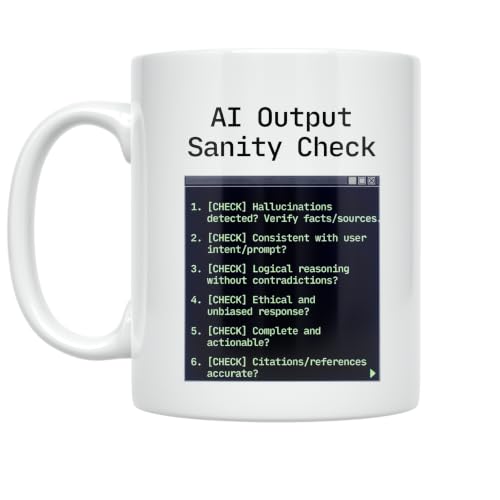
Tool Users Terminal Mug – AI Output Sanity Check Design – 11 oz Ceramic
- Design Theme: AI Output Sanity Check Checklist
- Print Style: Double-sided print for visibility
- Capacity and Material: 11 oz ceramic mug
As an affiliate, we earn on qualifying purchases.
As an affiliate, we earn on qualifying purchases.
Next Steps for Addressing AI Deployment Frictions
Industry analysts and users expect vendors to improve transparency around operational issues and release targeted updates to fix bugs and capacity constraints. Monitoring of incident reports, telemetry, and user feedback will continue to inform the assessment of AI reliability. Regulatory agencies may also increase scrutiny of vendor claims and operational transparency, potentially leading to new standards for AI deployment practices.

AI Agents + APIs: Seamless Integrations in 2026: 5 Battle-Tested Patterns, MCP Gateways, Composio & n8n for Production AI Agents (Practical Code & Builds)
As an affiliate, we earn on qualifying purchases.
As an affiliate, we earn on qualifying purchases.
Key Questions
Are these complaints isolated or widespread?
Multiple independent sources, including GitHub, Reddit, and official vendor reports, indicate these issues are widespread across several major AI platforms in 2026.
Will these reliability issues improve over time?
Vendors have acknowledged some bugs and capacity constraints, but it is not yet clear how quickly these will be resolved or whether systemic improvements are underway.
How do these issues affect AI deployment in industry?
Operational friction slows deployment, reduces trust, and raises costs, impacting the pace and scale of enterprise AI adoption.
Are vendors aware of the scale of these complaints?
Many complaints are publicly documented, but the extent of vendor awareness and response varies. Some vendors have acknowledged specific bugs, but transparency is inconsistent.
What does this mean for AI’s future capabilities?
Persistent operational issues suggest that while AI capabilities are advancing rapidly in demos, real-world deployment faces significant reliability hurdles that may temper expectations for near-term productivity gains.
Source: ThorstenMeyerAI.com