
TL;DR

Get business pricing on tech for your team
- Business-only prices and quantity discounts
- Tax-exempt purchasing
- Multiple users, one account, clear invoices
Aircraft maintenance is evolving with AI and augmented reality tools, enhancing accuracy and reducing downtime. This development represents a major technological shift in aerospace servicing.
Aircraft maintenance is now being transformed by the integration of artificial intelligence and augmented reality technologies, offering the potential to significantly improve efficiency, safety, and turnaround times. This shift is being driven by recent pilot programs in the aerospace industry, marking a new era in aircraft servicing.
Multiple aerospace companies and maintenance providers have begun deploying AI-driven diagnostic tools alongside augmented reality headsets to guide technicians during inspections and repairs. These systems enable real-time data analysis, predictive maintenance, and immersive visual guidance, reducing human error and accelerating repair processes. According to industry sources, pilot projects have shown reductions in maintenance time by up to 30%, while also enhancing safety protocols.
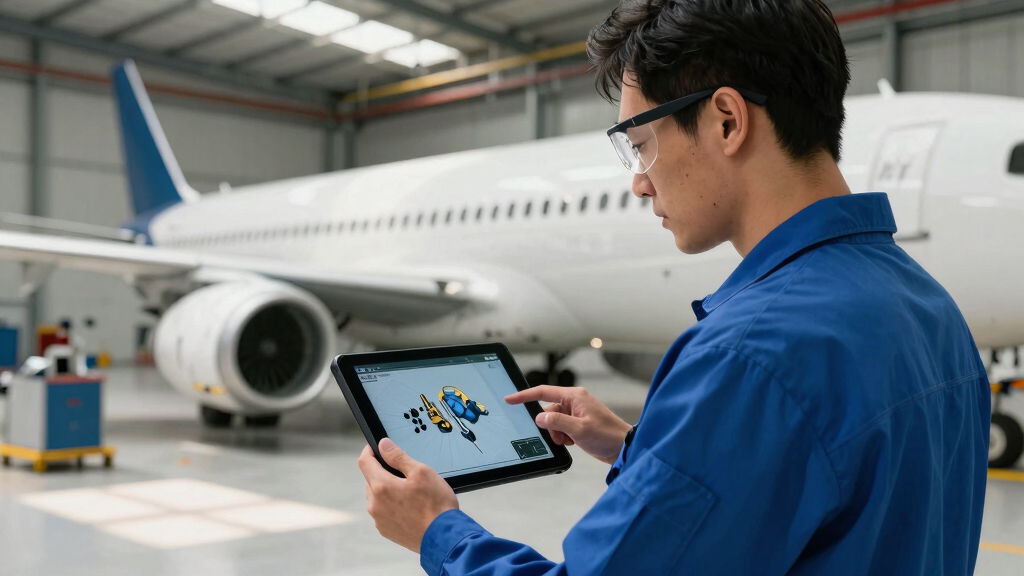
One notable example involves a major airline implementing an AI-powered diagnostic platform combined with AR glasses, allowing engineers to visualize complex systems and receive step-by-step repair instructions overlaid directly onto the physical aircraft. Experts say this integration can streamline troubleshooting and improve accuracy, especially in complex or hard-to-access components.
While these developments are promising, industry officials caution that widespread adoption depends on further validation, regulatory approval, and integration with existing maintenance workflows. The technology is still in the early stages of deployment, with ongoing testing and refinement.
Impact of AI and AR on Aircraft Maintenance Efficiency
The adoption of AI and augmented reality in aircraft maintenance could revolutionize how airlines and maintenance providers operate, leading to faster turnaround times, lower costs, and improved safety standards. This innovation addresses longstanding challenges such as human error, inspection delays, and complex troubleshooting, which are critical for ensuring flight safety and operational reliability. Ultimately, these technologies could set new industry standards and influence global maintenance practices.
AR glasses for aircraft maintenance
As an affiliate, we earn on qualifying purchases.
As an affiliate, we earn on qualifying purchases.
Recent Advances and Industry Adoption of Maintenance Technologies
Over the past few years, the aerospace industry has increasingly integrated digital tools into maintenance workflows, including predictive analytics and digital twins. These innovations aim to reduce unscheduled repairs and optimize resource allocation. The current push towards AI and AR builds on this trajectory, supported by advancements in machine learning, computer vision, and wearable tech. Pilot programs by major airlines and maintenance firms indicate a growing acceptance of these tools, although full-scale implementation remains in progress.
As an affiliate, we earn on qualifying purchases.
Uncertainties Surrounding Widespread Deployment
It is not yet clear when or if these AI and AR systems will be adopted industry-wide. Questions remain about regulatory approval, integration costs, and long-term reliability. Additionally, data security and technician training are ongoing concerns that could influence adoption timelines.
augmented reality headsets for technicians
As an affiliate, we earn on qualifying purchases.
As an affiliate, we earn on qualifying purchases.
Next Steps for Industry Adoption and Validation
Further pilot programs are expected to test the scalability and effectiveness of AI and AR tools across different aircraft types and maintenance environments. Regulatory bodies are likely to evaluate safety standards and certification processes in the coming months. Industry stakeholders anticipate wider deployment once these hurdles are addressed, potentially within the next 1-2 years.
predictive maintenance software for aircraft
As an affiliate, we earn on qualifying purchases.
As an affiliate, we earn on qualifying purchases.
Key Questions
How does AI improve aircraft maintenance?
AI enhances maintenance by providing real-time diagnostics, predictive analytics, and automated troubleshooting, reducing human error and speeding up repairs.
What role does augmented reality play in maintenance?
AR offers technicians immersive visual guidance, overlaying instructions and system data directly onto physical components, improving accuracy and efficiency.
Are these technologies safe and reliable enough for widespread use?
While pilot programs show promising results, full industry adoption depends on further validation, regulatory approval, and proven reliability over time.
When might these systems become standard in aircraft maintenance?
Industry experts expect wider adoption within the next 1-2 years, contingent on successful testing and regulatory clearance.
What challenges remain for integrating AI and AR into maintenance workflows?
Key challenges include ensuring system reliability, addressing data security concerns, training technicians, and navigating regulatory approval processes.
Source: rss
Halloween Picks
halloween
As an affiliate, we earn on qualifying purchases.