📊 Full opportunity report: The City That Watches Itself: The Living Digital Twin, And The God’s-Eye View We’re Building on ThorstenMeyerAI.com — validation score, market gap, and execution plan.

Get business pricing on tech for your team
- Business-only prices and quantity discounts
- Tax-exempt purchasing
- Multiple users, one account, clear invoices
TL;DR
Cities are building real-time, dynamic digital twins enhanced by wide-area sensors and AI, enabling self-monitoring urban environments. This development improves planning but raises surveillance concerns.
Most cities are now developing dynamic digital twins that integrate real-time data from multiple sensors, radar, and AI, creating a self-watching urban environment. This technology allows cities to monitor, simulate, and answer complex questions about their operations in real time, transforming urban management and surveillance.
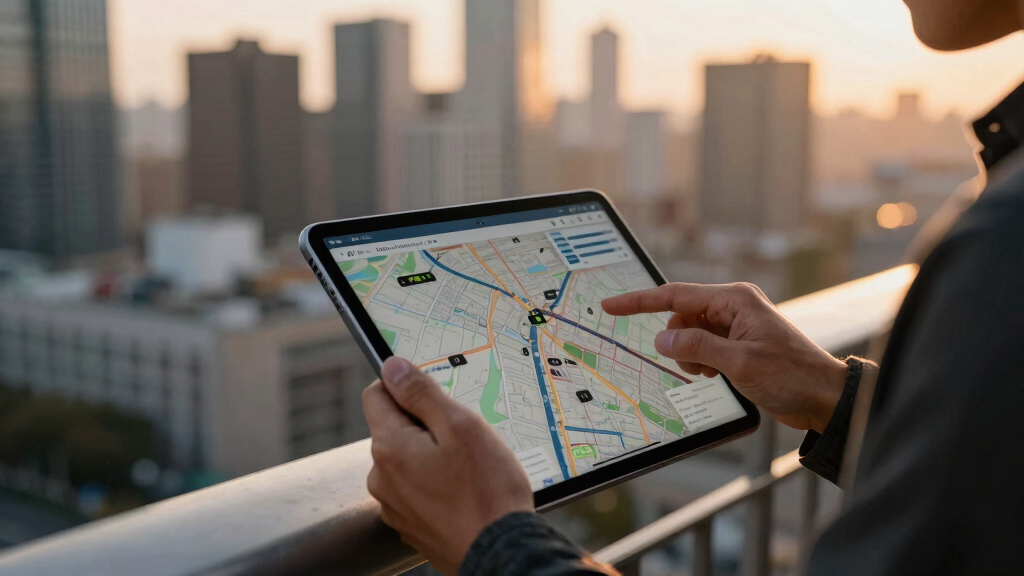
The concept of a digital twin involves a virtual replica of a city that updates continuously with data from IoT sensors, satellite imagery, and GIS systems. Cities like Singapore, Helsinki, and Las Vegas already operate such models, which have been used to optimize planning and reduce costs. These twins are now being enhanced by Wide-Area Motion Imagery (WAMI) sensors, which track every vehicle and pedestrian, creating a detailed, time-scrubbable record of city life.
Adding all-weather radar and satellite data complements existing data sources, helping to address limitations caused by weather or darkness, resulting in a more comprehensive, multi-sensor model. Advances in frontier AI models enable the system to interpret this data flow, allowing operators to query the city in natural language and receive detailed responses. This transition from a planning tool to an oracle-like system enhances urban monitoring and management capabilities.
The city that watches itself: the living digital twin, and the god’s-eye view we’re building
Soon most cities will exist twice — once in concrete, once as a live data model you can rewind, simulate, and question in plain language. Persistent sensing + frontier AI turn the planner’s digital twin into an oracle. The most useful thing we’ve built — and the most powerful surveillance instrument. Both at once.
- Plan better — cities & rural: traffic, zoning, energy, land use
- Emergency response — route crews, one live picture, ~50% faster
- Disaster resilience — simulate, track live, assess damage in hours
- Mass surveillance — track everyone, retroactively, forever
- Pattern-of-life — AI links movements, infers associations
- Social control — no warrant, no suspicion (cf. Baltimore, 2021 ruling)
We’re building a city that watches itself, remembers everything, and can be asked anything. The technology won’t choose between saving lives and ending privacy — we will, through the rules we write now, while the twin is still under construction and the defaults haven’t yet hardened into permanence. WAMI and the living twin open our lives to a view from the heavens that, from the dawn of civilization until a heartbeat ago, was reserved for gods and stars. The question is no longer whether we can see everything — it’s who gets to look, and who watches the watchers.
Implications of Autonomous, Self-Monitoring Cities
This development signifies a shift in urban management, offering potential benefits such as more efficient planning, cost reduction, and quicker emergency response. However, it also raises surveillance concerns, as cities could track individual movements and behaviors with increasing detail. The potential for misuse or cyberattacks on such systems underscores the importance of addressing data security and privacy issues.
As an affiliate, we earn on qualifying purchases.
Evolution of Digital Twins and Sensor Technologies
The concept of digital twins has evolved from static models used for urban planning to dynamic, real-time systems. The deployment of wide-area sensors like WAMI, combined with all-weather radar and advanced AI, has accelerated this process. Cities such as Singapore launched their Virtual Singapore project following flooding crises, demonstrating the practical benefits of real-time modeling. The current technological momentum indicates that many urban areas are progressing toward self-watching, AI-enabled city models.
Despite these advancements, the integration of such systems raises questions about data privacy and sovereignty, especially as some models are hosted outside national control, which could introduce vulnerabilities or influence from external entities.
“Our digital twin has contributed to reducing planning errors and optimizing land use, demonstrating tangible benefits of this technology.”
— Singapore’s Urban Planning Department
As an affiliate, we earn on qualifying purchases.
Unresolved Issues Around Data Security and Sovereignty
The widespread adoption of self-watching urban systems raises questions about privacy and data sovereignty. Concerns include the potential risks associated with foreign-controlled systems hosting sensitive infrastructure and the adequacy of current regulations to address these issues. The ability of cities to maintain control over their data and AI models remains an ongoing discussion.
As an affiliate, we earn on qualifying purchases.
Next Steps in Developing Self-Watching Urban Systems
Future efforts are likely to focus on establishing regulatory standards for data security and privacy, as well as technological improvements to enhance system security and autonomy. International cooperation may play a role in developing shared norms and safeguards for these surveillance systems. Ongoing research will also explore how to balance technological innovation with the protection of civil liberties.
AI-powered city surveillance systems
As an affiliate, we earn on qualifying purchases.
As an affiliate, we earn on qualifying purchases.
Key Questions
How do digital twins improve city planning?
They enable planners to simulate potential changes and assess their impacts before implementation, which can help reduce errors and optimize resource allocation.
What are the main privacy concerns with self-watching cities?
The ability to monitor individual movements and behaviors raises concerns about surveillance overreach and the potential misuse of data, especially if systems are controlled externally.
Are these systems secure from hacking?
Security remains a critical consideration; as these systems become more integrated and autonomous, ensuring their protection against cyber threats is essential.
Will all cities be able to afford such advanced systems?
Implementation costs vary, and larger cities may adopt these technologies more readily, while smaller cities could face financial and technical barriers.
Could these systems replace human urban planners?
While they can support planning processes, these systems are intended to complement human judgment rather than replace it, especially regarding social and ethical considerations.
Source: ThorstenMeyerAI.com
Columbus Day / Indigenous Peoples' Day Picks
long weekend sales
As an affiliate, we earn on qualifying purchases.