Smart factories use AI and IoT sensors to transform manufacturing by enabling you to analyze data in real time, predict equipment failures, and automate processes efficiently. These technologies help you monitor machinery, reduce downtime, and optimize supply chains, leading to safer and more responsive work environments. As a result, your operations become more adaptive and eco-friendly. Keep exploring to discover how these innovations can reshape your manufacturing practices even further.
Key Takeaways
- AI analyzes real-time data for decision-making, predictive maintenance, and supply chain optimization in smart factories.
- IoT sensors continuously monitor machinery parameters to detect inefficiencies and prevent costly failures.
- Integration of AI and IoT creates responsive, data-driven systems that enhance operational efficiency and flexibility.
- Smart factories enable rapid response to market changes, improve safety, and support ongoing process improvements.
- Connectivity and data analysis foster innovation, reduce waste, and promote sustainable manufacturing practices.
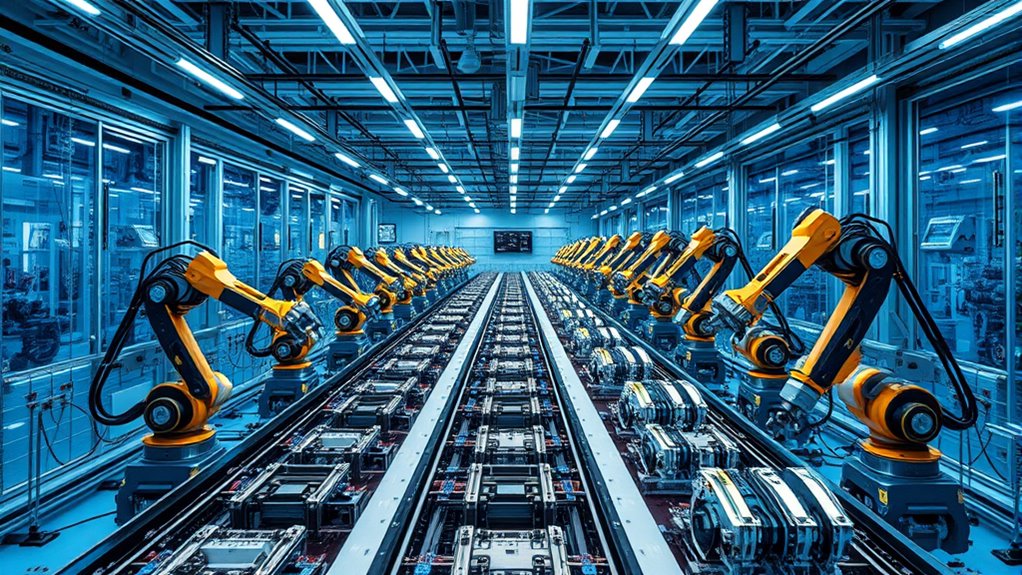
Have you ever wondered how manufacturing plants are becoming more efficient and adaptable? The answer lies in the rise of smart factories, where AI integration and IoT sensors play a vital role. These technologies are transforming traditional manufacturing processes into highly responsive, data-driven systems that optimize performance and reduce waste. When you step into a smart factory, you’re witnessing a seamless blend of hardware and software working together to improve every aspect of production.
AI integration is at the heart of this transformation. It enables machines to analyze vast amounts of data in real-time, identify patterns, and make intelligent decisions without human intervention. For example, predictive maintenance powered by AI can forecast equipment failures before they happen, minimizing downtime and saving costs. This proactive approach guarantees that machinery runs smoothly, and production schedules stay on track. AI also helps optimize supply chain management by forecasting demand more accurately and adjusting inventory levels accordingly, preventing overstocking or shortages. With AI, factories become more agile, capable of quickly adapting to changing market demands or unexpected disruptions.
AI-driven predictive maintenance minimizes downtime and boosts efficiency in modern manufacturing.
IoT sensors further enhance the capabilities of smart factories. These tiny devices are embedded in machinery, tools, and even products themselves, continuously collecting data on temperature, vibration, pressure, and other operational parameters. When you’re in a smart factory, IoT sensors provide a constant stream of information, allowing managers and automation systems to monitor conditions in real-time. This granular data helps identify inefficiencies or anomalies early, enabling immediate corrective actions. For instance, if a sensor detects abnormal vibration in a motor, maintenance can be scheduled before a breakdown occurs, avoiding costly repairs and delays.
Together, AI integration and IoT sensors create an interconnected ecosystem where information flows seamlessly across the factory floor. This connectivity enables smarter decision-making, faster response times, and greater overall efficiency. It also fosters a safer work environment, as sensors can detect hazards or unsafe conditions and alert personnel instantly. Furthermore, the data collected can be used for continuous improvement, guiding future innovations and process enhancements. Additionally, understanding organic and natural juices can inspire sustainable practices within manufacturing, emphasizing eco-friendly resource use and health-conscious products.
Frequently Asked Questions
How Do Smart Factories Impact Employment Levels?
Smart factories can lead to labor displacement as automation handles repetitive tasks, reducing the need for certain roles. However, they also create opportunities for skill enhancement, requiring workers to learn new technologies and operate advanced equipment. You might find some jobs evolving or disappearing, but new roles focused on managing, maintaining, and improving smart systems emerge. Overall, these factories reshape employment by shifting the focus toward higher-skilled, tech-savvy positions.
What Are the Cybersecurity Risks Associated With Iot in Manufacturing?
You should be aware that IoT in manufacturing introduces cybersecurity risks like cyber attack vulnerabilities and data privacy issues. Hackers can exploit weak points in connected devices, leading to system disruptions or theft of sensitive information. To protect your operations, you need strong security measures, regular updates, and data privacy protocols. Otherwise, you risk costly breaches that could halt production or damage your company’s reputation.
How Do AI Algorithms Optimize Production Processes?
Think of AI algorithms as skilled conductors guiding a symphony, enhancing harmony in your production line. You harness machine learning to analyze data patterns, identify inefficiencies, and predict equipment failures. This enables process automation, streamlining operations and reducing downtime. With AI, your manufacturing process becomes more responsive, optimizing throughput and quality. You transform raw data into strategic insights, ensuring your factory runs smoothly, efficiently, and adaptively.
What Is the Cost of Implementing Smart Factory Technology?
The cost of implementing smart factory technology varies, but you should consider a detailed cost analysis to understand expenses. It involves initial investments in IoT devices, AI systems, and infrastructure upgrades. You’ll face investment challenges like high upfront costs and integrating new systems with existing processes. While the expenses can be significant, the long-term benefits often outweigh the costs, improving efficiency, reducing waste, and boosting overall productivity.
How Do Smart Factories Affect Supply Chain Management?
Smart factories improve your supply chain management by enhancing inventory management and enabling predictive maintenance. They give you real-time data, so you can optimize stock levels, reduce shortages, and prevent delays. With AI and IoT, you stay ahead of equipment failures, minimizing downtime. This leads to a more responsive, efficient supply chain, saving costs and ensuring timely delivery, ultimately boosting your overall operational performance.
Conclusion
As you see, smart factories are revolutionizing manufacturing with AI and IoT, making processes more efficient and responsive. By embracing these technologies, you can stay ahead in a competitive landscape and boost productivity. Isn’t it time you considered how smart solutions could transform your operations and open new opportunities? Don’t get left behind—adapting now ensures you’re part of the future of manufacturing. The question is, are you ready to take that step?