
AI-powered performance reviews are transforming how your managers evaluate you. These robo-bosses use real-time data, automate feedback, and reduce human biases, making assessments more objective and consistent. They can identify growth opportunities, suggest personalized development plans, and even monitor employee sentiment. While AI brings fairness and efficiency, it also raises concerns about transparency and biases. If you want to explore how this tech shapes your future evaluations, stay with us.
Key Takeaways
- AI-driven performance reviews offer faster, more objective evaluations by analyzing real-time data and reducing human bias.
- Employees may experience more consistent, unbiased feedback, but transparency and human oversight remain essential.
- Virtual AI coaches and personalized insights enhance development and engagement during automated reviews.
- Challenges include ensuring fairness, addressing data bias, and maintaining trust in AI’s decision-making process.
- Overall, AI performance reviews can improve efficiency and fairness but require careful implementation and oversight.
Vision1 Mini Offline AI Assistant on USB Drive No Subscription Private Local AI Device Portable AI Chat and Document Analysis Compatible with PC System
🔐 COMPLETE LOCAL PRIVACY — 100% OFFLINE AI PROCESSING Vision1 Mini runs entirely on your computer without online…
As an affiliate, we earn on qualifying purchases.
As an affiliate, we earn on qualifying purchases.
The Rise of AI in Workplace Performance Management
The rise of AI in workplace performance management is transforming how organizations evaluate and develop their employees. While only 20% of leaders expect employees to use generative AI for more than 30% of daily tasks within a year, 75% plan to incorporate AI-based technology into review processes. An impressive 89% of Oracle employees are willing to adopt AI-powered performance reviews, showing strong acceptance. AI tools are automating parts of reviews, cutting manual effort and boosting efficiency. Employee engagement has dropped to 31%, but where AI is used, it increases by 71%. Goal achievement rises 50%, and employee performance improves by nearly 13%. Time spent on evaluations drops 25%, highlighting AI’s role in enhancing productivity and streamlining performance management across industries. AI’s rapid advancement in reasoning and multimodal understanding further supports more nuanced and comprehensive assessments. Additionally, integrating customized tuning options can help tailor AI systems to specific organizational needs, enhancing their effectiveness in performance management. Recognizing that color accuracy impacts overall image quality, organizations can calibrate AI tools to ensure precise and fair evaluations aligned with company standards.

Optimize YOUR Bnb: The Definitive Guide to Ranking #1 in Airbnb Search by a Prior Employee
As an affiliate, we earn on qualifying purchases.
As an affiliate, we earn on qualifying purchases.
How AI Enhances the Fairness and Objectivity of Reviews

AI reduces human bias by relying on data rather than personal judgment, making reviews more consistent. It also flags potential biases in language or assessments, helping managers correct unfairness. When trained on diverse data and regularly updated, AI promotes fairer, more objective performance evaluations. Incorporating equity-focused evaluation methods can further ensure comprehensive and unbiased reviews. Additionally, understanding the importance of Halloween traditions can inspire organizations to celebrate inclusively and foster team bonding during review processes. Emphasizing sleep routines for new parents can also support employee wellness initiatives, creating a more supportive work environment.
Reducing Human Bias
By analyzing patterns in review data, AI can identify and minimize common human biases such as gender, racial, and recency biases. It ignores irrelevant employee characteristics like age, gender, or ethnicity during evaluations, ensuring fairer assessments. Recency bias, which overemphasizes recent performance, is mitigated by AI tracking performance over set periods and assigning equal weight to all data points. AI systems use consistent criteria, reducing favoritism and subjective judgments. Studies project that AI-driven reviews could cut bias by up to 50% by 2025. This technology promotes fairness by standardizing evaluation processes, minimizing personal influence, and focusing on objective data. As a result, your reviews become more accurate, impartial, and trustworthy.
Ensuring Algorithmic Fairness
As organizations adopt AI-driven performance reviews, guaranteeing these systems remain fair and unbiased becomes increasingly important. Algorithmic fairness focuses on preventing discrimination based on demographic factors, which is crucial since biased evaluations can harm employee morale and productivity. AI can improve fairness by reducing variability and addressing biases rooted in historical data. However, challenges like data drift and algorithm robustness require ongoing attention. Strategies such as applying fairness metrics, preprocessing data, conducting regular audits, and maintaining transparency help mitigate biases. Continuous monitoring ensures fairness persists over time. Additionally, research indicates that AI systems can be designed to detect and correct for biases in real-time, further supporting fairer evaluations. Incorporating bias mitigation techniques into the development process can significantly enhance these efforts. Advancements in AI, combined with human oversight and clear policies, can further enhance fairness. By prioritizing these efforts, organizations can create more objective, equitable performance reviews, fostering trust and engagement across teams.

Digital Progression in Coaching and Therapy: Leveraging Technology to Transform Client Achievement
As an affiliate, we earn on qualifying purchases.
As an affiliate, we earn on qualifying purchases.
The Impact of AI on Employee Engagement and Development
The integration of artificial intelligence into employee development and engagement strategies is transforming how organizations support their workforce. You benefit from AI-driven personalized learning plans that tailor development based on your performance, interests, and learning style. AI virtual coaches help you set goals and navigate career paths, boosting motivation. Regular, unbiased feedback from AI reduces human bias and fosters continuous improvement. Additionally, AI analyzes your performance data to identify growth opportunities, helping you retain knowledge and develop skills effectively. AI also offers a future vision by guiding your career progression within the organization. This personalized approach enhances engagement, making your growth more relevant and motivating. Proper AI adoption is critical to avoid security, privacy, and bias issues, creating a more supportive environment that aligns your development with organizational goals. Incorporating predictive modeling can further optimize talent development strategies by forecasting future skill needs and aligning training initiatives accordingly. Moreover, understanding industry-specific voiceover trends can help tailor communication strategies that resonate with diverse audiences. Using AI to monitor employee sentiment can provide real-time insights into engagement levels, allowing for more targeted interventions. Recognizing the importance of performance review processes in organizational growth can help refine AI-driven feedback mechanisms and improve overall employee satisfaction. Additionally, applying privacy policies effectively ensures that employee data is protected while leveraging AI insights.
AI Productivity Blueprint: How to Use 12+ AI Tools to Work Smarter, Learn Faster, and Build a High-Performance Life
As an affiliate, we earn on qualifying purchases.
As an affiliate, we earn on qualifying purchases.
Predictive Analytics: Identifying High Performers Early

Artificial intelligence continues to reshape HR strategies, especially through predictive analytics that help identify high performers early in their careers. These tools analyze employee data—performance metrics, skills, engagement, and demographics—to forecast future success. By spotting high performers early, you can tailor development plans and retention efforts more effectively. Predictive models use machine learning, data mining, and statistical analysis to uncover patterns and predict outcomes. Here’s a quick look at key factors involved:
| Factor | Purpose |
|---|---|
| Performance Metrics | Measure productivity and goal attainment |
| Engagement Levels | Gauge motivation and effectiveness |
| Skills & Development | Predict future growth based on skill trends |
| Retention Data | Identify potential turnover risks |
| Organizational Metrics | Inform strategic talent decisions |
This approach enhances decision-making, boosting productivity and talent management. Understanding predictive models’ capabilities can help HR professionals interpret insights more accurately and make better strategic choices. Additionally, integrating performance evaluation with these models can further refine the accuracy of predictions. Incorporating data privacy considerations ensures that employee information remains secure while leveraging these advanced analytics. Recognizing the traits of high performers can help in refining selection and development strategies. Furthermore, ongoing analysis of organizational data can support continuous improvement in talent management practices. Being aware of predictive analytics limitations is also essential to avoid over-reliance on automated insights and maintain a balanced HR approach.
Efficiency Gains: Saving Time and Improving Accuracy
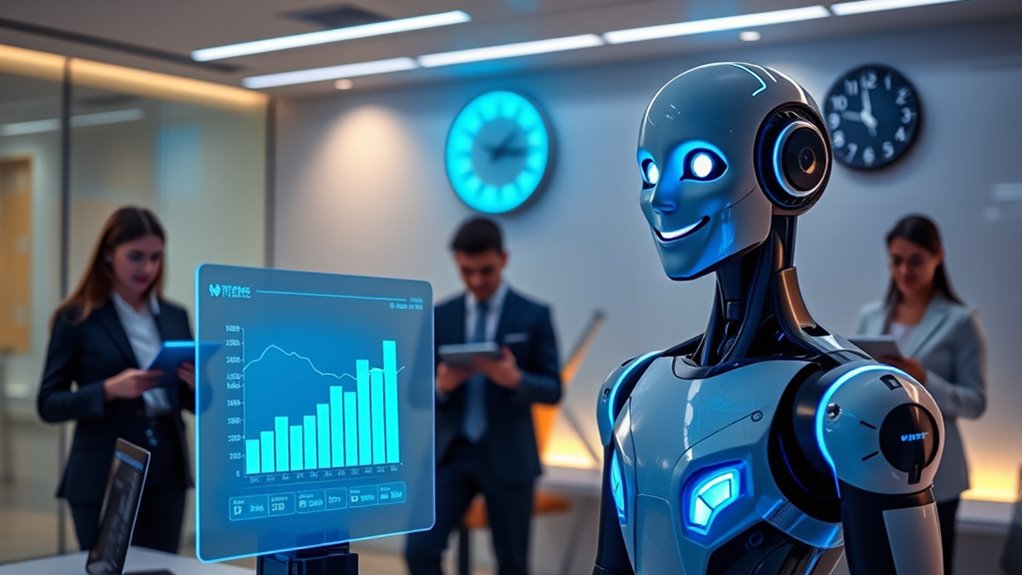
AI streamlines performance evaluations, cutting review times from hours to minutes. It also boosts assessment accuracy by relying on real-time data instead of subjective opinions. With faster, more precise evaluations, you can make better decisions and save valuable time. Incorporating mindfulness techniques into the evaluation process can further enhance focus and reduce biases. Additionally, understanding regional legal resources can help organizations tailor their review procedures to comply with local standards. Exploring sound healing science principles may also support teams in maintaining mental clarity during reviews, especially when integrating skin health insights that promote overall well-being.
Accelerated Evaluation Timelines
Accelerated evaluation timelines are transforming performance management by substantially reducing the time needed to complete reviews while enhancing their accuracy. AI-driven systems generate detailed feedback within minutes, replacing hours of manual writing. This automation enables you to guarantee consistent structure and tone across reviews, improving reliability. Data input allows rapid synthesis of employee metrics into actionable insights. Continuous real-time data collection supports frequent updates, further shortening review cycles. Specifically:
- AI creates feedback quickly, saving hours.
- Managers spend less time on drafting and more on development.
- Real-time data ensures timely, accurate assessments.
- Faster consensus reduces delays and rework.
Implementing AI tools also minimizes human bias, leading to fairer evaluations. These improvements streamline workflows, making evaluations more efficient and reliable.
Enhanced Assessment Precision
By harnessing real-time data collection and continuous feedback, performance assessments become more precise and reliable. You gain immediate insights that reflect current work, reducing reliance on outdated or subjective evaluations. Automated data streams monitor your progress continuously, enabling dynamic adjustments and accurate appraisals. This approach minimizes delays and improves review relevance, supporting more frequent, incremental assessments. To illustrate, consider these productivity gains:
| Task Type | Average Increase | Impact |
|---|---|---|
| Document & report writing | 59% | Faster feedback creation |
| Customer inquiries handled | 13.8% | Quicker review responses |
| Coding projects | 126% | Higher accuracy in evaluations |
| Routine data analysis | Reduced workload | More consistent, objective reviews |
| Overall assessment precision | Improved | Fairer, unbiased employee evaluations |
Ethical Considerations and Challenges in AI-Based Evaluations

As organizations increasingly rely on automated evaluation systems, ethical considerations and challenges become more prominent. You need to be aware of key issues:
- Privacy and Data Security: Nearly half of employees worry AI systems could invade personal privacy, especially with sensitive data at risk of cyber threats or misuse. Often, employees aren’t fully informed or haven’t given explicit consent, leading to transparency problems.
- Bias and Fairness: AI tools can reflect human biases, resulting in discriminatory outcomes that increase disparities and reduce trust. Unchecked, they risk sidelining diverse talent and perpetuating inequalities.
- Transparency and Explainability: Many AI decisions are opaque, frustrating employees and lowering engagement. Clear explanations and regulatory compliance are essential to build trust.
- Human Oversight: Combining AI with human supervision boosts satisfaction, ensures contextual judgment, and helps correct errors and biases.
The Growing Market and Future Trends of AI Performance Tools
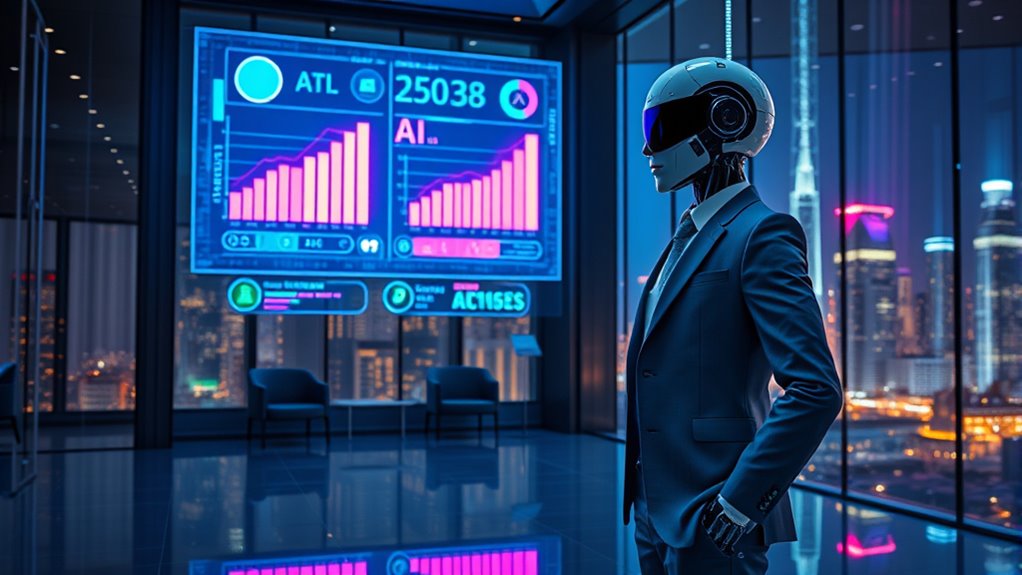
The AI performance tools market is experiencing rapid growth driven by advancements in generative AI, increasing enterprise adoption, and the rising demand for automation. You’ll see investments surge, with the market projected to reach USD 244.2 billion by 2025. North America leads, capturing over half of global AI software investments, while Asia-Pacific’s share is expanding rapidly, especially with China dominating the region. Future trends include shift-left testing, real-time analytics, and integration with automation platforms. Cloud and edge computing will make these tools more scalable and responsive, while enhanced security features protect sensitive data. As shown below, the market is evolving across segments and regions:
| Segment | Growth Rate | Key Focus |
|---|---|---|
| AI-enabled testing | 29.6% CAGR | Automation & testing |
| Talent analytics | Increasing | Recruitment & skills |
| Cloud solutions | Rapid growth | Accessibility & scalability |
Managing Employee Trust and Addressing Concerns
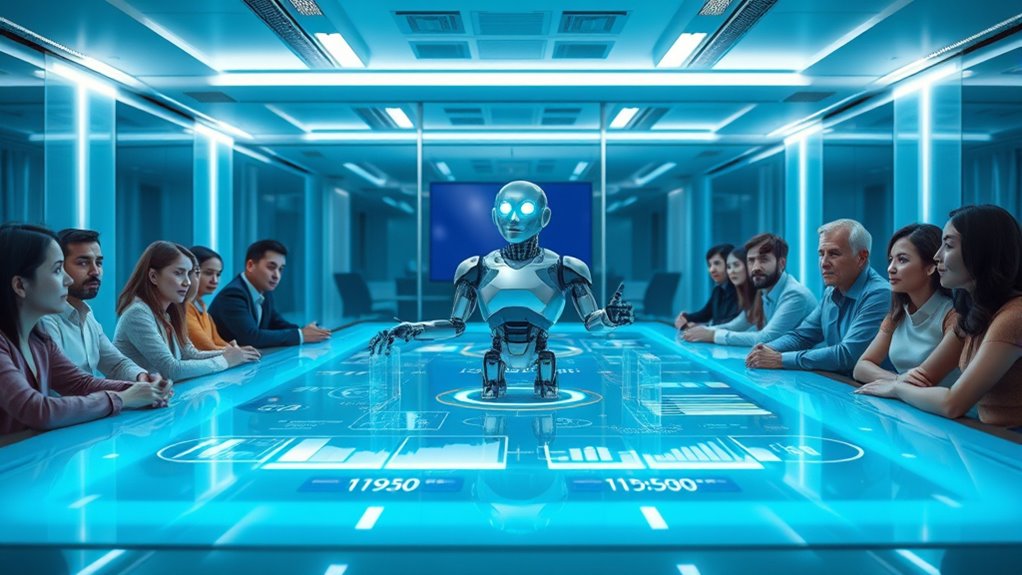
Managing employee trust in AI systems is critical for successful implementation, yet it remains a complex challenge. To build trust, you should focus on:
- Ensuring transparency about how AI makes decisions, so employees understand the process.
- Combining AI with human oversight to address concerns and provide context.
- Promoting fairness and diversity by using AI to reduce biases and support inclusion.
- Communicating clearly about AI’s role, benefits, and limitations to manage expectations.
The Human-Ai Hybrid Approach: Balancing Technology With Personal Touch

While building trust in AI systems is essential, relying solely on automation can overlook the human elements that foster genuine engagement and understanding. A hybrid approach balances objective data with subjective insights, giving you a more complete evaluation. AI reduces bias, increases accuracy, and streamlines the review process, but it can miss nuances like teamwork, leadership, or emotional intelligence. Human evaluators provide personalized feedback, interpret complex situations, and understand context better. This combination fosters balanced assessments, enhances trust, and offers richer feedback. It also allows organizations to adapt evaluations to specific roles or cultures. Although challenges like data quality and integration costs exist, blending AI’s efficiency with human judgment creates a more fair, nuanced, and effective review process that respects both technology and personal touch.
Frequently Asked Questions
How Does AI Handle Sensitive Employee Data Securely?
You might wonder how AI handles sensitive employee data securely. It encrypts data during transit and at rest using advanced standards like AES and TLS. Access is controlled with role-based permissions and multi-factor authentication. Continuous monitoring, logging, and threat detection help spot anomalies quickly. Regular updates, audits, and compliance with regulations guarantee your data stays protected, while strict controls limit exposure and prevent unauthorized access at every step.
What Are the Signs of Bias in AI Performance Systems?
While it’s natural to seek fairness, AI performance systems can sometimes show subtle signs of bias. You might notice uneven evaluations, especially for certain groups, or feel some hard-to-quantify qualities like emotional intelligence aren’t fully captured. Algorithms may inadvertently favor specific behaviors or overlook important context. If the system’s decisions seem inconsistent or unfair, it’s a sign that biases—hidden in the data or design—may be influencing outcomes.
Can AI Adapt to Unique Organizational Cultures Effectively?
You wonder if AI can effectively adapt to your organization’s unique culture. It can, especially when trained on diverse data that reflects your values and standards. AI integrates multiple data sources, providing personalized, continuous feedback aligned with your culture. However, its success depends on data quality and customization. With proper adaptation, AI can enhance accuracy, engagement, and efficiency, supporting your organization’s cultural nuances and evolving needs.
How Do Employees Typically React to Ai-Driven Reviews?
Imagine walking into a room where a robotic judge hands you your performance review. You might feel skeptical, but data shows most employees trust AI more, believing it’s fairer and less biased. You could appreciate the objectivity, yet worry about impersonal feedback. Overall, reactions range from increased engagement and trust to concern over lack of nuance, highlighting that balancing AI’s fairness with human insight remains key.
What Legal Considerations Exist for AI in Employee Evaluations?
You need to understand the legal considerations with AI in employee evaluations. Guarantee your AI systems comply with ADA and anti-discrimination laws to prevent bias and legal liabilities. Protect employee privacy by obtaining explicit consent and securing data properly. Conduct bias audits regularly and use diverse training data. Stay updated on evolving regulations, and always include human oversight to help safeguard fairness, legal compliance, and reputation.
Conclusion
Imagine a robot assistant that perfectly remembers every project detail, yet still needs your unique perspective. AI in performance reviews is like that—enhancing fairness and efficiency, but still relying on your human insight. As companies embrace these tools, you’ll find yourself balancing data-driven clarity with personal connection. Together, humans and AI can create a workplace where fairness and growth thrive, much like a well-tuned orchestra—each part essential for harmony.