
TL;DR

Get business pricing on tech for your team
- Business-only prices and quantity discounts
- Tax-exempt purchasing
- Multiple users, one account, clear invoices
Qualcomm has announced a new AI chip designed for data centers that eliminates high-bandwidth memory (HBM), directly challenging Nvidia’s market dominance. This move could reshape AI hardware competition.
Qualcomm has introduced a new AI data center chip that forgoes high-bandwidth memory (HBM), aiming to challenge Nvidia’s dominance in the AI hardware market. The chip, part of Qualcomm’s Dragonfly line, employs a novel design that stacks low-power DRAM directly on the logic die, a departure from traditional HBM-based architectures. This development signals a strategic shift by Qualcomm to compete more aggressively in the AI chip sector, which has been largely controlled by Nvidia.
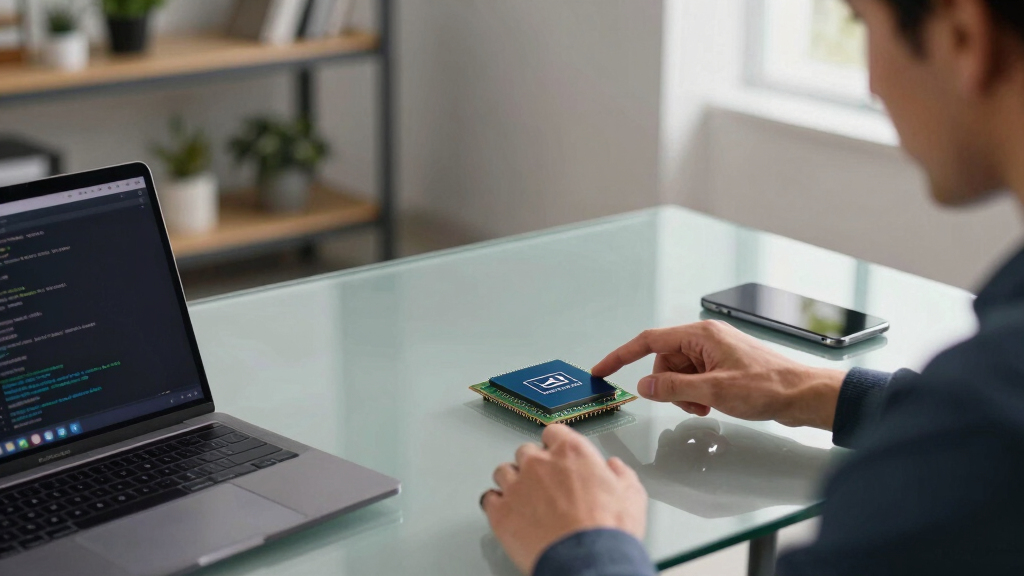
During a recent presentation in New York, Qualcomm’s vice president of data center, Durga Malladi, showcased the new chip architecture that replaces HBM with stacked low-power DRAM chips mounted directly on the logic die. This design aims to reduce costs and complexity associated with HBM, which has been a key component of Nvidia’s high-performance AI GPUs.
The new chip is part of Qualcomm’s broader effort to penetrate the AI data center market, traditionally dominated by Nvidia’s H100 and A100 series. The company claims that this approach could lower power consumption and manufacturing costs, potentially offering a more scalable and flexible solution for data center operators.
While Nvidia’s chips use HBM for high bandwidth and low latency, Qualcomm’s design relies on stacked DRAM, which is less costly and easier to produce at scale. The company has not disclosed specific performance metrics but emphasizes that the architecture could still meet demanding AI workloads.
Implications for AI Hardware Competition
This development is significant because Qualcomm’s move to eliminate HBM could disrupt the existing market balance dominated by Nvidia. If successful, the new architecture might lower barriers for data center operators to adopt AI hardware, potentially increasing competition and innovation in the sector. It also signals a shift toward more cost-effective AI solutions, which could influence future hardware designs.
As an affiliate, we earn on qualifying purchases.
Background of AI Chip Market Dominance
Nvidia has held a near-monopoly in high-performance AI chips for data centers, largely due to its use of HBM technology, which offers high bandwidth and low latency. The company’s GPUs have become the standard for training and inference in AI applications, with little direct competition until now.
Qualcomm, traditionally known for mobile processors, has recently pivoted toward AI data center hardware. Its Dragonfly line aims to challenge Nvidia’s dominance by offering alternative architectures designed to be more scalable and cost-efficient. The company’s recent demonstration indicates a strategic push to gain market share amid growing demand for AI infrastructure.
“Replacing HBM with stacked low-power DRAM could significantly reduce costs and complexity for data center operators.”
— an anonymous researcher
high bandwidth memory replacement chips
As an affiliate, we earn on qualifying purchases.
As an affiliate, we earn on qualifying purchases.
Unconfirmed Performance and Market Reception
It is not yet clear how the new Qualcomm chip will perform compared to Nvidia’s offerings in real-world AI workloads. Details about power efficiency, scalability, and actual performance benchmarks are still emerging. Market acceptance and the response from data center operators are also uncertain at this stage.
As an affiliate, we earn on qualifying purchases.
Next Steps for Qualcomm and Industry Response
Qualcomm plans to conduct further testing and validation of the new chip, with potential commercial deployment in the coming months. Industry analysts will be watching closely to see if the architecture can deliver on its promises and whether data center operators will adopt it as an alternative to Nvidia’s solutions. Nvidia has yet to respond publicly to this development.
As an affiliate, we earn on qualifying purchases.
Key Questions
How does Qualcomm’s new chip differ from Nvidia’s?
Qualcomm’s chip replaces high-bandwidth memory (HBM) with stacked low-power DRAM mounted directly on the logic die, aiming to reduce costs and complexity.
Can Qualcomm’s architecture match Nvidia’s performance?
It remains to be seen. Qualcomm claims their design can handle demanding AI workloads, but detailed benchmarks are not yet available.
Why is removing HBM significant?
Removing HBM could lower manufacturing costs and simplify scaling, potentially making AI hardware more accessible and competitive.
When will Qualcomm’s new chip be available commercially?
Qualcomm has not announced a specific release date; further testing and validation are expected in the coming months.
What does this mean for Nvidia’s market position?
This challenge could pressure Nvidia to innovate further or adjust pricing, but Nvidia’s existing market dominance remains significant for now.
Source: Nikkei Asia
Halloween Picks
halloween
As an affiliate, we earn on qualifying purchases.