📊 Full opportunity report: Phone-Photo Gauge Reading: A New Approach To Facility Monitoring on IdeaNavigator AI — validation score, market gap, and execution plan.

Get business pricing on tech for your team
- Business-only prices and quantity discounts
- Tax-exempt purchasing
- Multiple users, one account, clear invoices
TL;DR
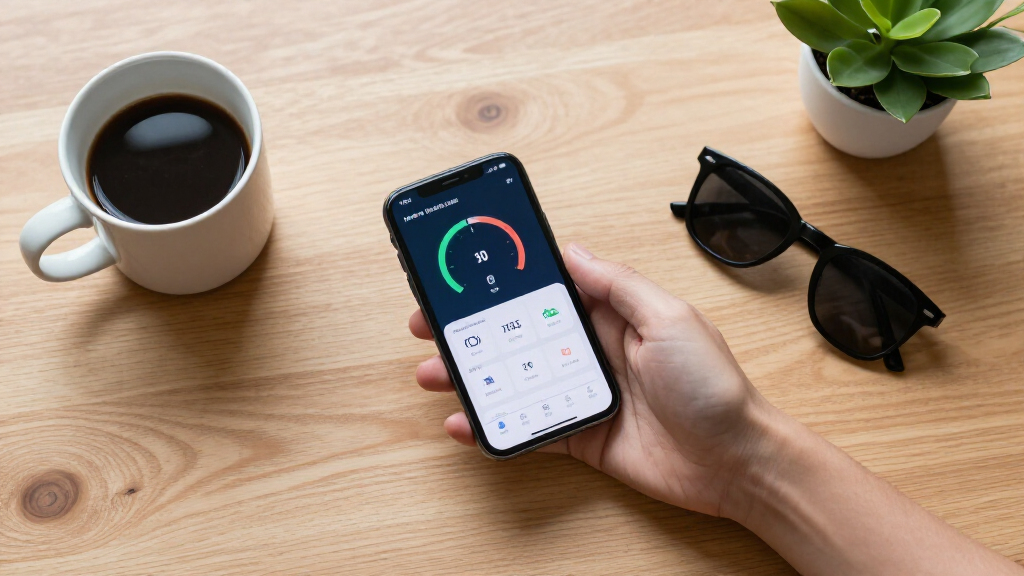
A new approach uses phone photos to record analog gauge readings, replacing manual clipboard rounds. Early tests show promise for reducing errors and enabling trend analysis without sensor retrofits. The method is being trialed at three facilities for validation.
Early trials of a new method involve using smartphone photos to record analog gauge readings during routine facility inspections, aiming to replace traditional clipboard rounds. This approach is designed to reduce transcription errors, improve data accuracy, and facilitate trend analysis without costly retrofits of legacy equipment. The pilot program is currently being conducted at three industrial facilities, with initial results expected soon.
The core innovation involves technicians photographing gauges, sight glasses, and counters with their smartphones during regular rounds. An AI-powered app then reads the gauge values from these images, compares them against expected ranges, logs the readings with timestamps and locations, and flags anomalies immediately. This process aims to create a reliable, digital record of gauge data that can be analyzed over time to detect developing failures early.
According to sources familiar with the pilot, this method could serve as a practical, low-cost alternative to retrofitting legacy equipment with IoT sensors, which often involves significant expense and disruption. Instead, it leverages advances in vision models capable of reliably reading analog dials from ordinary phone photos, a capability that has matured recently. The pilot is designed to validate the accuracy of this technique by running parallel photo-based and traditional clipboard rounds for one month, then comparing error rates and early detection of anomalies.
Potential Impact on Maintenance and Asset Management
This development could significantly improve the accuracy and timeliness of data collection in industrial maintenance. By automating gauge readings through simple photos, facilities can reduce human transcription errors and ensure more consistent data logging. The ability to trend gauge data over time without installing sensors on legacy equipment may lower costs and accelerate digital transformation efforts in industrial operations. If validated, this approach might redefine routine inspection workflows and enhance predictive maintenance strategies across sectors reliant on analog gauges.
As an affiliate, we earn on qualifying purchases.
Legacy Equipment and the Need for Cost-Effective Monitoring
Many industrial facilities still rely heavily on analog gauges, sight glasses, and counters to monitor equipment status. Traditional methods involve manual transcription of readings onto paper, which are then filed and seldom analyzed systematically. This process introduces errors, delays, and missed opportunities for early failure detection. Retrofitting these facilities with IoT sensors is often prohibitively expensive, especially for older or less critical equipment.
Recent advances in vision-based AI models capable of reading analog dials from photographs have opened new possibilities. Industry experts have noted that these models now achieve reliable accuracy, making it feasible to use smartphones as portable data collection devices. The current pilot builds on this technological progress, aiming to demonstrate that a simple phone photo workflow can deliver data quality comparable to or better than manual transcription, with added benefits of immediate anomaly detection and trend building.
As an affiliate, we earn on qualifying purchases.
Validation and Reliability of the Phone-Photo Method
It remains unclear how the accuracy of the vision models compares to traditional manual readings over longer periods or in challenging lighting conditions. The pilot program is still in early stages, and results from the parallel testing at three facilities over one month are pending. Additionally, questions about integration with existing maintenance systems and scalability across different types of gauges are yet to be answered.
As an affiliate, we earn on qualifying purchases.
Next Steps for Pilot Validation and Broader Adoption
The immediate next step is to complete the parallel testing phase, analyze error rates, and assess anomaly detection effectiveness. If results are positive, the developers plan to refine the app interface and expand the trial to more facilities. Long-term, the goal is to establish a scalable, subscription-based service for industrial clients, enabling widespread adoption of phone-photo gauge reading workflows.
As an affiliate, we earn on qualifying purchases.
Key Questions
How accurate are the vision models in reading gauges from photos?
Initial tests indicate high accuracy, but comprehensive validation results are still pending from the ongoing pilot program.
Can this method replace traditional manual readings entirely?
It is currently being tested as a supplement or alternative in specific workflows; full replacement depends on validation outcomes and integration capabilities.
What types of gauges or equipment are suitable for this approach?
The method is designed for analog gauges, sight glasses, and counters that can be visually read from a photograph, regardless of specific model or manufacturer.
What are the cost implications for facilities adopting this system?
Facilities would pay a monthly subscription fee based on gauge count, with minimal upfront costs compared to sensor retrofits, making it a potentially cost-effective solution.
When will this technology be available for broader use?
If pilot results are successful, commercial availability could follow within the next year, with phased rollouts planned based on validation outcomes.
Source: IdeaNavigator AI
Fall Picks
fall essentials
As an affiliate, we earn on qualifying purchases.