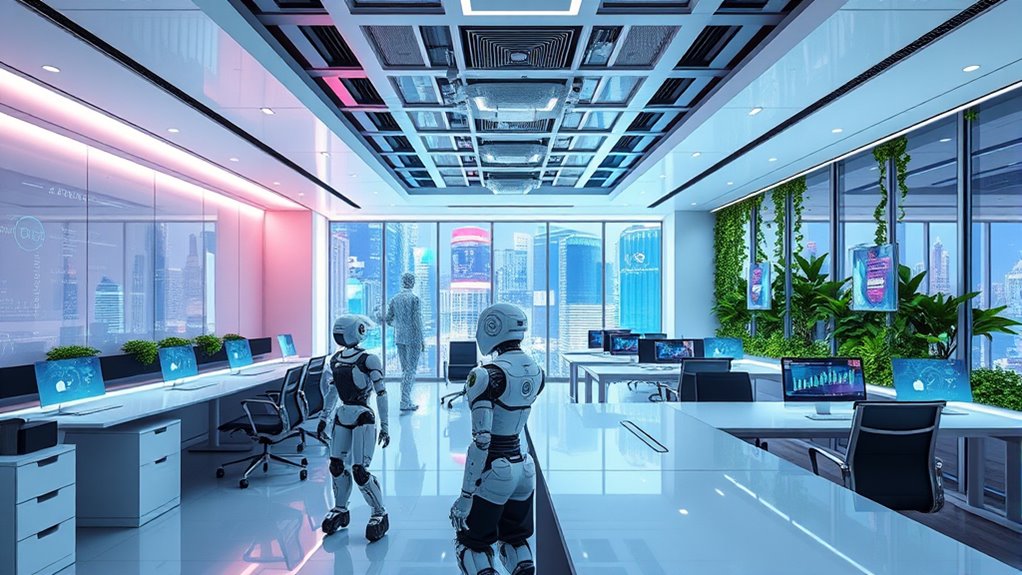

By 2030, your workplace will seamlessly blend AI-powered tools, immersive environments, and adaptable spaces to boost collaboration and productivity. Virtual meetings will feel more natural with 3D environments and real-time transcription, while smart offices adjust lighting, temperature, and layout to fit your needs. Connected devices will streamline your day, making everything more efficient. Stay with us if you want to explore how these innovations are shaping the future of work and transforming your daily experience.
Key Takeaways
- Virtual collaboration platforms will be fully immersive, AI-enhanced, and capable of seamless, inclusive communication regardless of physical location.
- Smart offices will feature dynamic, reconfigurable spaces optimized by sensors and AI to promote productivity and well-being.
- Integration with personal devices will enable automated task management, personalized environment control, and a unified digital workspace.
- Advanced visual tech like high refresh rate projectors will support immersive presentations and real-time virtual collaboration.
- AI-driven design principles will create flexible, sustainable work environments that adapt to individual and team needs, fostering innovation.

Office 2030
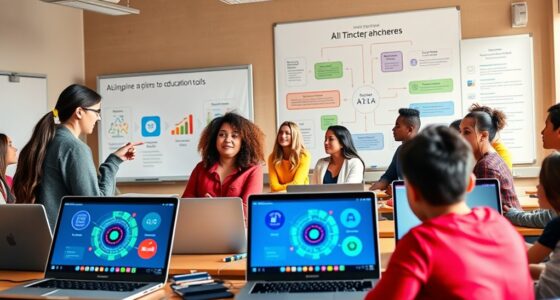
What will your office look like in 2030? As you step into your workspace, you’ll notice that virtual collaboration has become seamless and intuitive. Gone are the days of clunky video calls and disjointed communication tools. Instead, advanced AI-powered platforms enable you to interact with colleagues across the globe as if they’re right next to you. These systems automatically transcribe meetings, highlight action items, and even suggest ideal times for future collaboration, making teamwork more efficient than ever. Your virtual meetings feel natural, with immersive 3D environments that mimic physical spaces, fostering real connection despite physical distance. This evolution in virtual collaboration isn’t just about convenience; it’s about creating a more inclusive and flexible work environment where talent can thrive regardless of location.
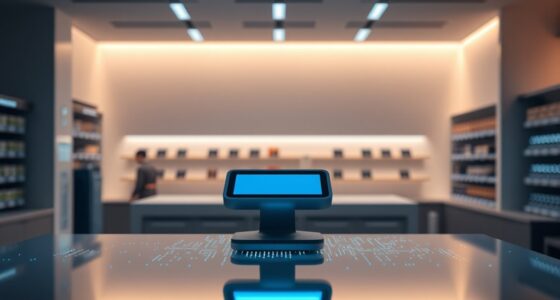
At the heart of this transformation lies smart office design. Your workplace is no longer a static space filled with desks and cubicles but a dynamic ecosystem tailored to your needs. Sensors embedded throughout the office monitor lighting, temperature, and occupancy levels, adjusting settings in real time to maximize comfort and energy efficiency. The layout itself adapts based on the task at hand or time of day, encouraging collaboration or focused work as needed. Walls and furniture are smart, capable of reconfiguring themselves with minimal effort, creating different zones for teamwork, quiet concentration, or social interaction. The building’s AI continuously analyzes data to improve layout and resource allocation, ensuring that your environment promotes productivity and well-being. Additionally, the integration of high refresh rates in projectors and displays enhances the clarity and fluidity of visuals, supporting both virtual collaboration and immersive presentations.
You’ll also find that your smart office integrates seamlessly with your personal devices, creating a unified digital workspace. Automated systems manage everything from scheduling meetings to ordering supplies, freeing you from mundane tasks. Lighting, climate control, and even your coffee machine are connected, responding to your preferences and habits. This integration cultivates a sense of harmony, allowing you to focus on your work without distractions. The office of 2030 prioritizes flexibility, sustainability, and user experience, all driven by AI and smart design principles. It’s a space that adapts to your needs, supporting collaboration both virtually and physically, while fostering innovation and comfort. As a result, your workday becomes more engaging, efficient, and enjoyable, pushing the boundaries of what an office can be in the future.
Frequently Asked Questions
How Will AI Impact Job Security in Office 2030?
AI will likely increase automation concerns and lead to job displacement for some roles, but it can also create new opportunities. You might worry about your job security, but staying adaptable and learning new skills can help you stay ahead. Embrace AI tools to boost your productivity, and focus on tasks that require human judgment. While change is inevitable, proactive adaptation can help secure your position in the evolving office landscape.
What Ethical Considerations Arise With Ai-Driven Decision Making?
Imagine trusting an algorithm to make decisions about your career—sounds risky, right? Ethical concerns like algorithmic bias and privacy violations come into play. You must question how fair these AI systems are and whether your personal data is protected. As AI makes more decisions, ensuring transparency and accountability becomes essential to prevent discrimination and safeguard your rights in this rapidly evolving workplace.
Will Remote Work Be Mandatory or Optional in Office 2030?
In 2030, remote work will likely be optional, allowing you to choose between virtual collaboration from home or working in a highly automated office environment. You’ll benefit from seamless office automation that enhances productivity, while virtual collaboration tools keep teams connected regardless of location. This flexible approach enables you to adapt to your preferences, balancing the convenience of remote work with the advantages of in-person interactions when needed.
How Will AI Influence Workplace Diversity and Inclusion?
AI will substantially boost workplace diversity and inclusion by actively mitigating bias through advanced algorithms, ensuring fair hiring and evaluation processes. It promotes cultural inclusivity by recognizing and respecting different communication styles and backgrounds. You’ll see AI tools help create equitable environments where everyone’s perspectives are valued, fostering a more diverse, inclusive workforce. Embracing these technologies allows you to build a workplace that truly reflects and supports the richness of human diversity.
What Cybersecurity Measures Are Essential in Ai-Integrated Offices?
Are you prepared to safeguard your AI-driven workplace? Implement robust cybersecurity protocols and prioritize data encryption to protect sensitive information. Regularly update security systems, monitor network activity, and educate staff on potential cyber threats. These measures prevent unauthorized access and data breaches, ensuring your office remains secure in an AI-integrated environment. Isn’t protecting your digital assets critical for maintaining trust and operational integrity? Absolutely, so act now.
Conclusion
By 2030, your workplace will be a symphony of AI and human harmony, where technology dances seamlessly with your daily tasks. Picture a future where your AI assistant is your trusted co-pilot, steering the complexities of work like a seasoned sailor steering through calm and storm alike. Embrace this evolution, for the office of tomorrow isn’t just a place—it’s a living, breathing ecosystem where innovation blossoms at every turn. The future’s rhythm is already calling your name.