
TL;DR
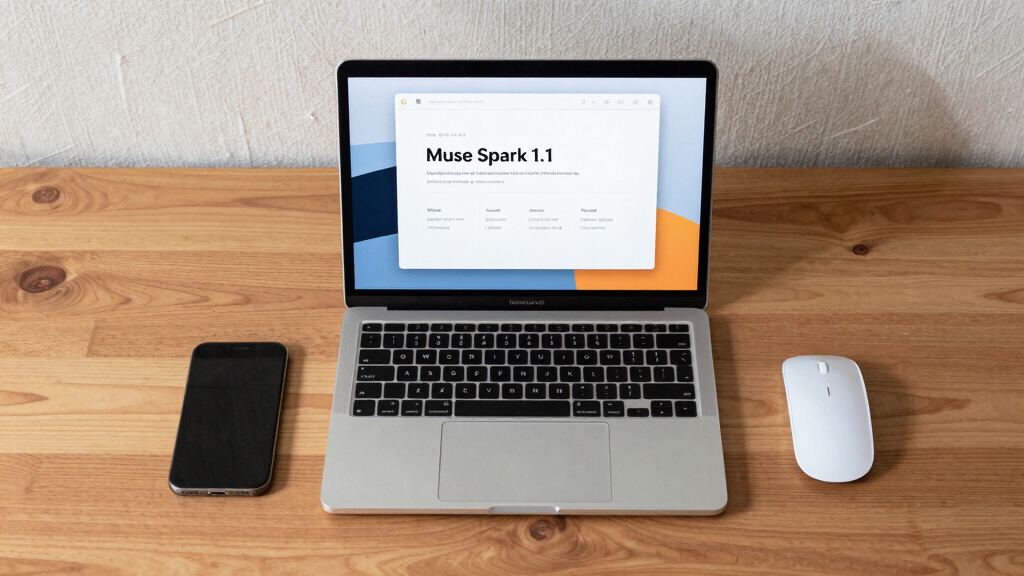
Meta announced the release of Muse Spark 1.1, an upgraded AI image-generation model. The company released an evaluation report detailing its capabilities, but some specifics remain undisclosed.
Meta has officially launched Muse Spark 1.1, an advanced AI model designed for high-quality image generation, accompanied by a detailed evaluation report. This marks a significant step in Meta’s AI development efforts and signals its focus on expanding generative AI capabilities.
The evaluation report, published on Meta’s official site, confirms the release of Muse Spark 1.1 and provides insights into its performance metrics, architecture improvements, and new features. According to the report, Muse Spark 1.1 demonstrates enhanced image quality, faster processing times, and better handling of complex prompts compared to its predecessor.
Meta officials stated that Muse Spark 1.1 incorporates advancements in model architecture, including optimized training techniques and increased parameter count, though specific technical details remain limited in the publicly available report. The company emphasized that the model is intended for research and commercial applications, with safety and bias mitigation features integrated into its design.
Implications for AI Image Generation and Industry Competition
The release of Muse Spark 1.1 underscores Meta’s ongoing investment in generative AI, positioning it as a competitor to other leading models like OpenAI’s DALL-E and Stability AI’s Stable Diffusion. The improvements in image quality and processing speed could influence adoption across various sectors, including advertising, entertainment, and design.
For developers and researchers, the detailed evaluation report provides valuable benchmarks and insights into Meta’s approach to scaling and refining AI models, potentially shaping future developments in the field. However, the extent of the model’s commercial deployment and access remains unclear, which could impact industry adoption rates.

The Ultimate AI Prompt Collection: 150+ Ready-to-Use Prompts for Images, Photo Editing, Articles, Videos, Marketing, Business, and Content Creation
As an affiliate, we earn on qualifying purchases.
As an affiliate, we earn on qualifying purchases.
Background on Meta’s AI Image Models and Prior Developments
Meta has been active in the generative AI space, releasing several models and tools aimed at expanding AI’s creative capabilities. Prior to Muse Spark 1.1, the company introduced earlier versions of Muse Spark and other image-generation models, emphasizing safety and usability. The new release follows a broader industry trend of releasing large-scale, high-performance generative models to compete with other tech giants.
The evaluation report for Muse Spark 1.1 is part of Meta’s broader strategy to demonstrate transparency and foster research collaborations. It also reflects ongoing efforts to improve AI safety and reduce biases in generated content, issues that have been central to recent AI developments.
“Muse Spark 1.1 represents our most advanced image-generation model to date, with significant improvements in quality and efficiency.”
— Meta AI spokesperson

Ai Art : Ai Image Generator
- AI Image Generator: Create images with AI technology
- Text to Image: Generate images from text prompts
- Image to Image: Transform images with AI
As an affiliate, we earn on qualifying purchases.
As an affiliate, we earn on qualifying purchases.
Unconfirmed Technical Details and Deployment Plans
It is not yet clear how widely Muse Spark 1.1 will be available to developers and commercial partners. Specific technical details about the model’s architecture, training data, and safety features have not been fully disclosed in the report, leaving some questions about its capabilities and limitations.
Additionally, the timeline for broader deployment or integration into Meta’s products remains uncertain, and it is unclear whether the model will be accessible to third-party developers or only used internally.

Hands-On Generative AI with Transformers and Diffusion Models
As an affiliate, we earn on qualifying purchases.
As an affiliate, we earn on qualifying purchases.
Next Steps for Meta and AI Industry Adoption
Meta is expected to continue refining Muse Spark 1.1 and may release further technical details or updates in the coming months. The company could also announce partnerships or API access for external developers, though no official timeline has been provided.
Industry analysts will be monitoring how Muse Spark 1.1 performs in real-world applications and whether it influences competitive dynamics among AI image-generation models. Further evaluation reports or demonstrations are anticipated to clarify its capabilities and deployment plans.

The AI Image Creation Playbook: 13 Proven Prompts for AI Image Generation, Editing & Design Without Photoshop
As an affiliate, we earn on qualifying purchases.
As an affiliate, we earn on qualifying purchases.
Key Questions
What is Muse Spark 1.1?
Muse Spark 1.1 is Meta’s latest AI model designed for high-quality image generation, featuring improvements over previous versions in image quality and processing speed.
How does Muse Spark 1.1 compare to other models like DALL-E?
According to Meta’s evaluation report, Muse Spark 1.1 demonstrates enhanced image quality and efficiency, but direct comparisons depend on specific benchmarks and use cases, which are not fully detailed publicly.
Will Muse Spark 1.1 be available for public use?
Meta has not announced specific plans for broad public or developer access. The model’s deployment and accessibility remain uncertain at this stage.
What are the safety features of Muse Spark 1.1?
Meta states that safety and bias mitigation features are integrated into Muse Spark 1.1, but detailed information about these features has not been disclosed in the evaluation report.
When will more technical details be released?
There is no confirmed timeline for additional technical disclosures, but Meta may publish further updates or research papers in the coming months.
Source: hn