
TL;DR
Mistral has announced Robostral Navigate, a new state-of-the-art navigation model for robotics. This development aims to improve autonomous mobility and precision in various applications. The system’s capabilities and potential impacts are still being evaluated.
Mistral has introduced Robostral Navigate, a new advanced robotics navigation system designed to improve autonomous movement and decision-making. This development was announced during a major industry event, marking a significant milestone for the company’s robotics division and the broader field of autonomous systems.
Robostral Navigate is described by Mistral as a state-of-the-art navigation model that integrates multiple sensory inputs, real-time mapping, and adaptive path planning. According to Mistral, the system leverages recent advances in AI and sensor fusion to enable robots to operate more effectively in complex, dynamic environments. The company claims that the system can outperform existing navigation solutions in terms of speed, accuracy, and obstacle avoidance. While Mistral has shared technical highlights and initial performance metrics, detailed independent evaluations and real-world testing results are not yet publicly available. The launch was accompanied by demonstrations showing robots navigating cluttered industrial and outdoor settings with high precision, but further validation is awaited.Implications for Autonomous Robotics Development
The introduction of Robostral Navigate could accelerate the deployment of autonomous robots across sectors such as logistics, manufacturing, and service industries. Its advanced capabilities may reduce reliance on human oversight, improve safety, and increase operational efficiency. For industry stakeholders, this signals a potential shift towards more reliable and adaptable autonomous systems. However, the full impact depends on how the system performs in diverse, real-world conditions and whether it can be integrated into existing robotic platforms at scale. The development also underscores the ongoing competition among robotics firms to lead in autonomous navigation technology.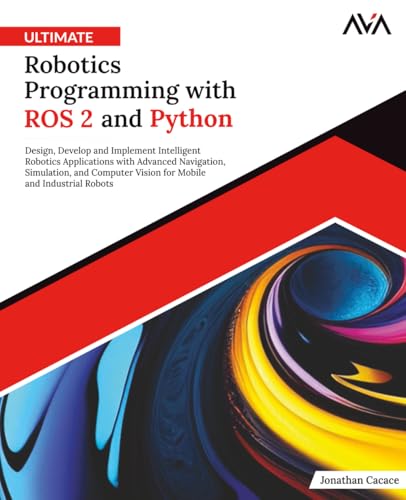
Ultimate Robotics Programming with ROS 2 and Python: Design, Develop, and Implement Intelligent Robotics Applications with Advanced Navigation, … Tech Specialist — Robotics & IoT Path)
As an affiliate, we earn on qualifying purchases.
As an affiliate, we earn on qualifying purchases.
Over the past few years, robotics companies have been investing heavily in navigation and perception systems to enable fully autonomous operations. Leading firms like Boston Dynamics, NVIDIA, and Waymo have introduced various solutions, but challenges remain in achieving robust, versatile navigation in unpredictable environments. Mistral’s announcement builds on this trend, aiming to set a new benchmark with Robostral Navigate. Prior to this, Mistral has been known for its innovations in AI-driven robotics, but this is its most ambitious step into integrated navigation systems. The timing aligns with industry-wide efforts to commercialize autonomous robots for a broad range of applications, from warehouse automation to outdoor exploration.
“Robostral Navigate represents a leap forward in autonomous navigation, combining cutting-edge sensors and AI to enable robots to operate safely and efficiently in complex environments.”
— Mistral spokesperson

Introduction to Autonomous Robots: Mechanisms, Sensors, Actuators, and Algorithms
As an affiliate, we earn on qualifying purchases.
As an affiliate, we earn on qualifying purchases.
Performance Validation and Real-World Testing Outcomes
It is not yet clear how Robostral Navigate will perform outside controlled demonstrations. Independent evaluations and extensive field testing are still pending, leaving questions about its robustness, scalability, and integration capabilities in diverse operational settings.
Shark AV2501S AI Ultra Robot Vacuum, with Matrix Clean, Home Mapping, 30-Day Capacity HEPA Bagless Self Empty Base, Perfect for Pet Hair, Wifi, Dark Grey
- Powerful Suction: Removes dirt from all floor types
- Matrix Clean Navigation: Ensures thorough, grid-based cleaning
- Self-Emptying Base: Holds 30 days of debris automatically
As an affiliate, we earn on qualifying purchases.
As an affiliate, we earn on qualifying purchases.
Upcoming Validation, Deployment Plans, and Industry Adoption
Mistral is expected to publish detailed performance data following upcoming field tests. The company may also begin pilot programs with industry partners to evaluate real-world deployment. Monitoring how quickly and broadly the system is adopted will be key to assessing its ultimate impact on the robotics sector.Introduction to Autonomous Robots: Mechanisms, Sensors, Actuators, and Algorithms
As an affiliate, we earn on qualifying purchases.
As an affiliate, we earn on qualifying purchases.
Key Questions
According to Mistral, Robostral Navigate integrates advanced sensors, AI-driven path planning, and real-time mapping, aiming to outperform current solutions in speed, accuracy, and obstacle avoidance.
When will Robostral Navigate be available for commercial use?
The company has not announced a specific release date. Initial demonstrations suggest it will undergo further testing before commercial deployment, which could occur within the next year.
What applications are targeted for Robostral Navigate?
The system is designed for use in autonomous logistics, industrial automation, outdoor exploration, and service robotics, among other sectors.
Has Robostral Navigate been independently tested?
No, independent validation and extensive real-world testing are still pending. Current demonstrations are controlled or limited in scope.
How might this development impact the robotics industry?
If successful, Robostral Navigate could set new standards for autonomous navigation, potentially accelerating adoption and innovation across multiple sectors.
Source: hn