
TL;DR

Get business pricing on tech for your team
- Business-only prices and quantity discounts
- Tax-exempt purchasing
- Multiple users, one account, clear invoices
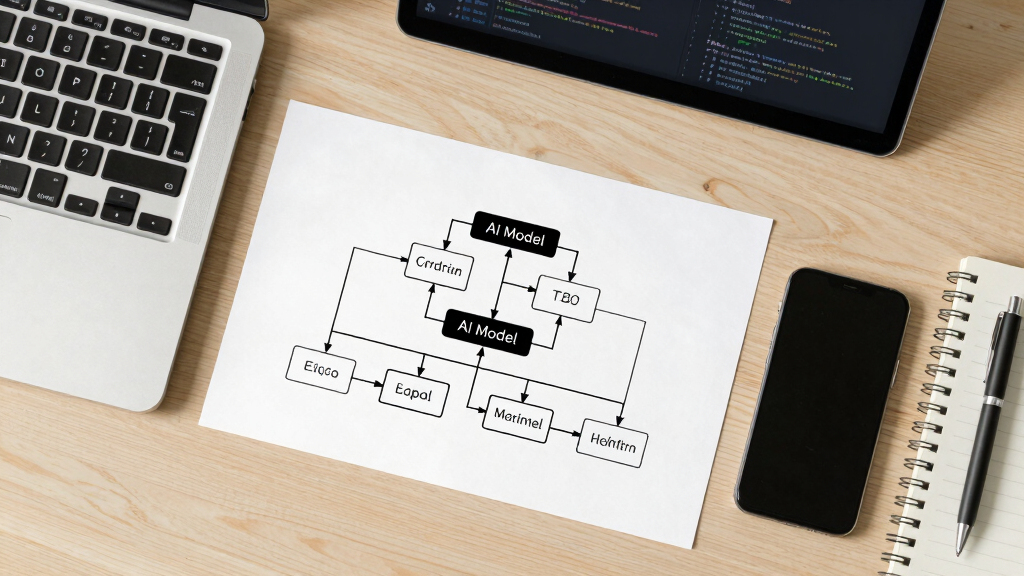
Interfaze is a new model architecture that outperforms leading models like Gemini-3-Flash and GPT-5.4-Mini across nine benchmarks in OCR, vision, speech, and structured output. It merges the strengths of task-specific neural networks with transformer models, enabling high accuracy at scale.
Interfaze is a newly introduced model architecture that combines the strengths of deep neural networks and transformers to deliver high accuracy and low cost for deterministic tasks at scale. It outperforms models like Gemini-3-Flash, Claude-Sonnet-4.6, GPT-5.4-Mini, and Grok-4.3 across nine benchmarks in OCR, vision, speech-to-text, and structured output, according to sources familiar with the development.
Interfaze is designed to address the limitations of traditional transformer models in tasks requiring high precision and efficiency, such as OCR, object detection, and structured data extraction. It leverages the specialization of convolutional neural networks (CNNs) and deep neural networks (DNNs), integrating them with omni-transformers to enhance accuracy and reduce computational costs. Benchmark tests show Interfaze leading in nearly all evaluated categories, including OCR accuracy, structured output correctness, and speech-to-text performance, at a comparable price point to existing lightweight models like Gemini-3-Flash.
The architecture supports multiple input modalities—text, images, audio, and files—and is optimized for high-volume, deterministic tasks. Its key features include a feature value context window of one million tokens and a maximum output of 32,000 tokens, making it suitable for complex document processing and multimedia analysis. The model’s performance has been benchmarked against specialized OCR providers and generalist transformer models, consistently outperforming them in accuracy and speed.
Why It Matters
Interfaze’s introduction marks a significant advancement for industries relying on large-scale, high-precision data extraction and processing. Its ability to combine task-specific neural network strengths with transformer flexibility means organizations can achieve better accuracy at lower costs, especially in OCR, structured data, and vision tasks. This development could reduce dependence on expensive, slow generalist models for deterministic tasks, enabling more efficient workflows and better resource utilization.
As an affiliate, we earn on qualifying purchases.
Background
Traditional neural network architectures like CNNs and DNNs have been used since the 1990s for specialized tasks such as OCR and object detection. More recently, transformer models have dominated natural language processing and general AI tasks but face limitations in deterministic, high-accuracy applications due to cost and speed. Existing models like Gemini-3-Flash and GPT-5.4-Mini are optimized for generalist performance but fall short in specialized, high-volume tasks. Interfaze aims to fill this gap by merging the precision of CNNs with the versatility of transformers, offering a new approach to scalable, high-accuracy AI.
“Interfaze combines the best of both worlds—task-specific neural networks and omni-transformers—delivering unmatched accuracy and efficiency for deterministic tasks.”
— Source close to the development team
“If Interfaze performs as claimed, it could redefine how enterprises handle large-scale data extraction and processing, reducing costs while improving accuracy.”
— Industry analyst
As an affiliate, we earn on qualifying purchases.
What Remains Unclear
It is not yet clear how Interfaze performs in real-world, large-scale deployments beyond benchmark tests, or how it compares long-term in terms of maintenance and retraining costs. Details about its integration into existing systems and broader availability are still emerging.
speech-to-text transcription device
As an affiliate, we earn on qualifying purchases.
As an affiliate, we earn on qualifying purchases.
What’s Next
Further details about deployment options, pricing, and integration are expected soon. Industry adoption and real-world testing will determine the model’s practical impact. Researchers and developers will likely scrutinize benchmark results and begin experimenting with Interfaze in various applications.
structured data extraction tools
As an affiliate, we earn on qualifying purchases.
As an affiliate, we earn on qualifying purchases.
Key Questions
What tasks is Interfaze best suited for?
Interfaze excels in deterministic tasks such as OCR, object detection, structured data extraction, and vision-related applications, providing high accuracy at scale.
How does Interfaze compare in cost to existing models?
Interfaze is priced similarly to lightweight models like Gemini-3-Flash, at approximately $1.50 per million input tokens and $3.50 per million output tokens, aiming for cost-effective high-volume processing.
Will Interfaze replace general-purpose transformers?
No, it is designed to complement them by focusing on high-accuracy, deterministic tasks, rather than replacing large language models used for reasoning and creative tasks.
When will Interfaze be available for public use?
Details about availability are still forthcoming. Industry sources expect a phased rollout, with broader access expected in the coming months.
Evergreen bestsellers Picks
bestsellers
As an affiliate, we earn on qualifying purchases.