
🔍 Read the full analysis: Inside The AI Tower: Twelve Rooms Of AI At Work With A Focus On Safety on ThorstenMeyerAI.com

Get business pricing on tech for your team
- Business-only prices and quantity discounts
- Tax-exempt purchasing
- Multiple users, one account, clear invoices
TL;DR
The AI Tower introduces twelve interactive rooms demonstrating AI capabilities with a focus on safety. This development aims to educate users on responsible AI deployment and management. Details on implementation and potential risks are still emerging.
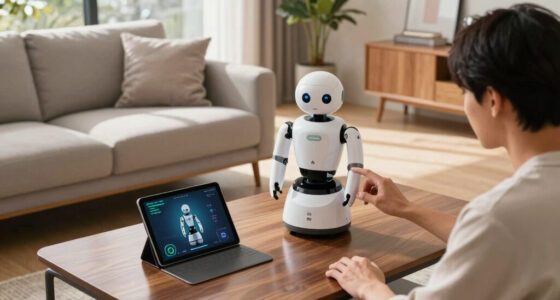
The AI Tower, a virtual environment designed to showcase twelve distinct applications of artificial intelligence, has gone live, emphasizing safety and responsible use. Developed by Thorsten MeyerAI, this interactive platform allows users to explore AI functions directly in their browsers, with no sign-up or tracking required. The launch marks a significant step in educating the public about AI capabilities and risks, especially concerning safety protocols embedded within these demonstrations.
The AI Tower features twelve rooms, each dedicated to a specific aspect of AI, such as retrieval-augmented generation, prompt engineering, autonomous agents, and automation workflows. These rooms are designed to be accessible across devices—phones, tablets, or computers—and serve as practical demonstrations of AI in action, with a particular focus on safety considerations. For example, the ‘Archive Desk’ shows how AI can fetch information from personal or organizational documents, highlighting the importance of data privacy and accuracy.
According to Thorsten Meyer, the creator of the platform, the goal is to provide a transparent, hands-on environment where users can see how AI systems operate and understand potential pitfalls. The platform also emphasizes that current AI models, even when used responsibly, can produce errors or misinterpretations, underscoring the need for careful oversight and safety measures. The launch coincides with increasing public interest and concern about AI safety, especially as AI models become more integrated into daily workflows and decision-making processes.
While the platform is publicly accessible, it is still in early stages, and developers caution that the demonstrations do not encompass all safety challenges associated with real-world AI deployment. The platform’s design aims to foster awareness and responsible experimentation, not to replace professional safety protocols or regulatory frameworks.
A guided tour of practical AI · Safety in focus
Inside the AI Tower: Twelve Rooms of AI at Work
An interactive online exhibit makes AI capabilities easier to explore—and puts responsible use, limitations, and human oversight in view.
Open access: Explore in a browser across phones, tablets, and computers, with no sign-up or tracking required.
Each room demonstrates a different AI capability or workflow.
Developed by Thorsten MeyerAI as an accessible learning space.
Distinct AI demonstrations
Browser-based, no account
Phone, tablet, or computer
Limits, errors, and oversight
Twelve rooms, practical ideas
The Tower presents hands-on examples of AI in action. Four capabilities named in the brief illustrate the range; the exhibit includes twelve rooms overall.
Archive Desk
Retrieval-augmented generation can fetch information from documents. Check source quality, privacy, and accuracy.
Prompt Engineering
See how instructions guide model responses, and why unclear prompts can produce incomplete or misleading results.
Autonomous Agents
Explore systems that can pursue tasks through multiple steps, with attention to boundaries and human review.
Automation Workflows
Follow how AI can fit into repeatable processes—and where mistakes can travel if nobody checks outputs.
Interactive Demos
Try practical functions directly in a browser and observe how a system behaves in context.
More to Discover
The Tower has twelve rooms. The available description names examples, not a complete room-by-room catalogue.
Capability needs context
As AI enters everyday work and important decisions, people need a clear view of what systems can do—and where they can fail.
Make the process easier to see
Interactive demonstrations can make complex AI functions less abstract, helping users ask better questions about how outputs are produced.
Expect errors and misreadings
Even responsibly used models can be wrong or misinterpret information. Important outputs need verification and human oversight.
Protect the information supplied
Document-based AI raises practical questions about access, privacy, and whether retrieved information is current and relevant.
Learn without overstating readiness
The Tower supports awareness and experimentation. Its demonstrations do not replace professional safety processes or regulation.
Explore, question, verify
A useful demonstration is a starting point for informed judgment. Carry its lessons into the way you evaluate real AI systems.
Choose a room
Start with a capability or workflow that interests you.
Observe the output
Notice what the system handles well and where it struggles.
Check the risks
Ask about errors, privacy, misuse, and missing context.
Keep oversight
Use human judgment and established safeguards for real work.
Open questions remain
The project’s impact will depend on how it develops, how people use it, and what evidence future evaluation provides.
Developers plan to gather feedback and expand the exhibit to address emerging concerns. Potential next steps include better ways to detect AI errors and misuse, and closer engagement with evolving standards.
Whether interactive education changes practice or policy remains to be measured.
Questions visitors may have
What is the AI Tower for?
It helps people explore AI functions, safety considerations, and responsible use through interactive online demonstrations.
Can I try it myself?
Yes. It is publicly accessible in a browser across devices, with no sign-up or tracking required.
Does it show AI limitations?
Safety is a central focus, including the possibility of errors, misinterpretations, and misuse—and the need for oversight.
Will it shape industry standards?
That remains uncertain. The initiative aims to support awareness and inform good practice, but its influence has not been established.
What does the exhibit not cover?
It cannot represent every safety challenge or complex deployment scenario, and it does not replace professional protocols or regulatory frameworks.
How might it change?
Planned development includes new rooms and features, with user feedback helping guide improvements.
Why the AI Tower’s Safety Focus Matters
The launch of the AI Tower signifies a move toward greater transparency and education in AI technology, especially regarding safety. As AI systems become more embedded in critical sectors like healthcare, finance, and public safety, understanding their limitations and risks is vital. The platform’s emphasis on safety demonstrates a recognition that responsible AI use must be accessible and understandable to the broader public, policymakers, and developers. This initiative could influence future standards for AI transparency and safety training, helping prevent misuse or unintended consequences of AI applications.
Moreover, by providing interactive, real-time demonstrations, the AI Tower helps demystify complex AI processes, fostering trust and informed decision-making. It also serves as a testing ground for best practices in AI safety, potentially informing industry standards and regulatory policies. As AI models evolve rapidly, such educational tools are crucial to ensuring that safety remains a central concern amid technological advancements.
As an affiliate, we earn on qualifying purchases.
Background and Development of the AI Tower Initiative
The concept of the AI Tower originated from ongoing efforts by AI researchers and developers to improve transparency and safety in AI deployment. Previously, initiatives like the Museum of AI and the Engine Room provided static or technical insights into AI systems. The AI Tower builds on these ideas by offering an interactive, user-friendly environment where people can directly experiment with AI functions and observe safety considerations in action.
Developed by Thorsten MeyerAI, the platform was announced in early 2024 as part of a broader push for responsible AI education. The platform’s design reflects current best practices in AI safety, including retrieval-augmented generation, prompt engineering, and automation workflows, all integrated into a single accessible environment. The platform also responds to increased public concern about AI misuse, misinformation, and safety, aiming to bridge the gap between technical understanding and practical application.
While the platform is still in its early stages, its open-access model and focus on safety demonstrate a commitment to responsible AI development. It complements ongoing industry and academic efforts to establish safety standards and best practices for AI deployment in real-world settings.
“The AI Tower is designed to be a transparent space where users can learn about AI safety firsthand, experimenting safely with real functions.”
— Thorsten Meyer, AI Developer
As an affiliate, we earn on qualifying purchases.
Unanswered Questions About AI Tower’s Impact and Scope
While the AI Tower offers valuable insights, it remains unclear how widely it will influence industry standards or regulatory policies. The platform is still in early deployment, and its actual impact on public understanding and safety practices has yet to be measured. Additionally, it is not yet confirmed whether the platform will expand to include more advanced safety features or integrate with professional AI safety tools.
Questions also remain about how the platform will evolve with ongoing AI developments, particularly in areas like autonomous agents and complex automation workflows. The long-term effectiveness of such educational tools in promoting responsible AI use is still being studied.
As an affiliate, we earn on qualifying purchases.
Next Steps for AI Safety Education and Platform Development
Developers plan to expand the AI Tower with new rooms and features that address emerging safety challenges, including better detection of AI errors and misuse. They also intend to gather user feedback to improve the platform’s educational effectiveness and safety demonstrations.
In the coming months, there will likely be efforts to integrate the AI Tower with industry standards and regulatory frameworks, possibly influencing policy discussions. Researchers expect that additional studies will assess how such platforms impact public understanding and responsible AI practices, guiding future educational initiatives.
Overall, the AI Tower’s ongoing development aims to reinforce the importance of safety in AI deployment and foster a more informed, cautious approach to AI adoption across sectors.
As an affiliate, we earn on qualifying purchases.
Key Questions
What is the purpose of the AI Tower?
The AI Tower is designed to educate users about AI functions, safety considerations, and responsible use through interactive demonstrations accessible online.
Can I try the AI Tower myself?
Yes, the platform is publicly accessible and can be used on any device without sign-up or tracking, allowing users to explore AI functionalities firsthand.
Does the AI Tower include safety features?
Yes, safety is a core focus, with demonstrations showing how AI systems can produce errors, misinterpret information, or be misused, emphasizing the need for oversight.
Will the AI Tower influence industry standards?
It is still early to tell, but the platform aims to inform best practices and promote safety awareness, potentially shaping future standards and policies.
What are the limitations of the AI Tower?
As a demonstration platform, it does not cover all safety challenges or advanced AI deployment scenarios, and its long-term impact remains to be seen.
Source: ThorstenMeyerAI.com
Fall Picks
fall essentials
As an affiliate, we earn on qualifying purchases.