
TL;DR
Jean-Baptiste Kempf, known for VLC Media Player, is now building Kyber, a real-time infrastructure for controlling robots and drones. The startup has raised $5 million and is already deploying its technology across industries.
Jean-Baptiste Kempf, the lead developer behind VLC Media Player, has unveiled Kyber, a new infrastructure platform designed to control remote robots, drones, and other physical devices in real time. The startup has secured $5 million in funding led by Lightspeed Venture Partners and is already working with clients across defense, telecommunications, robotics, and AI sectors.
Kyber is built as an SDK that synchronizes video, audio, sensor data, and control inputs with minimal latency, drawing on Kempf’s expertise in streaming technology. Its core aim is to enable remote operation of devices where milliseconds matter, such as autonomous vehicles, drones, or industrial robots.
The platform originated from Kempf’s experience at cloud gaming startup Shadow, emphasizing low-latency streaming. It combines video streaming principles with IoT optimization, allowing management of potentially millions of devices without physical access for updates or control.
Kyber’s open-source core is complemented by a commercial product and custom deployment services through a team of 25 full-time employees, including many engineers specializing in tailored solutions. The company has offices in Paris, San Francisco, and Singapore, targeting a global customer base.
Currently, Kyber is focused on three segments: robotics, drones, and remote IT access, with the latter seen as a sizable market opportunity comparable to enterprise remote desktop solutions.
Implications of Real-Time Control for Robotics and AI
This development signals a significant advancement in remote device management, with potential impacts across industries such as defense, logistics, manufacturing, and AI. By enabling near-instantaneous control over millions of devices, Kyber could facilitate more autonomous systems, improve safety, and reduce operational costs. Its open-source approach and scalable infrastructure also suggest broad adoption possibilities, transforming how remote operations are conducted globally.
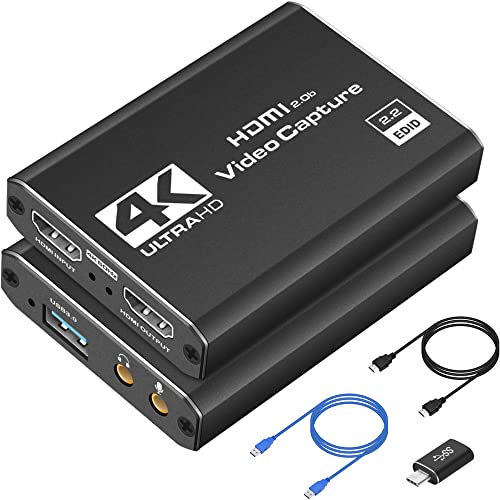
4K HDMI Capture Card USB 3.0 – 1080P 60FPS Gaming & Streaming Video Capture Card with HDMI Loop-Out, Plug & Play, Low-Latency Recording for PS5/PS4/Xbox/Switch/OBS/PC/Mac
- 4K HDMI Capture for Crisp Video: Supports 1080P 60FPS or higher quality
- Plug-and-Play USB Connectivity: No drivers needed, easy setup
- Compatible with Major Consoles: Works with PS5, Xbox, Switch, and more
As an affiliate, we earn on qualifying purchases.
As an affiliate, we earn on qualifying purchases.
Background on Kempf’s Transition from Media to Robotics
Jean-Baptiste Kempf is best known for VLC Media Player, a widely used open-source video player with over 6 billion downloads. His expertise in streaming technology laid the foundation for Kyber, which applies similar principles to control systems for physical devices. The rise of physical AI and autonomous systems has increased demand for low-latency, reliable remote control solutions, prompting Kempf to pivot from consumer software to industrial infrastructure.
Kyber’s funding round, led by Lightspeed, underscores investor confidence in the market potential of real-time control for autonomous and remote systems. The startup’s early deployments across defense, telecom, and robotics demonstrate its readiness to serve diverse sectors with scalable, high-performance solutions.
“Kyber’s approach leverages streaming technology to minimize latency, enabling real-time control of devices at a scale previously thought impossible.”
— an anonymous researcher

Focket 164ft Drone Airdrop System, 2.4G Drone Clip Remote Control Object Launcher, Holds up to 1.65lb Universal Drone Thrower Remote Control Dispenser Delivery Kit Drone Drop Release
- Lightweight Design: Weighs about 32g/1.1oz
- Versatile Applications: For advertising, bait, gifts, meals, rings
- USB Charging & Remote Control: Quick release with 2.4G remote
As an affiliate, we earn on qualifying purchases.
As an affiliate, we earn on qualifying purchases.
Remaining Questions About Kyber’s Deployment and Adoption
It is not yet clear how quickly Kyber will achieve widespread adoption across industries or how its technology will perform at massive scale in real-world environments. Details about specific use cases, deployment timelines, and competitive landscape remain to be seen as the company continues to expand its client base.

FANUC A05B-2301-C301 Robot Teach Pendant D634602
- Model Number: FANUC A05B-2301-C301
As an affiliate, we earn on qualifying purchases.
As an affiliate, we earn on qualifying purchases.
Next Steps for Kyber and Its Market Expansion
Kyber plans to accelerate deployment with existing clients and expand into new sectors such as industrial automation and autonomous vehicles. The company will likely demonstrate its platform’s capabilities at upcoming industry events and seek additional funding to support scaling efforts. Monitoring its adoption rate and technological performance over the next 12-18 months will be key to understanding its impact.

ZAC MPC 300W Pulsed Laser Cleaning Machine for Mold Metal Surface Rust Cleaning 220V Laser Cleaning Tools with IoT Control & Optional X/Z-Axis Platform Class 2, Output 0.874mW
- Model: MPC-300W laser cleaning machine
- Laser Power: 300W pulsed laser
- Cooling Method: Air-cooled system
As an affiliate, we earn on qualifying purchases.
As an affiliate, we earn on qualifying purchases.
Key Questions
What industries will benefit most from Kyber’s technology?
Industries involving remote control of autonomous systems, such as defense, logistics, manufacturing, and AI-driven robotics, are expected to benefit most.
How does Kyber compare to existing remote control solutions?
Kyber aims to offer lower latency and higher scalability than traditional remote control systems, enabling management of millions of devices with millisecond responsiveness.
Is Kyber open source or proprietary?
The core platform is open source, while the company offers a commercial product with custom deployment options for enterprise clients.
When will Kyber be available for broader commercial use?
The company is already deploying its platform with select clients; wider availability is expected as it scales up its deployments over the next year.
What challenges might Kyber face in scaling?
Potential challenges include managing system reliability at massive scale, ensuring security, and integrating with diverse hardware and software ecosystems.
Source: TechCrunch