
TL;DR

Get business pricing on tech for your team
- Business-only prices and quantity discounts
- Tax-exempt purchasing
- Multiple users, one account, clear invoices
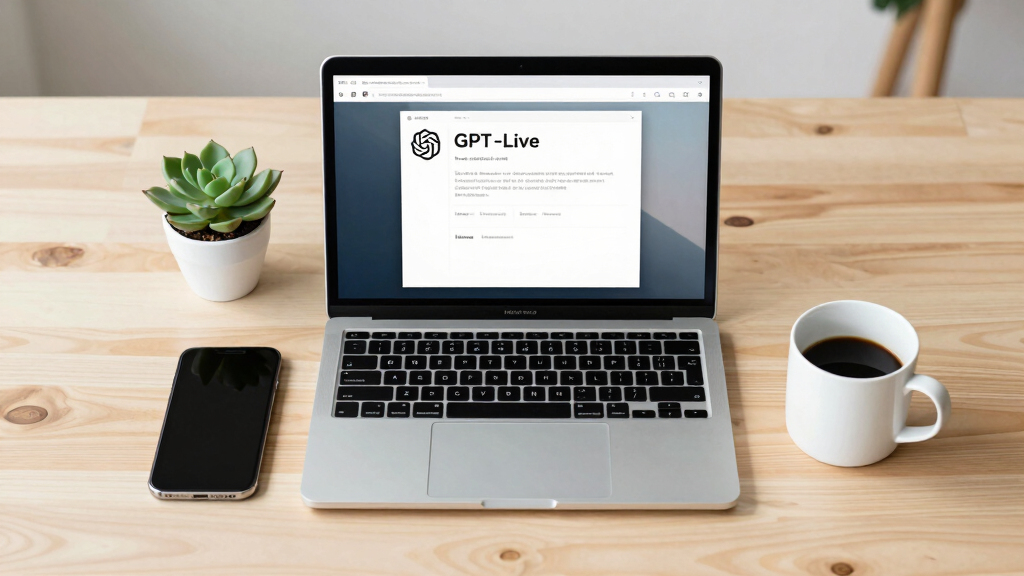
OpenAI has launched GPT‑Live, a new platform enabling users to interact with GPT models in real time. The service aims to improve responsiveness and usability for various applications. Details on features and availability are still emerging.
OpenAI has officially launched GPT‑Live, a new platform that provides real-time interaction with its GPT models through a dedicated chat interface. The service is now accessible to users, aiming to enhance responsiveness and user engagement in AI conversations. This development marks a significant step in making AI more immediate and interactive for a broad audience.
According to OpenAI, GPT‑Live is designed to deliver instantaneous responses to user prompts, reducing latency compared to previous API-based interactions. The platform features a streamlined interface optimized for both desktop and mobile devices, and it supports multiple GPT model versions, including the latest GPT-4. OpenAI stated that GPT‑Live is available to both individual users and enterprise clients, with initial rollout starting today.
While specific technical details remain limited, OpenAI emphasized that GPT‑Live leverages advanced infrastructure to ensure low latency and high reliability. The company also noted plans to incorporate user feedback to refine the service over the coming months. The platform is accessible via a web interface, and OpenAI has hinted at future integrations with existing products and APIs.
Implications for AI User Interaction
The launch of GPT‑Live represents a notable advancement in AI technology, moving from traditional API-based interactions to real-time conversational experiences. For users, this could mean more natural, immediate exchanges with AI models, potentially transforming applications in customer support, education, and entertainment. For developers and businesses, GPT‑Live offers a new way to embed AI into live services, enhancing responsiveness and user engagement.
This development also signals OpenAI’s focus on improving user experience and staying competitive in the rapidly evolving AI landscape, where responsiveness is increasingly a key differentiator.
As an affiliate, we earn on qualifying purchases.
Background on Real-Time AI Platforms
Prior to GPT‑Live, OpenAI and other AI providers primarily offered GPT models through APIs, which often involved some latency and less seamless interaction. While real-time chat features existed in some applications, they relied on third-party integrations or custom implementations. OpenAI has been gradually enhancing its offerings, including the introduction of ChatGPT with live chat capabilities in certain contexts, but GPT‑Live is the company’s first dedicated platform focused solely on instantaneous AI communication.
The move aligns with broader industry trends toward more responsive AI interfaces, with competitors exploring similar features. OpenAI’s announcement follows months of speculation about a dedicated real-time platform, driven by user demand for faster, more natural interactions with AI models.
As an affiliate, we earn on qualifying purchases.
Details on Platform Capabilities and Limitations
OpenAI has not yet disclosed detailed technical specifications or performance benchmarks for GPT‑Live. It is unclear how the platform manages scalability under high demand or how it compares in latency to existing solutions. Additionally, information about specific features, such as customization options or API integrations, remains limited. The full scope of supported languages and potential restrictions for enterprise use is also still to be confirmed.
AI responsiveness enhancement tools
As an affiliate, we earn on qualifying purchases.
As an affiliate, we earn on qualifying purchases.
Upcoming Features and User Feedback Integration
OpenAI plans to gather user feedback over the coming weeks to refine GPT‑Live’s features and stability. Future updates may include expanded model options, improved response quality, and integration with other OpenAI services. The company also indicated that additional features, such as voice interaction and multi-user sessions, are under consideration. Monitoring user adoption and technical performance will be critical in shaping subsequent developments.
interactive AI conversation software
As an affiliate, we earn on qualifying purchases.
As an affiliate, we earn on qualifying purchases.
Key Questions
Is GPT‑Live available to all users now?
Yes, GPT‑Live is now accessible to both individual and enterprise users, according to OpenAI’s announcement.
How does GPT‑Live differ from ChatGPT?
GPT‑Live is a dedicated platform focused on real-time, instant responses, whereas ChatGPT is primarily a conversational interface that may involve some latency. GPT‑Live aims to deliver faster, more seamless interactions.
What models does GPT‑Live support?
OpenAI stated that GPT‑Live supports multiple GPT versions, including GPT-4, but detailed model support and customization options are still being clarified.
Are there plans to add voice or multi-user features?
OpenAI has indicated that future updates may include voice interaction and multi-user sessions, but these features are not yet available.
What are the potential limitations of GPT‑Live?
Details about scalability, latency under heavy load, and specific feature restrictions remain unclear as OpenAI continues to develop the platform.
Source: hn
Fall Picks
fall essentials
As an affiliate, we earn on qualifying purchases.