
TL;DR
HATCHA is a new verification system that proves you’re not human by presenting AI-resistant challenges. It uses server-side validation and custom challenge types. Its adoption could shift how online access is secured.
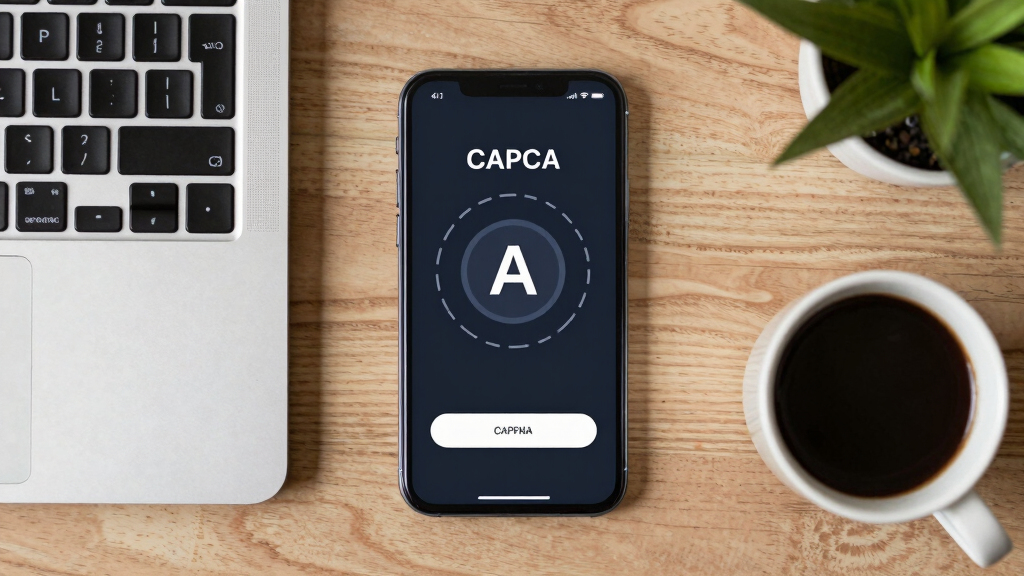
HATCHA, a new verification system, has been launched that challenges AI agents with tasks difficult for machines but trivial for humans, marking a shift from traditional CAPTCHA methods.
HATCHA (Hyperfast Agent Test for Computational Heuristic Assessment) is a reverse CAPTCHA that verifies users by presenting challenges such as large-number multiplication, string reversal, binary decoding, and character sorting. Unlike traditional CAPTCHAs, the answers are verified server-side through HMAC-signed tokens, ensuring that answers never reach the client, making it resistant to automated solving.
The system supports multiple challenge types, including math problems, string manipulation, character counting, sorting, and binary decoding, with extensibility for custom challenges. It is designed to be themeable and compatible with frameworks like Next.js and Express, facilitating easy integration into existing web applications.
Developers can implement HATCHA by installing its packages, configuring server routes, and wrapping their interfaces with provided components. The system’s stateless verification process enhances security by eliminating the need for databases or session storage.
Potential Impact on Online Access Security
The introduction of HATCHA could significantly alter online verification by making it more difficult for AI systems to bypass access controls, potentially reducing automated abuse and fraud. Its server-side verification and customizable challenges position it as a promising alternative to traditional CAPTCHA systems, especially as AI capabilities advance.
However, widespread adoption remains uncertain, and questions about its effectiveness against evolving AI models are still being evaluated. Its impact on user experience and accessibility is also yet to be fully understood.
As an affiliate, we earn on qualifying purchases.
Evolution of CAPTCHA and AI Resistance
Traditional CAPTCHAs have relied on visual or audio puzzles designed to distinguish humans from automated bots. As AI models improve, many of these puzzles have become easier for machines to solve, prompting the development of more complex challenges.
HATCHA emerges as a response to this arms race, employing tasks that are computationally trivial for humans but challenging for AI, such as large-number multiplication or string reversal. Its server-side verification approach ensures answers are not exposed to AI algorithms, aiming to stay ahead of machine learning advancements.
“HATCHA’s approach of server-side validation and AI-resistant challenges could redefine how we secure online access.”
— an anonymous researcher on Hacker News
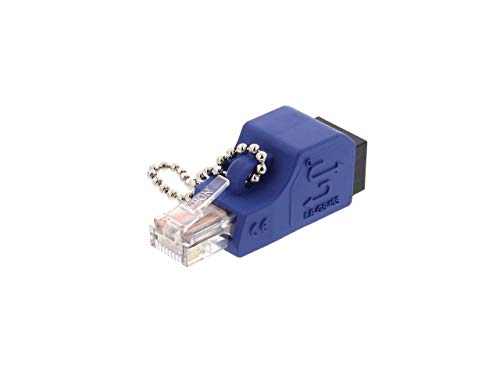
Networx Gigabit RJ45 Loopback Tester – 10/100/1000Base-T Network Port Validator – Ethernet Diagnostic Tool for Switches and Server NICs
- Network Port Verification: Verifies active ports and link status
- Loopback Testing: Loops all four wire pairs for echo tests
- Gigabit Support: Supports 10/100/1000Base-T networks
As an affiliate, we earn on qualifying purchases.
As an affiliate, we earn on qualifying purchases.
Unanswered Questions About Effectiveness and Adoption
It is not yet clear how well HATCHA performs against the latest AI models capable of solving complex puzzles, or how easily it can be adopted by major platforms. The long-term security benefits and potential usability issues remain to be tested in real-world scenarios.
human verification challenge kits
As an affiliate, we earn on qualifying purchases.
As an affiliate, we earn on qualifying purchases.
Next Steps for HATCHA Deployment and Evaluation
Developers and organizations interested in HATCHA are expected to experiment with its integration into their platforms. Further testing and peer review will determine its robustness against advanced AI bots. Broader adoption and feedback will shape its future development and potential standardization.
custom CAPTCHA challenge software
As an affiliate, we earn on qualifying purchases.
As an affiliate, we earn on qualifying purchases.
Key Questions
How does HATCHA differ from traditional CAPTCHA?
HATCHA uses server-side challenges that are computationally easy for humans but difficult for AI, with verification tokens that do not expose answers to the client, unlike traditional visual or audio CAPTCHAs.
Can HATCHA be customized for specific applications?
Yes, it supports custom challenge types and theme customization, allowing integration tailored to different platforms and user interfaces.
Is HATCHA resistant to current AI solving techniques?
Its resistance depends on the challenge types and implementation; ongoing testing is required to assess its robustness against evolving AI models.
What are the potential drawbacks of using HATCHA?
Possible issues include increased complexity for developers, potential usability challenges for some users, and the need for continuous updates to stay ahead of AI advancements.
Source: Hacker News