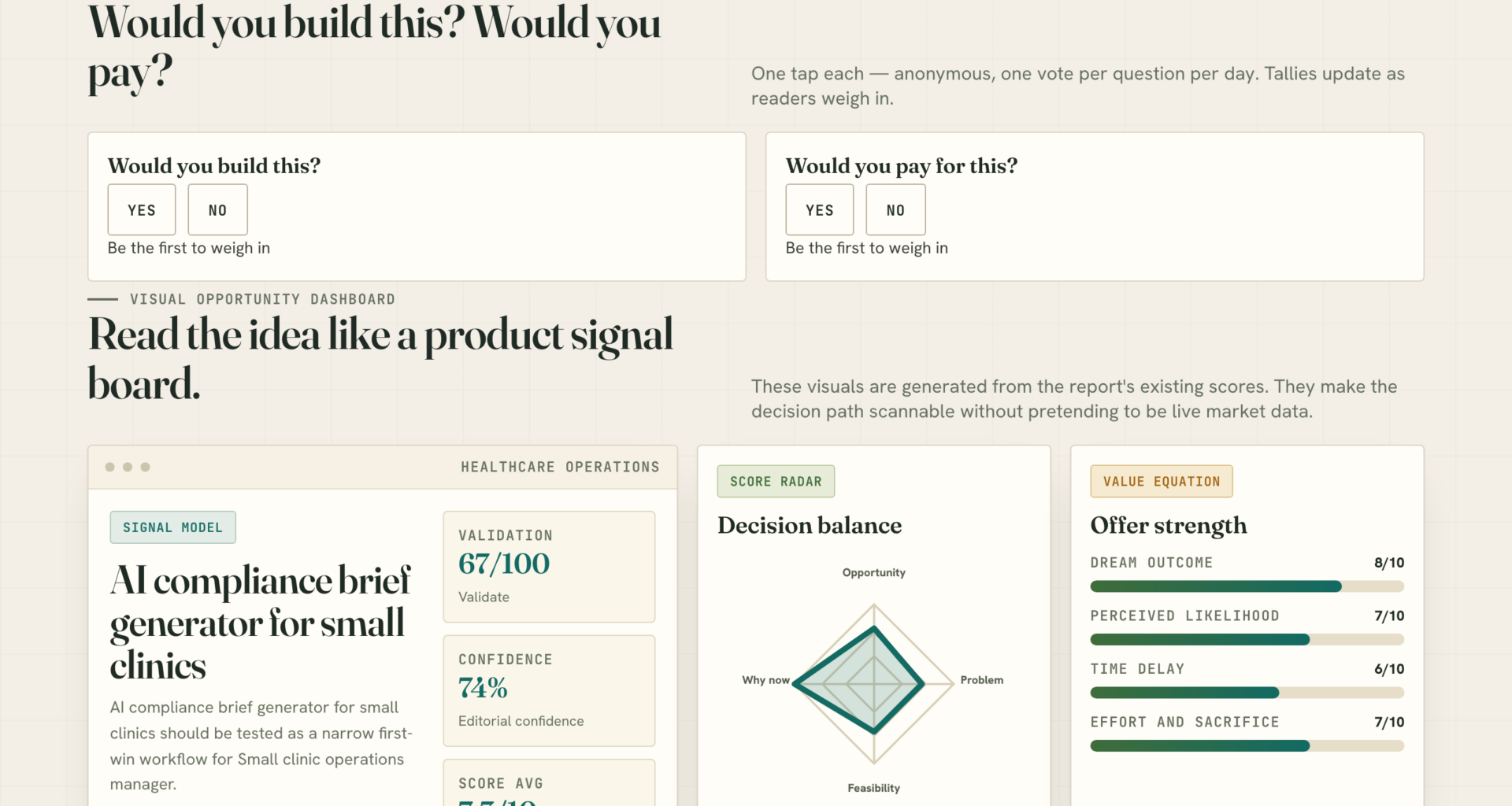

📊 Full opportunity report: AI compliance brief generator for small clinics on IdeaNavigator AI — validation score, market gap, and execution plan.

Get business pricing on tech for your team
- Business-only prices and quantity discounts
- Tax-exempt purchasing
- Multiple users, one account, clear invoices
TL;DR
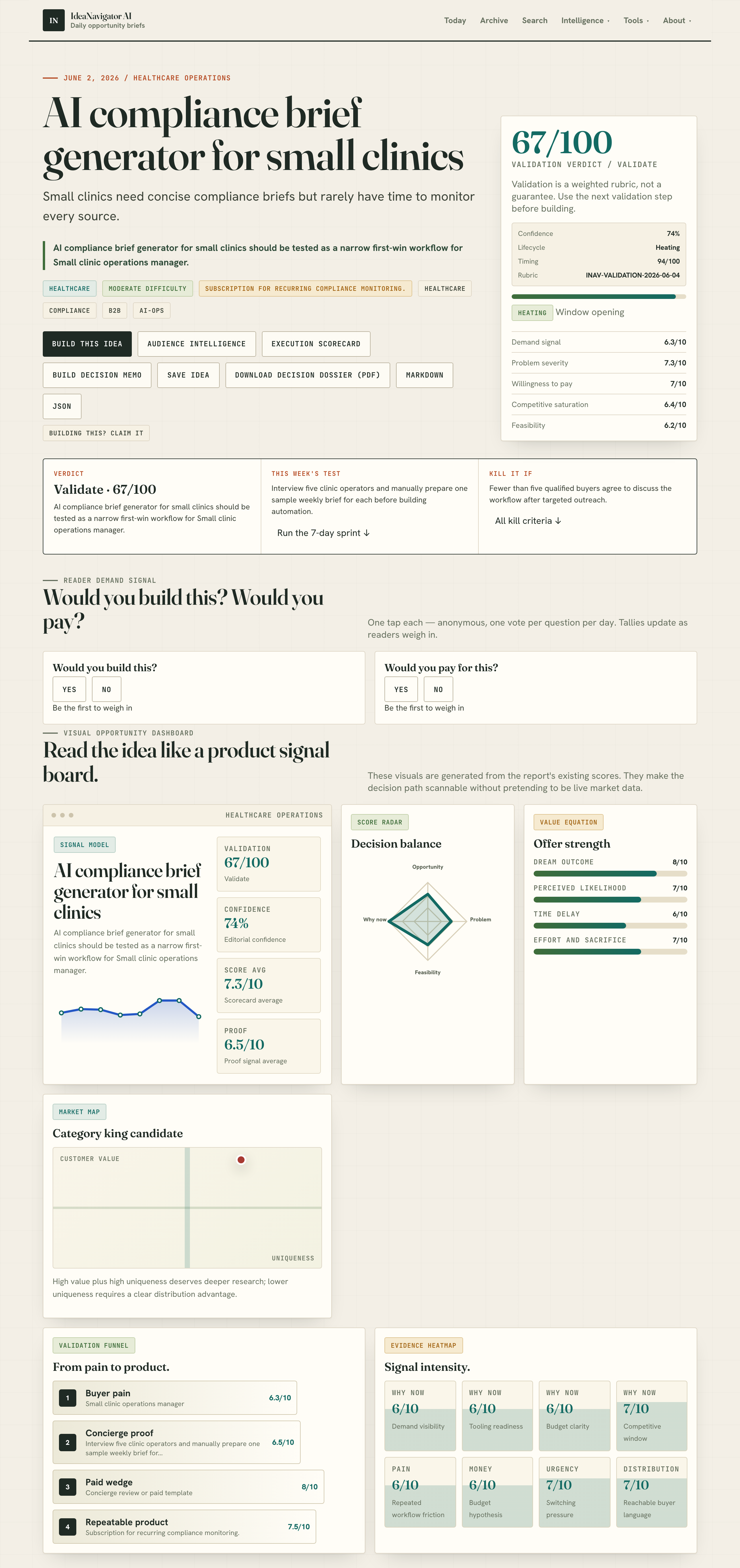
An AI compliance brief generator tailored for small clinics is entering a testing phase. It aims to provide weekly regulatory summaries, helping clinics stay compliant efficiently. The project is in early validation stages with initial interviews and manual brief preparations.
IdeaNavigator AI is developing an AI-powered compliance brief generator specifically for small clinics, currently in a testing phase with initial interviews and manual brief preparations. This tool aims to help clinic operations managers stay updated on regulatory requirements efficiently, addressing a common challenge in healthcare operations.
The proposed AI compliance brief generator is designed to produce weekly summaries of regulatory updates relevant to small clinics. It will include source links, a review option for clinic owners, and a concise action checklist. The project is in the validation stage, with plans to interview five clinic operators and manually prepare sample briefs for each before automating the process.
According to an anonymous researcher affiliated with IdeaNavigator AI, the initiative aims to create a narrow, high-value workflow that addresses the time constraints faced by small clinic managers, who often lack resources to monitor multiple information sources regularly. Revenue is expected to come from a subscription model, offering recurring compliance updates to clinics.
Potential Impact on Small Clinic Operations Efficiency
This development could significantly reduce the time and effort required for small clinics to stay compliant with evolving regulations. By automating the summarization of regulatory updates, clinics can focus more on patient care and operational management. The tool’s success could also demonstrate a scalable model for targeted AI applications in healthcare operations.
Products Worth Considering

Apple iPad 11-inch with A16 Chip, 512GB, Wi-Fi 6, and Apple Pencil (USB-C) — Blue

Bose QuietComfort Headphones (2nd Gen), Wireless Over-Ear Noise-Cancelling Headphones, Eucalyptus Green

Logitech MX Creative Console with 9 Customizable Keys, Graphite
As an affiliate, we earn on qualifying purchases.
Growing Need for Simplified Compliance Monitoring in Healthcare
Small clinics often lack dedicated compliance teams and rely on manual efforts to track regulatory changes, which can be time-consuming and prone to oversight. The increasing frequency of regulatory updates, driven by technological and policy changes, has heightened the need for efficient, automated solutions. Previous efforts to automate compliance have focused on larger organizations; this project aims to fill a gap for smaller healthcare providers.
“The goal is to create a lightweight, automated workflow that provides clinics with concise, actionable regulatory summaries each week.”
— an anonymous researcher
Unconfirmed Details About Deployment and Adoption
It is not yet clear how quickly the tool will be adopted by clinics or how effective the manual validation process will be in ensuring accuracy. The actual user interface, integration with existing systems, and long-term scalability remain to be tested. Additionally, the potential regulatory or privacy challenges associated with automated summarization are still under assessment.
Next Steps in Validation and Pilot Testing
The project team plans to conduct interviews with five clinic operators and manually prepare sample briefs for each. Based on feedback, they will refine the tool before moving toward automation. The next milestone is to launch a pilot phase, where clinics will test the generated briefs and provide feedback on usability and accuracy. Further development will depend on initial results and user acceptance.
Key Questions
How will the AI generate compliance briefs?
The AI will use summarization algorithms to condense regulatory updates from multiple sources into a weekly digest, including links and actionable checklists.
Who is the target user for this tool?
The primary users are small clinic operations managers who need concise, timely regulatory updates without extensive monitoring efforts.
When will the tool be available for wider use?
The project is currently in early testing, with a pilot phase planned after initial validation. A broader rollout is expected after successful refinement, likely within the next year.
What are the potential challenges for this AI tool?
Key challenges include ensuring the accuracy of summaries, integrating with existing clinic systems, and addressing any privacy concerns related to data sources.
How will clinics subscribe or pay for this service?
The business model is based on a subscription service offering recurring compliance updates, tailored to small clinics’ needs.
Source: IdeaNavigator AI