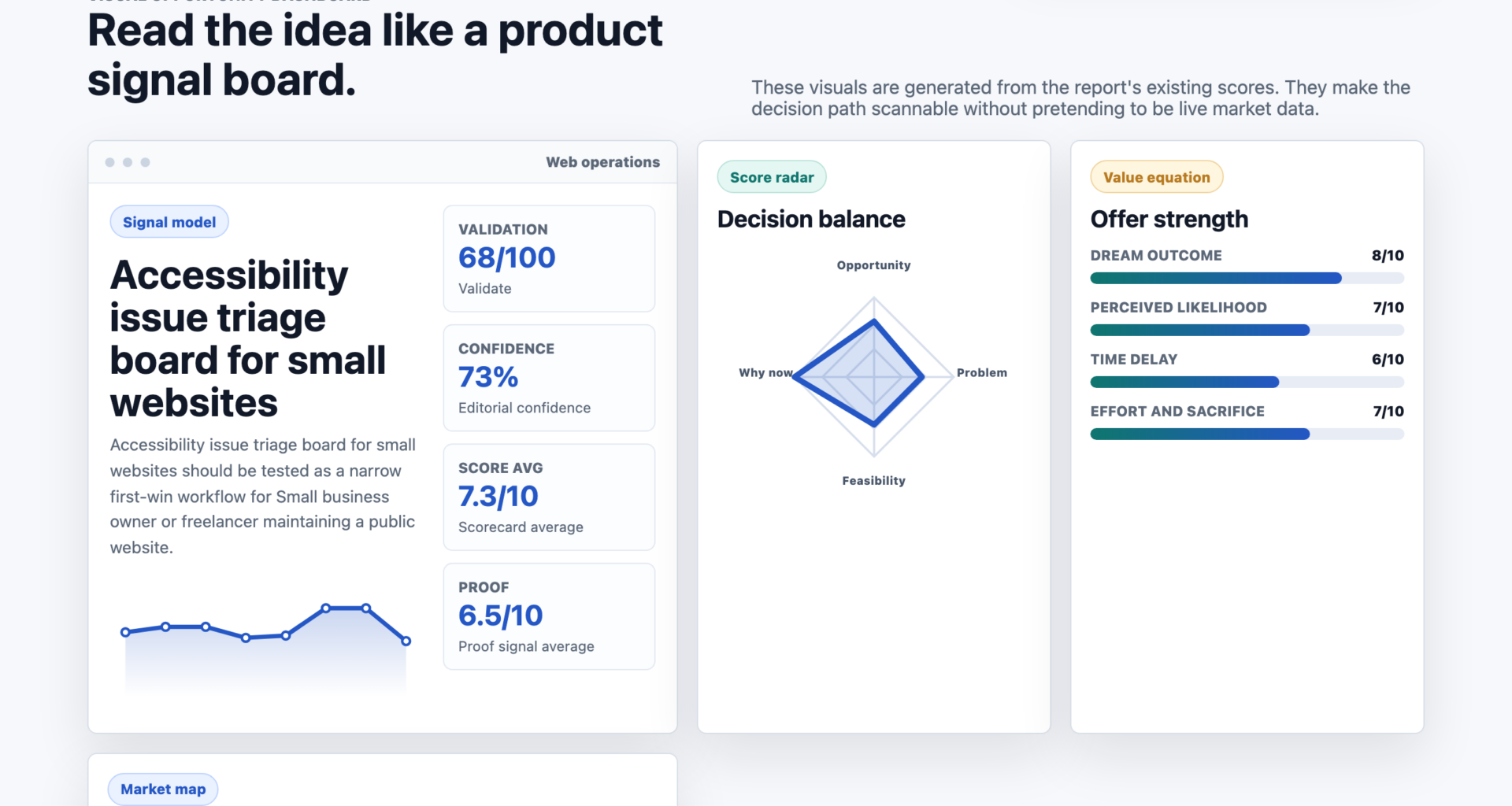

📊 Full opportunity report: Accessibility issue triage board for small websites on IdeaNavigator AI — validation score, market gap, and execution plan.

Get business pricing on tech for your team
- Business-only prices and quantity discounts
- Tax-exempt purchasing
- Multiple users, one account, clear invoices
TL;DR

A prototype triage board for accessibility issues on small websites is under testing, aiming to help small business owners and freelancers prioritize fixes. It groups audit findings by severity and page, turning them into repair tickets. The project is in early validation stages.
A new accessibility issue triage board designed for small websites is in development and being tested as a workflow tool to help small business owners and freelancers prioritize accessibility fixes more efficiently.
The triage board aims to import audit notes, group issues by page and severity, and convert them into repair tickets. This approach addresses a common challenge: vague audit findings that small website owners struggle to interpret and act upon. The project is currently in early testing, with validation efforts focused on reviewing existing small-site audits and gauging owner interest in a prioritized issue list.
According to an anonymous researcher, the initiative is motivated by the increasing awareness among small organizations that accessibility is an operational responsibility, not just a one-time redesign. The goal is to create a simple, actionable workflow that small website owners can adopt without extensive technical expertise.
Why Small Website Owners Need Accessible Issue Management
This development could significantly improve how small business owners and freelancers handle accessibility issues, which are often identified in vague audit reports. By providing a clear, prioritized list of issues, the triage board could reduce the time and effort needed to address accessibility, making compliance more achievable and sustainable. It also opens a potential revenue stream for agencies offering ongoing accessibility management services, with paid audit tools or subscriptions.
Products Worth Considering

Jackery Solar Generator 1000 v2 with 100W Solar Panel

Jackery Explorer 2000 v2 Portable Power Station with Two 200W Solar Panels

DJI Mini 3 Drone with DJI RC and 3‑Axis Mechanical Gimbal
As an affiliate, we earn on qualifying purchases.
Growing Awareness of Accessibility Responsibilities for Small Sites
In recent years, small organizations have become increasingly aware that accessibility is an ongoing operational concern rather than a one-off project. Many rely on external audits that generate vague findings, leaving owners uncertain about what to fix first. Existing tools often lack user-friendly workflows tailored for non-technical users, creating a gap that this triage board aims to fill. The project aligns with broader trends toward democratizing accessibility management and integrating it into routine web operations.
“The goal is to create a straightforward workflow that small site owners can use to prioritize and manage accessibility issues without needing deep technical knowledge.”
— an anonymous researcher
Unconfirmed Aspects of the Triage Board’s Development
It is not yet clear how widely the triage board will be adopted or how effective it will be in real-world scenarios. The validation process is ongoing, and user feedback from small website owners has yet to be fully collected. Additionally, details about the final feature set, pricing model, and integration options remain to be finalized.
Next Steps in Testing and Validation Phases
The project team plans to review three small-site audits manually and gather feedback from owners about the usefulness of a prioritized issue list. Based on this input, further development and refinement of the tool will follow. Broader testing and potential pilot programs could begin within the next few months, aiming for a wider rollout if results are positive.
Key Questions
Who is this triage board intended for?
The tool is designed for small business owners and freelancers who maintain public websites and need a straightforward way to manage accessibility issues.
What problems does the triage board aim to solve?
It addresses the challenge of vague audit findings by grouping issues by page and severity, and converting them into actionable repair tickets, making accessibility management more practical for small sites.
Is this tool available now?
It is currently in testing and validation stages, with no commercial release announced yet.
How might this impact small website owners?
If successful, it could simplify accessibility compliance, reduce the effort required to address issues, and help integrate accessibility into ongoing web operations.
Will this generate revenue for developers or agencies?
Yes, there is potential for monetization through paid audit companion services or subscription models for agencies managing multiple client sites.
Source: IdeaNavigator AI