TL;DR

Get business pricing on tech for your team
- Business-only prices and quantity discounts
- Tax-exempt purchasing
- Multiple users, one account, clear invoices
Christian F.K. Schaller says AI coding tools helped him develop Linux support for a newer Plustek film scanner and improve MIPI camera support on his laptop. He has published a reusable harness that compares hardware traffic from Windows and Linux drivers; the scanner work overlapped with support being added to SANE upstream.
Developer Christian F.K. Schaller says he used AI coding tools and captured hardware data to build Linux support for a newer Plustek film scanner and improve his laptop’s MIPI camera support. He has shared hw-harness, a project intended to help others compare how Windows and Linux drivers communicate with devices, though he says it was made generic after his own experiments.
Schaller’s scanner project began after he bought a Plustek OpticFilm 8200i for digitizing family film negatives. The newer scanner revision used a Genesys GL128 controller, USB ID 07b3:1825, while the older model with the same name used a different controller already supported by SANE, the Linux scanning software. Schaller says he initially made little progress on a SANE driver and set the effort aside for several months.
He later set up a Windows virtual machine with the scanner passed through to it and captured USB traffic from the Linux host using usbmon. He says an AI agent helped him use the Windows driver as a reference and compare those traces with the behavior of his Linux driver. Within hours he had a recognizable scan, he reported, and later produced a driver with color, grayscale and infrared modes, resolutions from 300 to 7,200 dpi, and infrared-based dust and scratch removal.
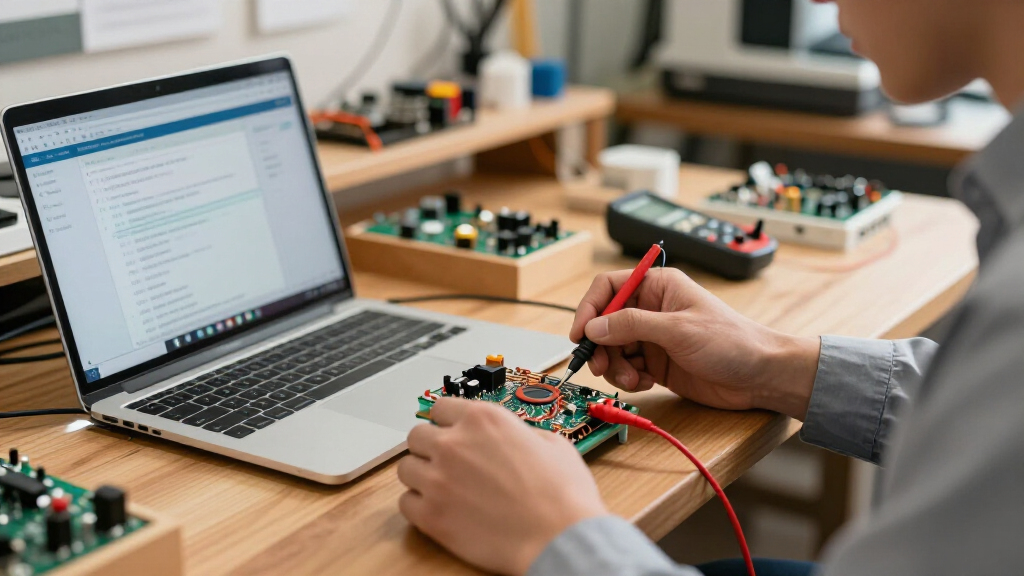
Schaller says he also used the approach to prepare patches for the Linux kernel and libcamera that improved MIPI camera support on his laptop. The harness he published describes capturing a vendor-driver session, repeating the operation under Linux, and comparing the traces. For internal devices without a bus that can be monitored in this way, it instead gathers Windows configuration information such as INF files, registry data, ACPI tables and device properties.
A Faster Route to Linux Device Support
Undocumented hardware can remain unusable on Linux when manufacturers provide drivers only for Windows. Schaller’s account offers a practical example of how AI-assisted analysis may reduce the time spent examining long hardware traces and testing possible explanations for device behavior. The work still depends on access to the device, usable reference data and checks on real hardware.
The potential benefit extends beyond one scanner. A reusable process for capturing and comparing driver behavior could help developers investigate other unsupported peripherals, including cameras. Schaller’s report is an individual project account, however, and does not establish how often the method will work or how much time it saves across different devices.
As an affiliate, we earn on qualifying purchases.
The scanner backend was not the only Linux support effort underway. Schaller says that after he had set aside his project, someone added support for the newer scanner to SANE’s Genesys backend. That support arrived upstream in September 2026, before his report was published on October 15. The overlap means his independently developed backend was not the only route to support.
Schaller compared his backend with the upstream version. In his tests, both resolved the same fine detail at 3,600 dpi. He reported a full-resolution scan time of 34.6 seconds for his backend and 54.4 seconds for upstream, and said his implementation supported infrared dust removal while upstream offered more resolution steps. He cautioned that the comparison came from a single scanner and a single frame, so it is one data point rather than a broad performance test.
He says he wrote the original scripts for his own projects and later asked an AI tool to make them more generic and document them. The published harness is therefore a follow-on project, not the exact setup he used from the start.
“Within a few hours I had my first ever working scan under Linux, sure with some quality issues, but 100% recognizable as the image in the negative.”
— Christian F.K. Schaller
As an affiliate, we earn on qualifying purchases.
Limits of One Developer’s Results
The report does not establish whether other developers have used hw-harness successfully or whether the method will work across hardware types. Schaller’s scanner comparison covers one unit and one frame; performance on other devices, settings or systems is not provided. The report also does not give independent validation of the laptop camera patches or describe whether they have been merged into the Linux kernel or libcamera.
Schaller says the method observes device traffic and extracts configuration data rather than copying Windows driver code. The report does not include an independent legal assessment of that approach. It also remains unclear how much work will be needed to adapt the harness to devices with different interfaces and drivers.
As an affiliate, we earn on qualifying purchases.
Upstream Patches and Wider Use
The next milestones are whether Schaller’s kernel and libcamera patches are submitted to or accepted by their upstream projects, and whether other developers can use the published harness on their own hardware. The scanner already has support in SANE’s upstream Genesys backend, according to Schaller’s report, while his separate backend comparison and Negative Vibes scanning application document his own implementation.
Further reports from developers using the harness would help show whether the approach can be repeated beyond Schaller’s scanner and laptop camera. The October 15 account does not state a schedule for those developments.
AI-assisted driver development tools
As an affiliate, we earn on qualifying purchases.
As an affiliate, we earn on qualifying purchases.
Key Questions
What is hw-harness?
It is a set of scripts and documentation intended to help developers compare hardware traffic or device configuration from Windows and Linux drivers while investigating Linux support.
How did Schaller investigate the scanner?
He ran the vendor’s Windows driver in a virtual machine with the scanner passed through, captured USB traffic from the Linux host using usbmon, and compared it with traffic from his Linux driver.
Does the scanner now have Linux support?
Schaller says SANE’s Genesys backend gained support for the newer scanner in September 2026. His report also describes a separate backend he developed and compared with the upstream version.
How strong is the performance comparison?
Schaller reported a 34.6-second full-resolution scan for his backend and 54.4 seconds for upstream, with matching fine detail at 3,600 dpi. He said the results came from one scanner and one frame, so they are a limited comparison.
What remains to be confirmed about the camera work?
Schaller reported preparing kernel and libcamera patches that improved MIPI camera support on his laptop. His account does not say whether the patches were merged or independently tested on other systems.
Source: hn
Fall Picks
fall essentials
As an affiliate, we earn on qualifying purchases.