
TL;DR

Get business pricing on tech for your team
- Business-only prices and quantity discounts
- Tax-exempt purchasing
- Multiple users, one account, clear invoices
Ricursive Intelligence founders Anna Goldie and Azalia Mirhoseini described their startup’s AI chip-design approach at TechCrunch Disrupt on Oct. 14, 2026. They say the system can learn across design iterations and explore layouts that conventional methods may miss, but the report does not provide independent performance figures, customer details or evidence that the approach has solved compute shortages.
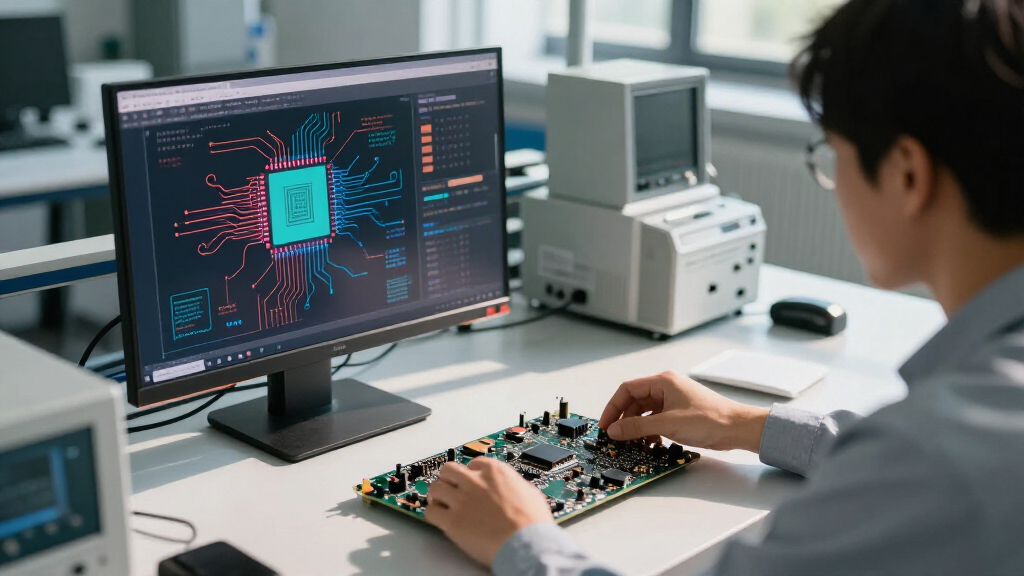
Ricursive Intelligence founders Anna Goldie and Azalia Mirhoseini said at TechCrunch Disrupt on Wednesday, Oct. 14, that their startup is developing AI that designs chips, learns from each iteration and uses those lessons to improve later designs. The effort targets a key constraint on the expansion of AI: the availability and efficiency of computing hardware, though the founders’ account does not establish that Ricursive has yet delivered chips or measurable gains.
The founders described a system intended to automate and accelerate chip design, a process that Goldie said can take months or years. They argue that shortening design cycles could make it more practical to develop chips for a wider range of uses, rather than concentrating resources on a small number of designs. The report did not include a product launch, commercial deployment or a timetable for customer availability.
Goldie said demand for computing capacity could rise at least 10,000 times over the next five years, describing that projection as potentially conservative. That figure is her forecast, not an independently verified measurement. She argued that meeting such demand by building a comparable volume of data centers is not the right approach; chip efficiency and more effective use of data-center bandwidth, wafers and fabrication plants should also contribute.
The founders said AI can search for chip layouts that differ from established engineering approaches. They cited AlphaChip, an AI system they had previously developed, as an example: it produced a circular, “donut-shaped” arrangement of components that initially surprised engineers and later proved successful, according to the founders. They also said Ricursive is working to optimize whole chips rather than divide the work into dozens of smaller blocks, and that this can yield intricate patterns, including wave-like designs. The report offered no benchmark results or technical data to quantify the claimed advantages.
Why Faster Chip Design Matters
If AI can reduce the time and effort needed to design chips, it could change which hardware projects are economically feasible. Goldie argued that a process measured in weeks rather than months or years could support custom chips for applications such as space, augmented and virtual reality, and biological computing. Those are examples of potential uses she described, not confirmed Ricursive products or announced customer projects.
The proposal also speaks to the costs behind the current expansion of computing. More efficient chips could, in principle, deliver more useful computing from limited fabrication capacity, energy and data-center infrastructure. But that outcome depends on whether designs can be manufactured reliably, perform well in real workloads and justify their cost. The report provides no independent measurements of power use, performance, manufacturing yield or savings, so the broader impact remains unproven.
AI taking on some design work may also alter the roles of chip engineers. Goldie said she sees human contribution shifting toward ideas and creative direction, with AI handling more execution. That is her view of the field’s direction, rather than evidence that engineers will be replaced or that AI can manage the full design and validation process without human oversight.
As an affiliate, we earn on qualifying purchases.
From AlphaChip to Ricursive
The founders’ argument draws on their previous work on AlphaChip, which they cited as an example of AI producing a layout that differed from what engineers initially expected. Their account suggests Ricursive intends to build on the idea that machine-learning systems can explore many possible component arrangements and improve through repeated design attempts.
Traditional approaches, as the founders characterized them, often divide a chip into smaller blocks for design and optimization. Ricursive’s stated approach is to optimize the chip as a whole, potentially enabling patterns that are difficult to find when work is partitioned. The startup says it plans to share more about the designs, but the TechCrunch report did not specify the system’s technical architecture, how its results are validated, or whether any Ricursive-designed chip has entered manufacturing.
As an affiliate, we earn on qualifying purchases.
Performance and Deployment Still Unknown
The report does not say whether Ricursive has produced a finished chip, signed customers, begun manufacturing or demonstrated its designs in commercial use. It also gives no benchmarks, energy comparisons, fabrication yields or cost figures that would show how its approach compares with established chip-design methods.
It remains unclear how much of the process the AI handles, what role engineers play in checking and revising outputs, and how the system accounts for manufacturing constraints. The company’s claim that whole-chip optimization can produce unconventional layouts is described by its founders, but the report provides no independently assessed technical results. Goldie’s projection of 10,000-fold compute-demand growth over five years is likewise a forecast, and its assumptions and comparison basis are not detailed in the report.
As an affiliate, we earn on qualifying purchases.
Awaiting Designs and Evidence
The founders said they plan to share more about the intricate chip patterns, including wave-like designs, in the future. The report did not give a release date or identify a specific next product announcement. Readers will need further disclosures to assess the system’s capabilities, including technical comparisons, examples of completed designs and information about manufacturing or customer trials.
The next meaningful test will be whether Ricursive can show that AI-generated designs work beyond the design process: chips must be fabricated, validated and shown to provide practical advantages in performance, efficiency, cost or time. Until those details are available, the company’s approach remains a stated development effort aimed at easing compute constraints, rather than a demonstrated solution to them.
As an affiliate, we earn on qualifying purchases.
Key Questions
What is Ricursive Intelligence developing?
The startup says it is developing AI that designs chips and learns from successive design iterations to improve later versions. The report does not describe a released commercial product.
Has Ricursive shown that its chips are more efficient?
Not in the information reported. The founders argue that AI-designed layouts could improve efficiency, but the report includes no independent benchmarks, power figures or manufacturing results.
What is the 10,000-times figure?
Anna Goldie forecast that demand for computing capacity could increase by at least 10,000 times over the next five years, calling the estimate potentially conservative. It is her stated projection; the report does not provide its assumptions or independent verification.
Why does Ricursive want to optimize whole chips?
The founders said optimizing a chip as a whole, instead of dividing it into many smaller blocks, may allow AI to find unusual layouts and patterns. The report does not include technical results that establish how much this approach improves designs.
Source: rss
Fall Picks
fall essentials
As an affiliate, we earn on qualifying purchases.