📊 Full opportunity report: Benefit Check Bot: A Game Changer For B2B2C Public Benefits Access on IdeaNavigator AI — validation score, market gap, and execution plan.
Open a free Amazon Business account
Business pricing, bulk buying and tax-exempt orders.
Create a free accountAs an affiliate, we earn on qualifying purchases.
TL;DR
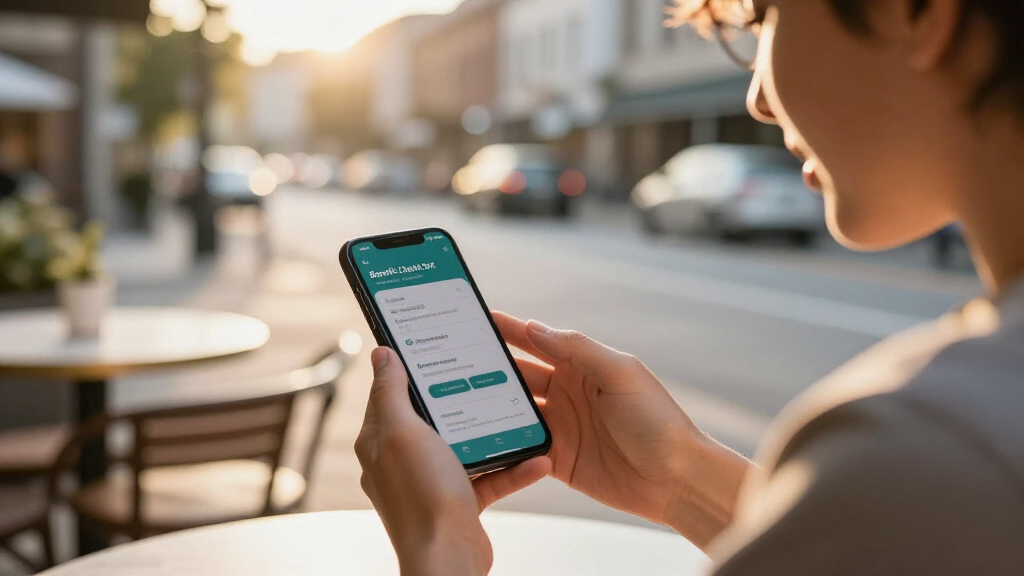
A new AI-powered benefit check bot is being tested to improve eligibility screening for low-income clients. It aims to reduce manual effort, increase accuracy, and boost program enrollment, addressing a $100B benefits gap.
A new conversational benefits screening bot is being piloted to help healthcare systems, clinics, and nonprofits quickly identify which federal, state, and local benefits low-income clients qualify for. This development responds to a longstanding challenge: over $100 billion in benefits go unclaimed annually due to complex eligibility rules and manual screening processes. The tool aims to streamline access, reduce administrative burdens, and increase program enrollment, with early testing underway in select states.
The benefit check bot is a white-label SaaS solution that can be embedded on clinic or nonprofit websites or used via SMS. It asks clients a series of yes/no and multiple-choice questions to determine likely eligibility for programs such as SNAP, Medicaid, EITC/CTC, WIC, and LIHEAP. The system then provides an estimate of benefits, next-step application links, and required documentation checklists. The initial pilot involves 5-10 benefits navigators across two states, aiming to assess whether the tool reduces screening time, improves detection of eligible clients, and maintains accuracy compared to manual processes.
Developed as a response to the recent closure of Benefits Data Trust, a major nonprofit that traditionally handled benefits enrollment, the tool addresses a critical capacity gap. The post-pandemic Medicaid unwinding and redetermination efforts have increased the need for efficient screening solutions. The AI-driven bot leverages conversational technology to deliver multilingual, near-zero marginal cost screening, making it feasible for front-line staff to serve more clients effectively.
Potential Impact on Benefits Accessibility and Efficiency
This innovation could significantly improve the efficiency of benefits screening, enabling frontline staff to identify eligible clients more quickly and accurately. By automating a traditionally manual process, the bot could increase enrollment in key safety-net programs, reducing the $100 billion in benefits that go unclaimed each year. For health systems and community nonprofits, this means better resource allocation, improved client outcomes, and a more scalable model for benefits access. Additionally, the tool’s ability to deliver multilingual support addresses barriers faced by diverse populations, promoting equity in benefits access.
As an affiliate, we earn on qualifying purchases.
Background on Benefits Access Challenges and Technological Opportunities
For decades, low-income families have struggled to access available benefits due to fragmented eligibility rules and lengthy, document-heavy application processes. Over $100 billion in benefits, including SNAP, Medicaid, and tax credits, remain unclaimed annually, partly because front-line staff lack quick, reliable tools to assess client eligibility. The closure of Benefits Data Trust in 2024, a key player in benefits enrollment across seven states, has further highlighted the need for scalable, automated solutions. Meanwhile, advances in conversational AI and the post-pandemic surge in Medicaid redeterminations have created an environment ripe for technological intervention. Pilot programs like this benefit check bot aim to harness these innovations to address longstanding gaps.
benefits eligibility assessment tools
As an affiliate, we earn on qualifying purchases.
As an affiliate, we earn on qualifying purchases.
Uncertainties Around Pilot Results and Scalability
It is not yet clear how accurately the bot will perform in diverse real-world settings, or whether it will significantly increase enrollment rates compared to current manual screening. The pilot phase will provide preliminary data, but broader scalability and integration with existing eligibility systems remain to be tested. Additionally, questions about long-term adoption, user acceptance, and data privacy are still to be addressed as the project progresses.
multilingual benefits application forms
As an affiliate, we earn on qualifying purchases.
As an affiliate, we earn on qualifying purchases.
Next Steps for Pilot Evaluation and Broader Deployment
During the upcoming 4-6 weeks, participating organizations will evaluate the bot’s performance by measuring reductions in screening time, accuracy of eligibility detection, and user satisfaction. If results are promising, plans will include expanding the pilot to additional states and integrating with more benefit programs. Stakeholders will also explore funding models, including outcome-based contracts with Medicaid managed care organizations, to support wider adoption. Further research will be needed to confirm the tool’s long-term effectiveness and impact on benefits uptake.
benefits enrollment assistance tools
As an affiliate, we earn on qualifying purchases.
As an affiliate, we earn on qualifying purchases.
Key Questions
How does the benefit check bot determine eligibility?
The bot asks clients a series of yes/no and multiple-choice questions about their circumstances, then uses programmed rules to estimate likely eligibility for various programs and benefits.
Who can use this benefit screening tool?
It is designed for healthcare providers, community-based nonprofits, benefits navigators, and government agencies involved in client eligibility screening.
Will this tool replace human benefits navigators?
It is intended to augment, not replace, human staff by automating initial screening and freeing up resources for complex cases or application assistance.
What are the main benefits of using the bot?
The tool aims to reduce screening time, improve accuracy, increase benefits enrollment, and support multilingual, accessible screening for diverse populations.
When will the pilot results be available?
Results are expected within the next 4-6 weeks as participating organizations complete evaluations of the initial testing phase.
Source: IdeaNavigator AI
Flea & tick season Picks
flea and tick prevention
As an affiliate, we earn on qualifying purchases.