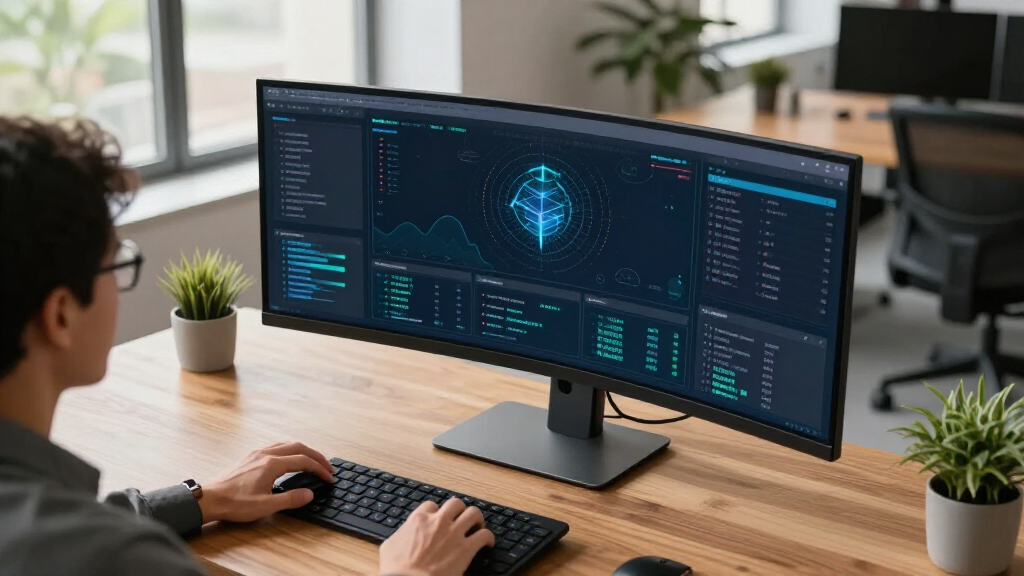

🔍 Read the full analysis: 2026 Ultrawide Monitors That Elevate AI Performance on ThorstenMeyerAI.com

Get business pricing on tech for your team
- Business-only prices and quantity discounts
- Tax-exempt purchasing
- Multiple users, one account, clear invoices
TL;DR
In 2026, ultrawide monitors are emerging as key tools for AI performance, featuring high resolutions and better connectivity. These developments could significantly impact AI research and deployment.
In 2026, leading display manufacturers are unveiling ultrawide monitors specifically designed to elevate AI performance. These monitors feature high resolutions, rapid refresh rates, and enhanced connectivity options tailored for AI workloads, marking a significant shift in how AI researchers and professionals visualize and process data. The development reflects a growing intersection between high-end display technology and artificial intelligence, with potential implications across research, development, and enterprise deployment.
The new generation of ultrawide monitors announced for 2026 includes models from major brands such as Samsung, ASUS, and LG, with features aimed at boosting AI productivity. These monitors are equipped with resolutions reaching WQHD (3440×1440) and higher, providing expansive visual real estate critical for data visualization, model training, and real-time analysis. They also incorporate refresh rates of 120Hz or above, enabling smoother interaction with dynamic AI interfaces and real-time data streams.
Connectivity improvements are a core feature, with many models offering USB-C, HDMI 2.1, and DisplayPort 2.0. These allow seamless integration with high-performance GPUs and AI hardware, reducing latency and supporting larger data transfers. Ergonomic and durability features such as adjustable stands and VESA compatibility are also common, ensuring prolonged use in professional environments. Some models include specialized color calibration for accurate visualization of AI-generated graphics and models.
Industry insiders suggest that these monitors are optimized not only for traditional AI tasks but also for emerging areas such as AI-assisted design, machine learning model debugging, and large-scale data analysis. The integration of high-resolution, fast refresh rate, and versatile connectivity aims to meet the demanding needs of AI practitioners, researchers, and enterprise users.
The 10 picks
- 1
 Samsung 49" Business Curved Ultrawide Dual QHD Computer Monitor, USB-C, Displ…View on Amazon →
- 2
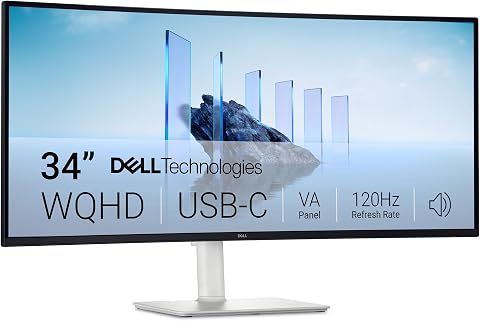 Dell 34 Monitor S3425DW, WQHD VA, 120Hz, FreeSync Premium, Eye ComfortView on Amazon →
- 3
 LG 34WR55QK-B 34-inch UltraWide WQHD Curved Computer MonitorView on Amazon →
- 4
 Samsung 34′ Odyssey G5 Ultra-Wide Gaming Monitor with 1000R Curved ScreenView on Amazon →
- 5
 SAMSUNG 34" ViewFinity S50GC Series Ultra-WQHD Monitor, 100Hz, HDR10, AMD Fre…View on Amazon →
- 6
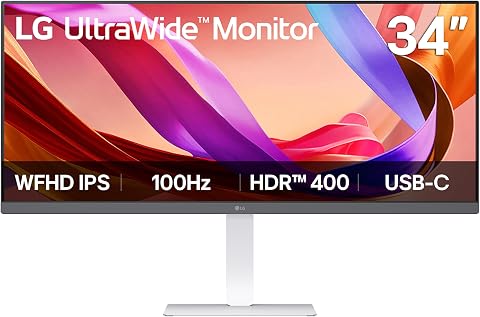 LG 34U530A-W 34-inch UltraWide WFHD IPS Computer MonitorView on Amazon →
- 7
 SANSUI 34-Inch Curved Ultrawide Gaming Monitor UWQHD 3440 x 1440P 200HzView on Amazon →
- 8
 LG 34U60ZB-B 34-inch UltraWide WQHD Curved MonitorView on Amazon →
- 9
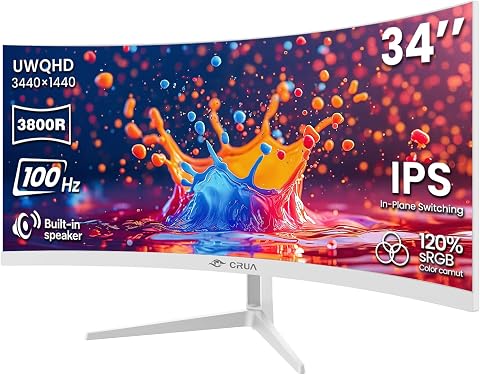 CRUA 34 Inch 21:9 UWQHD Ultrawide Curved Monitor with Speakers, WhiteView on Amazon →
- 10
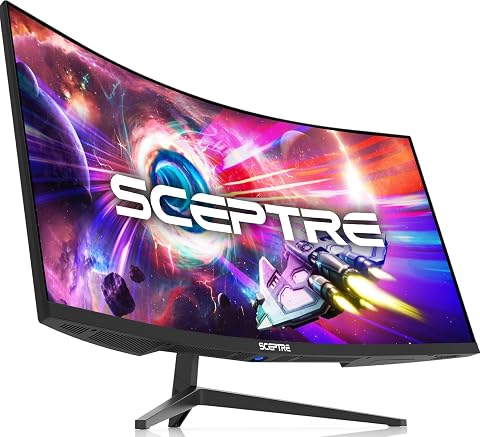 Sceptre 34-Inch Curved Ultrawide WQHD Monitor (3440 × 1440), R1500, up to 180…View on Amazon →
Why 2026 Ultrawide Monitors Matter for AI Progress
The introduction of these ultrawide monitors in 2026 could significantly impact the efficiency and accuracy of AI workflows. Higher resolutions enable detailed visualization of complex models and datasets, while faster refresh rates improve real-time interaction with AI systems. Enhanced connectivity reduces bottlenecks in data transfer, supporting larger, more complex AI models and datasets.
For AI research and development, these monitors could facilitate better understanding of model behavior, faster debugging, and more intuitive data analysis. In enterprise settings, improved visualization tools may accelerate deployment cycles and improve decision-making. Overall, these advancements underscore a strategic shift toward integrating high-performance display technology directly into AI workflows, potentially fostering faster innovation and more sophisticated AI applications.
Products Worth Considering

LG UltraGear 27-Inch QHD OLED Gaming Monitor, 240Hz, 0.03ms, G-SYNC Compatible, FreeSync Premium Pro, HDMI 2.1

Samsung 27-Inch Odyssey QD-OLED G8 4K 240Hz Gaming Monitor

Bose QuietComfort Wireless Bluetooth Headphones with Active Noise Cancellation, Mic, USB‑C Charging, Deep Bass, 24‑Hour Battery – White Smok
As an affiliate, we earn on qualifying purchases.
Evolution of Ultrawide Monitors and AI Integration
Ultrawide monitors have gained popularity over the past decade for their ability to enhance multitasking and immersive experiences in gaming and professional work. In 2023, models from Samsung and LG set new standards with resolutions up to 3440×1440 and refresh rates exceeding 100Hz, primarily targeting gamers and creative professionals.
Meanwhile, AI workloads have grown exponentially, demanding better visualization tools for data analysis, model training, and debugging. Until now, most AI professionals relied on multiple monitors or high-end workstations with specialized displays. The convergence of ultrawide display technology with AI needs became evident as hardware manufacturers began developing monitors with features specifically tailored for AI tasks, such as ultra-high resolutions, rapid refresh rates, and advanced connectivity options.
In 2026, this convergence is reaching a new peak, with manufacturers announcing monitors explicitly designed to meet the needs of AI workflows. These monitors aim to combine the visual breadth of ultrawide screens with the performance requirements of modern AI applications, signaling a new era of AI-optimized display technology.
Unconfirmed Aspects of 2026 AI-Optimized Monitors
While several models have been announced, detailed specifications, especially regarding their AI-specific performance enhancements, remain under wraps. It is unclear how these monitors will perform in real-world AI workloads or how much they will cost. Additionally, the extent to which these displays will be adopted in enterprise AI environments versus niche research settings is still uncertain, as is how they will integrate with existing AI hardware and software ecosystems.
Next Steps in AI-Focused Display Development
Manufacturers are expected to release detailed specifications and availability information throughout 2026. Industry experts anticipate that early adopters will include AI research labs, data centers, and tech companies seeking to optimize AI workflows. Further testing and benchmarking will be necessary to evaluate how these monitors perform under heavy AI workloads, and user feedback will shape future iterations. The broader AI community will be watching closely to see if these displays deliver on their promise to enhance AI productivity and visualization.
Key Questions
How do ultrawide monitors improve AI workflows?
Ultrawide monitors provide a larger visual workspace, enabling better data visualization, simultaneous monitoring of multiple AI models, and more efficient debugging and analysis processes.
Will these monitors support high-end AI hardware?
Most models are designed with multiple connectivity options like USB-C, HDMI 2.1, and DisplayPort 2.0, supporting integration with high-performance GPUs and AI accelerators.
Are these monitors suitable for professional AI research or only enterprise use?
While initially targeted at enterprise and research institutions, many models are expected to be accessible for high-end professional use, with varying price points and features.
What specific features make these monitors AI-optimized?
Features include ultra-high resolutions, rapid refresh rates, low latency, advanced color accuracy, and enhanced connectivity tailored to support AI hardware and software needs.
When will these monitors be available to consumers?
Manufacturers are expected to launch initial models throughout 2026, with wider availability possibly extending into late 2026 or early 2027.
Source: ThorstenMeyerAI.com