
TL;DR

Get business pricing on tech for your team
- Business-only prices and quantity discounts
- Tax-exempt purchasing
- Multiple users, one account, clear invoices
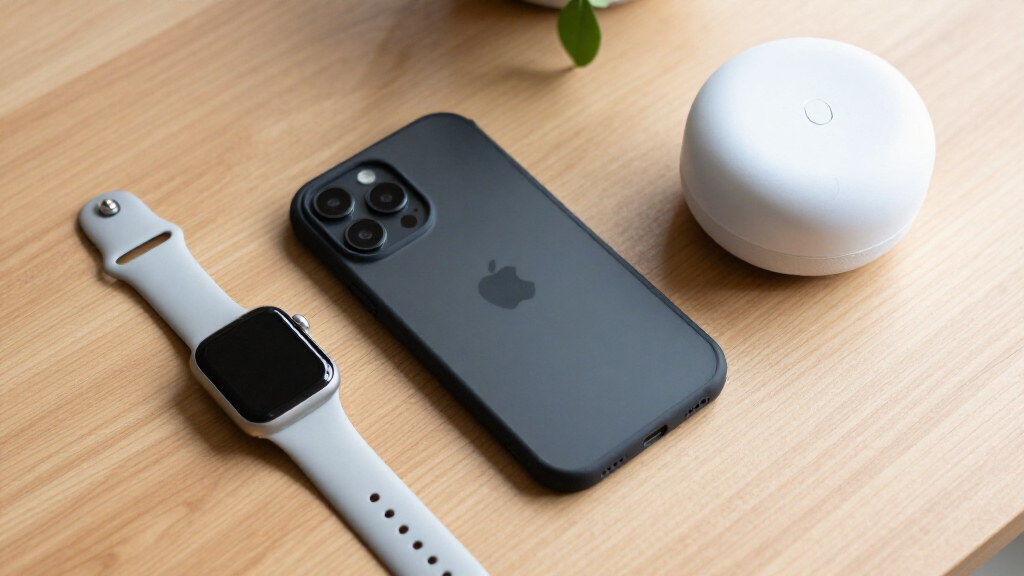
Cactus has introduced Needle2, a 14MB agentic language model optimized for deployment on mobile devices, wearables, and smart home gadgets. This development aims to bring advanced AI capabilities to resource-constrained hardware, expanding the reach of intelligent automation.
Cactus has unveiled Needle2, a 14MB agentic large language model designed specifically for deployment on mobile devices, wearables, smart home gadgets, and small robots. This lightweight model aims to enable advanced AI capabilities directly on edge hardware, reducing reliance on cloud computing and enhancing privacy and responsiveness.
Needle2 is a significantly smaller version of Cactus’s previous models, optimized for low-resource environments. The model supports tool calling, device control, and structured data extraction, enabling devices to perform complex tasks such as voice commands, automation, and contextual understanding without needing large cloud-based models.
According to Henry from Cactus, the model’s size is just 14MB, making it feasible for integration into smartphones, wearables, and embedded systems. The company claims that Needle2 maintains a high level of functionality despite its small footprint, emphasizing its suitability for real-time applications.
The release was announced on Show HN, indicating an initial phase of public testing and feedback. Cactus has not yet disclosed detailed technical specifications or benchmarks but emphasizes that Needle2 is designed to enable more private, efficient, and accessible AI on edge devices.
Impact of Needle2 on Edge AI Deployment
This development could significantly expand the deployment of AI in resource-constrained devices. By enabling advanced language understanding and control on devices with minimal hardware, Needle2 may reduce dependence on cloud services, improve user privacy, and enable faster, more responsive interactions. It also opens possibilities for AI-powered automation in areas like smart homes, wearables, and robotics, where hardware limitations previously restricted AI capabilities.
Experts suggest that such lightweight models could democratize access to AI, making it feasible for a broader range of devices and applications, potentially transforming how consumers and industries adopt AI technology.
As an affiliate, we earn on qualifying purchases.
Background on Compact and Agentic Language Models
Prior to Needle2, most agentic large language models required extensive computational resources, often running on cloud servers. Smaller models existed but lacked the ability to perform complex tasks or maintain a high level of interactivity. Recent advancements in model compression, efficient architectures, and edge AI have led to the development of more compact models. Cactus’s Needle2 builds on this trend, aiming to combine small size with agentic capabilities.
Earlier models like GPT-3 and GPT-4 are much larger, often hundreds of megabytes to gigabytes, limiting deployment on edge devices. Needle2’s release marks a step toward making advanced AI more accessible and practical for local, real-time use in consumer electronics and robotics.
“Needle2’s small size and agentic capabilities enable AI to run directly on phones, wearables, and small robots, opening new possibilities for edge AI.”
— Henry from Cactus
As an affiliate, we earn on qualifying purchases.
Technical Details and Performance Benchmarks Still Unclear
It is not yet clear how Needle2’s performance compares to larger models in terms of accuracy, speed, and robustness. Cactus has not released detailed benchmarks or technical specifications, and independent evaluations are pending. The extent of its capabilities in complex tasks remains to be seen, as does its effectiveness across different hardware platforms.
As an affiliate, we earn on qualifying purchases.
Next Steps Include Broader Testing and Industry Adoption
Following this announcement, Cactus plans to open Needle2 for broader testing and gather user feedback. The company may also release technical documentation and benchmarks in the coming months. Industry observers will be watching for real-world applications, integration into consumer devices, and potential collaborations with hardware manufacturers to accelerate adoption.
As an affiliate, we earn on qualifying purchases.
Key Questions
What makes Needle2 different from other small language models?
Needle2 is designed to be both lightweight (14MB) and agentic, supporting complex tasks like tool calling and device control directly on edge hardware, unlike many small models that lack these capabilities.
Can Needle2 run on smartphones and wearables?
Yes, according to Cactus, its small size makes it suitable for deployment on smartphones, wearables, and small robots, enabling AI functionalities without relying on cloud servers.
What applications could benefit from Needle2?
Potential applications include voice assistants, smart home automation, wearable health monitors, and robotics, where real-time, private AI processing is advantageous.
Is Needle2 available for public use now?
The model has been announced and is in the early testing phase. Broader availability and integration details are expected in the coming months.
How does Needle2 compare to larger models like GPT-4?
While Needle2 is much smaller and optimized for edge deployment, its accuracy and capabilities in complex tasks are still to be evaluated against larger, cloud-based models like GPT-4.
Source: hn
Fall Picks
fall essentials
As an affiliate, we earn on qualifying purchases.




![Claude Code Reads AGENTS.md Only When Telemetry Is On [Fixed]](https://deepintellica.com/wp-content/uploads/2026/09/claude-code-reads-agents-md-only-when-telemetry-is-on-fixed-featured-260x140.jpg)