
TL;DR
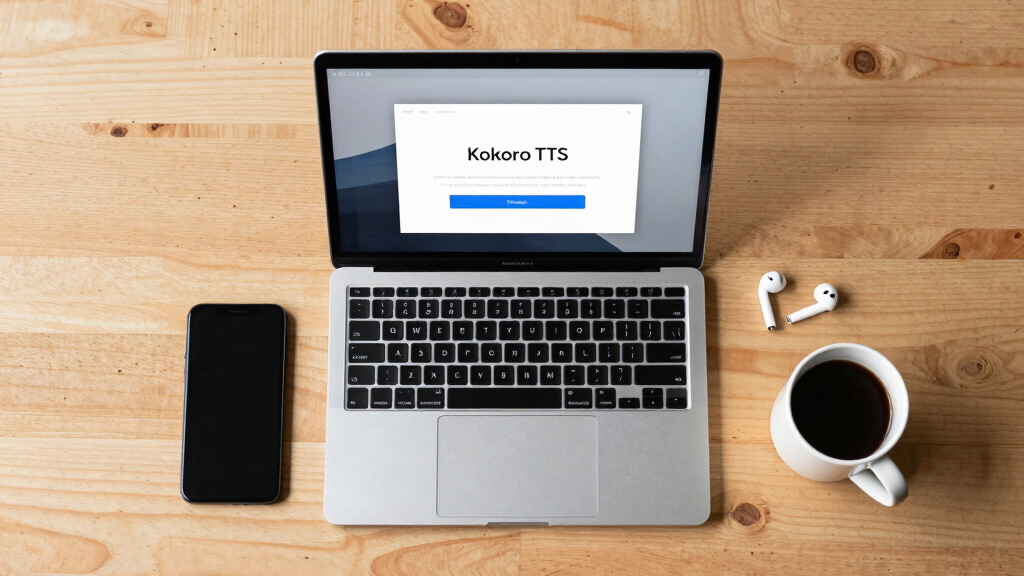
Kokoro has announced a new Text-to-Speech system designed for local use on standard CPUs. It offers high-quality audio synthesis while maintaining low resource demands, making it accessible for a wide range of devices.
Kokoro has unveiled a new local, CPU-friendly, high-quality Text-to-Speech (TTS) system designed to operate efficiently on standard personal computers and devices. This development aims to democratize access to high-quality speech synthesis, reducing reliance on cloud-based solutions and specialized hardware. The system’s release is significant for developers, content creators, and users seeking privacy and resource-efficient alternatives.
The new TTS system, developed by Kokoro, emphasizes resource efficiency by being optimized for standard CPUs rather than requiring GPUs or dedicated accelerators. According to Kokoro’s technical team, the system maintains high audio quality comparable to more resource-intensive models, making it suitable for applications such as accessibility tools, personal assistants, and local content creation.
Early demonstrations and technical documentation indicate that the system can generate natural-sounding speech with minimal latency, even on mid-range hardware. Kokoro states that the system is open for integration into various platforms, with an emphasis on ease of use and compatibility across different operating systems. Specific details about the underlying architecture or training data have not been publicly disclosed.
Implications for Accessibility and Privacy
This development is important because it enables high-quality speech synthesis to be performed entirely on local devices, enhancing user privacy by eliminating the need to send data to cloud servers. It also broadens access, especially in regions or scenarios where internet connectivity is limited or unreliable. For developers, this provides a new option for integrating TTS into applications without significant hardware investments.
local CPU-based Text-to-Speech software
As an affiliate, we earn on qualifying purchases.
As an affiliate, we earn on qualifying purchases.
Growing Demand for Local, Efficient TTS Solutions
Over recent years, there has been increasing interest in local TTS solutions due to concerns over privacy, data security, and latency. Major tech companies have primarily focused on cloud-based services, but recent trends show a shift toward edge computing and resource-efficient models. Kokoro’s announcement aligns with this trend, aiming to fill a gap for high-quality, CPU-optimized TTS systems accessible to a broader user base.
Previous efforts in open-source and commercial sectors have struggled to balance audio quality with computational efficiency. Kokoro claims to have made significant progress in this area, though detailed technical comparisons are yet to be published.
“Our new TTS system is designed to deliver high-quality speech synthesis on standard CPUs, making advanced voice technology accessible to everyone.”
— Kokoro Development Team
high-quality offline TTS engine for PC
As an affiliate, we earn on qualifying purchases.
As an affiliate, we earn on qualifying purchases.
Technical Details and Performance Benchmarks Still Unclear
While Kokoro has announced the system and provided some demonstrations, specific technical details, benchmarks, and comparative analyses are not yet publicly available. It remains unclear how the system performs across different hardware configurations, or how it compares to existing open-source or commercial TTS models in terms of quality and resource consumption.
Furthermore, the timeline for broader availability and integration into commercial products has not been disclosed.
privacy-focused speech synthesis tools
As an affiliate, we earn on qualifying purchases.
As an affiliate, we earn on qualifying purchases.
Expected Release and Developer Access Details Pending
Kokoro has indicated that the system will be available for developer testing and integration in the coming months, with potential updates based on user feedback. Further technical documentation, benchmarks, and user guides are expected to be released soon. Industry observers anticipate that the system will undergo real-world testing in various applications, such as accessibility tools and local voice assistants, to validate its performance and usability.
resource-efficient TTS applications
As an affiliate, we earn on qualifying purchases.
As an affiliate, we earn on qualifying purchases.
Key Questions
Will Kokoro’s TTS system be open-source?
Kokoro has not explicitly stated whether the system will be open-source, but the emphasis on accessibility and integration suggests possible open or semi-open licensing. Further announcements are expected to clarify this.
What hardware is required to run Kokoro’s TTS system?
The system is designed to operate efficiently on standard CPUs, including mid-range personal computers. Specific hardware requirements have not yet been published.
How does this compare to existing cloud-based TTS services?
This system aims to provide comparable audio quality while enabling local processing, thus enhancing privacy and reducing dependency on internet connectivity. Exact performance comparisons are pending.
When will the system be available for public use?
Details about the release schedule are still emerging. Kokoro has indicated a phased rollout for developers and early adopters in the upcoming months.
Source: hn