

📊 Full opportunity report: A Skill Is A Folder, Not A Prompt: What Anthropic Learned Running Hundreds Of Them on ThorstenMeyerAI.com — validation score, market gap, and execution plan.
TL;DR
Anthropic has demonstrated that Skills are not just prompts but comprehensive folders containing instructions, scripts, and assets. This approach enhances consistency, onboarding, and organizational learning in AI deployment.
Anthropic has revealed that its Skills are not simple prompts but folders that contain instructions, scripts, and assets, fundamentally changing how AI agents are built and maintained. This approach, based on extensive internal testing, aims to improve consistency, onboarding, and institutional knowledge management within organizations deploying AI.
In a detailed write-up from a Claude Code engineer, Anthropic explains that a Skill is a container—a folder that can include instructions, reference documents, runnable scripts, templates, data, and configuration. Unlike traditional prompts, these folders enable agents to discover, read, and execute complex workflows, making the process more durable and scalable.
This shift allows organizations to embed tribal knowledge and guardrails directly into the agent’s operational assets, rather than relying on ad-hoc prompting. The company emphasizes that Skills serve three core functions: ensuring output consistency, simplifying onboarding, and enabling continuous improvement through iteration.
Anthropic has identified nine categories of Skills, ranging from library references and product verification to infrastructure operations. The most valuable category, according to the company, is verification—skills that check the work—because they most significantly improve output quality. The approach is designed to turn repetitive tasks into reliable, automated procedures that can be versioned and shared across teams.
A Skill is a folder, not a prompt
Anthropic published what it learned running hundreds of Skills across its own engineering org. Read as a business memo, the point is bigger than a coding trick: this is how ad-hoc prompting becomes durable institutional capability — the SOPs your agents actually follow, versioned and shared.
“A Skill is just a clever markdown prompt you save in a file.”
A folder the agent can discover, read & run — instructions, scripts, references, templates, config & on-demand hooks.
The knowledge of how your organization actually operates can be captured, versioned, shared & executed — and the thing capturing it is a humble folder with a script and a gotchas list inside. For the builder, that’s context engineering with real tools attached. For whoever owns the budget, it’s the difference between AI that starts from zero every morning and an asset that compounds. Caveats: best practices are still evolving, checked-in Skills cost context, and curation beats accumulation. Start with one Skill, one gotcha, and the category that catches your mistakes.
How Skills Transform Organizational AI Deployment
This development matters because it shifts AI development from a manual, prompt-based process to a systematic, asset-based approach. Packaging knowledge into folders reduces variability, enhances reliability, and accelerates onboarding for new team members. It also creates a living library of institutional knowledge that improves over time, making AI tools more aligned with organizational practices and guardrails.
For businesses, this means more predictable AI output, faster integration of new workflows, and a foundation for scaling AI capabilities securely and efficiently. The approach signals a move toward operationalizing AI as a core organizational asset rather than a set of ad-hoc prompts, potentially setting new standards in enterprise AI deployment.

AI Workflow Automation for Bloggers: Build a Simple Content System to Research, Write, Optimize, and Repurpose Posts Faster with AI and No-Code Tools (AI Toolkit for Bloggers 2026 Book 8)
As an affiliate, we earn on qualifying purchases.
As an affiliate, we earn on qualifying purchases.
Internal Testing and the Nine Skill Categories
Anthropic’s internal experiments involved cataloging Skills into nine categories, from reference management and code scaffolding to operational runbooks. These categories serve as a gap analysis tool, helping organizations identify missing capabilities or areas for improvement.
The company highlights that its best Skills started small—just a few lines of instructions—and improved through iterative refinement, especially in verification tasks. This process emphasizes that Skills are not static but evolve with organizational learning, capturing subtle institutional knowledge that prevents errors and enhances consistency.
Prior to this, most teams relied on prompt engineering, which often led to inconsistent outputs and onboarding difficulties. Anthropic’s approach aims to formalize and version control workflows, making AI deployment more reliable and scalable.
“A Skill is a folder, not just a prompt. It’s a container for instructions, scripts, and knowledge that the agent can discover and execute.”
— Thorsten Meyer, AI engineer at Anthropic
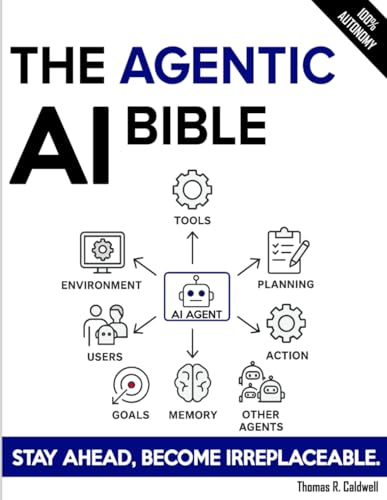
The Agentic AI Bible: The Complete and Up-to-Date Guide to Design, Develop, and Scale Goal-Driven, LLM-Powered Agents that Think, Execute and Evolve
As an affiliate, we earn on qualifying purchases.
As an affiliate, we earn on qualifying purchases.
Unconfirmed Aspects of Skills Implementation
It is not yet clear how widely adopted this approach will be outside Anthropic or how it will scale across different organizational sizes and industries. Details on how Skills are maintained, updated, and governed over time are still emerging. Additionally, the precise impact on AI safety and control measures remains to be evaluated as organizations implement these practices.

AI Real Estate Playbook: How to Reclaim Your Time, Multiply Your Income, and Clone Yourself
As an affiliate, we earn on qualifying purchases.
As an affiliate, we earn on qualifying purchases.
Next Steps for Broader Adoption and Validation
Organizations interested in this approach should begin cataloging their own Skills into similar categories, focusing on verification and institutional knowledge capture. Further research and case studies are expected to validate the long-term benefits and best practices for maintaining Skills libraries. Anthropic plans to share more detailed guidelines and tools to facilitate wider adoption.
![MixPad Free Multitrack Recording Studio and Music Mixing Software [Download]](https://m.media-amazon.com/images/I/71ltIxIuz1L._SL500_.jpg)
MixPad Free Multitrack Recording Studio and Music Mixing Software [Download]
Create a mix using audio, music and voice tracks and recordings.
As an affiliate, we earn on qualifying purchases.
As an affiliate, we earn on qualifying purchases.
Key Questions
How does a Skill differ from a traditional prompt?
A Skill is a folder containing instructions, scripts, and assets, making it a reusable, versioned asset that encapsulates organizational knowledge, unlike a simple prompt which is just a text instruction.
What are the main benefits of using Skills?
Skills improve output consistency, simplify onboarding, and enable continuous improvement through iterative refinement, making AI deployment more reliable and scalable.
Can Skills be updated or refined over time?
Yes, Skills are designed to evolve through iterative improvements, capturing lessons learned and adapting to new edge cases, much like a living document or asset library.
Is this approach applicable to all organizations?
While promising, the approach’s effectiveness depends on organizational complexity and maturity. Larger or more process-driven organizations may benefit most initially, with broader applicability as best practices develop.
What challenges might organizations face adopting this model?
Potential challenges include establishing governance for Skills updates, integrating with existing workflows, and ensuring team buy-in for a shift from prompt engineering to asset management.
Source: ThorstenMeyerAI.com