
TL;DR
Foundation, a new software platform, offers a high-performance, event-driven architecture aimed at teams building scalable, evolving AI and software systems. It emphasizes performance, observability, and tenant isolation.
Ovasabi Foundation has been introduced as a comprehensive platform designed to support high-performance, event-driven software and AI systems. The project aims to provide a structured, scalable foundation for teams focused on evolving codebases and demanding operational performance, with key features including tenant isolation, real-time projections, and automatic observability.
The Foundation platform offers a full-stack toolkit that includes backend modules, client interfaces, and cross-language schemas, all optimized for performance at the nanosecond to microsecond levels. It enforces a seven-plane performance ladder, ensuring that different communication protocols and data formats are measured and optimized for speed, from direct dispatch at nanoseconds to browser-based execution in supported environments.
Key features include a multi-tenant architecture, real-time event processing, bounded worker orchestration with retries, and built-in observability through OpenTelemetry. The platform is built using a combination of Go, TypeScript, Rust/WASM, and other technologies, aiming to support scalable, high-performance applications that require strict performance guarantees. The initial capabilities include resumable file transfers, real-time projections, and a unified observability layer.
Foundation is not designed for zero-DevOps or no-code teams but targets organizations that understand infrastructure management and performance optimization, emphasizing code evolution and managed infrastructure.
Why Foundation’s Approach to Performance Matters
This platform represents a shift towards integrating hardware-level performance considerations into software architecture, especially for AI and real-time systems. By enforcing strict performance planes and providing tools for observability and tenant isolation, Foundation aims to enable developers to build more responsive, scalable, and maintainable applications. This could influence how high-performance AI systems are developed, especially in sectors demanding low latency and high throughput, such as finance, gaming, and real-time analytics.
Furthermore, its emphasis on evolving codebases and managed infrastructure aligns with industry trends towards more resilient and adaptable systems, potentially reducing operational overhead while maintaining performance guarantees. However, the platform’s complexity and focus on performance mean it may not suit all teams or use cases, especially those prioritizing rapid deployment over low-level optimization.
high performance event-driven server platform
As an affiliate, we earn on qualifying purchases.
As an affiliate, we earn on qualifying purchases.
Background and Development of Foundation Platform
The concept of Foundation emerged from the need for a software substrate that bridges the gap between hardware capabilities and software performance, especially for AI workloads. The project is still in early stages, with version 0.0.1 released as a work-in-progress. It builds on existing trends in event-driven architectures, high-performance computing, and observability-focused development.
Prior developments in systems like real-time databases, microservices, and high-performance messaging have laid the groundwork, but Foundation distinguishes itself by integrating these elements into a unified, performance-enforced platform. The project’s documentation emphasizes its focus on performance measurement, developer tooling, and scalable architecture, aiming to serve teams that need to evolve complex systems without sacrificing speed or observability.
While still early, Foundation’s approach aligns with broader industry efforts to optimize software for hardware capabilities, especially as AI models grow in size and complexity, demanding more efficient, scalable infrastructure.
“Foundation bridges the software deficit: the gap between hardware performance and typical software stacks, providing proven patterns for instant responsiveness and scaling safely.”
— Foundation team

Modern Distributed Tracing in .NET: A practical guide to observability and performance analysis for microservices
As an affiliate, we earn on qualifying purchases.
As an affiliate, we earn on qualifying purchases.
Unanswered Questions About Foundation’s Adoption and Maturity
It is not yet clear how widely adopted Foundation will become or how it will perform in large-scale, real-world deployments. The platform is still in early development, with version 0.0.1, and comprehensive benchmarks or case studies are not yet available. Additionally, questions remain about its ease of integration with existing systems and the learning curve for teams unfamiliar with its performance-centric architecture.
Further details are needed on its long-term stability, community support, and how it compares to established platforms in terms of developer productivity and operational complexity.

Building Multi-Tenant SaaS Architectures: Principles, Practices, and Patterns Using AWS
As an affiliate, we earn on qualifying purchases.
As an affiliate, we earn on qualifying purchases.
Next Steps for Foundation Development and Adoption
Foundation’s creators plan to release more comprehensive documentation, tutorials, and case studies to demonstrate its capabilities and ease of integration. They also intend to gather feedback from early adopters to refine features and performance guarantees. Future milestones include broader beta testing, performance benchmarking in diverse environments, and potential collaborations with industry partners interested in high-performance AI systems.
Developers and organizations interested in Foundation should monitor official channels for updates, participate in early testing, and evaluate how its architecture aligns with their system requirements.
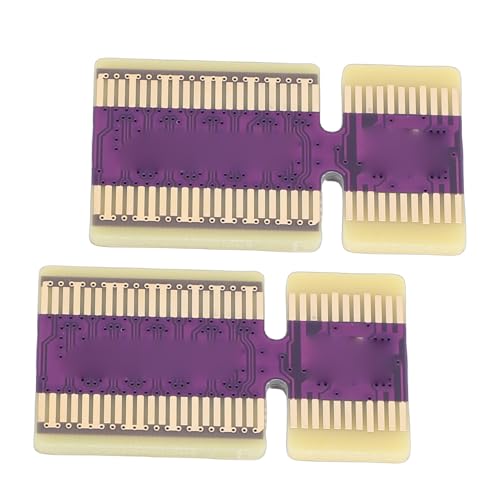
FAUOSWUK PCIe 5.0 and 4.0 X4 Male to Male Adapter Card, Extension Riser Card with 256Gbps Bandwidth, Low Latency, Backward Compatible, for High Performance Computing, Video Editing
[STURDY & RELIABLE PREMIUM CONSTRUCTION] Crafted from PCB material this PCIe to PCIe adapter card boasts a robust…
As an affiliate, we earn on qualifying purchases.
As an affiliate, we earn on qualifying purchases.
Key Questions
What types of systems is Foundation best suited for?
Foundation is designed for high-performance, event-driven systems requiring strict performance guarantees, such as real-time analytics, AI workloads, and scalable microservices architectures.
Is Foundation ready for production use?
As of now, Foundation is in early development (version 0.0.1). It is not yet confirmed whether it is ready for large-scale production deployments, but initial capabilities are promising for experimental and early adopter use cases.
How does Foundation improve performance over traditional stacks?
Foundation enforces a seven-plane performance ladder, ensuring operations at the nanosecond to microsecond levels, with automatic measurement and regression detection, reducing latency and increasing throughput compared to conventional software architectures.
What are the main components of Foundation?
Core components include a Go backend, TypeScript clients, a high-performance Rust/WASM kernel, shared UI primitives, native shell integration, and cross-language schemas, all designed to optimize performance and scalability.
How does Foundation support evolving codebases?
Foundation provides scaffolds, enforcement checks, and documentation aimed at teams that want to maintain and evolve production systems efficiently, emphasizing managed infrastructure and performance tracking.
Source: Hacker News