

Automation offers both opportunities and challenges for developing countries. While it can boost productivity and open new sectors, it also risks widening economic gaps as advanced economies attract more investment and tech benefits. Infrastructure, skills, and digital access are still hurdles for many, risking a slowdown or stall in growth. If you want to understand how these nations can harness AI for inclusive progress and avoid falling behind, there’s more to explore.

Get business pricing on tech for your team
- Business-only prices and quantity discounts
- Tax-exempt purchasing
- Multiple users, one account, clear invoices
Key Takeaways
- Automation may displace low-skilled jobs, potentially widening inequality and hindering developing countries’ economic growth.
- Strategic investment in local AI capabilities can help developing nations leverage automation for industrial upgrading.
- Infrastructure gaps and skill shortages limit automation benefits, slowing technological progress in many developing economies.
- Automation can boost productivity and competitiveness, offering opportunities for growth if accompanied by workforce reskilling.
- Without inclusive policies, automation risks reinforcing global disparities, challenging “the rise of the rest.”
AI training kits for developing countries
As an affiliate, we earn on qualifying purchases.
As an affiliate, we earn on qualifying purchases.
The Global Impact of AI on Developing Economies

Artificial intelligence is transforming developing economies in complex ways. You may see job displacement, especially in sectors like Bangladesh’s garment industry, where up to 60% of jobs could disappear by 2030. While AI has the potential to boost global GDP by $7 trillion, its effects on developing countries are mixed. AI shifts economic focus from traditional manufacturing to services, but even those sectors face automation threats. This shift can accelerate economic inequality within countries and between nations, reinforcing existing disparities. Technological advances in manufacturing and ICT increase efficiency but often reduce employment opportunities. To stay competitive, developing countries need to diversify their economies beyond manufacturing and services. Embracing AI presents opportunities, but also requires strategic planning to manage its disruptive impacts effectively. Incorporating automation and mix of industries can help mitigate some negative effects and foster sustainable growth. Additionally, fostering a culture of innovation and resilience can help these nations adapt more effectively to rapid technological changes. Recognizing the role of technological innovation in economic development is essential for crafting effective policies and fostering long-term resilience. Leveraging advancements in industry-specific automation can support local industries in upgrading their processes and maintaining competitiveness.
affordable data center equipment
As an affiliate, we earn on qualifying purchases.
As an affiliate, we earn on qualifying purchases.
Challenges Faced by Emerging Nations in AI Adoption

Emerging nations face significant hurdles in adopting AI, primarily due to inadequate infrastructure, skilled workforce shortages, and limited financial resources. Reliable energy supply remains a challenge, making it hard to support data centers and AI systems. Digital infrastructure gaps, such as low internet penetration—37% in Sub-Saharan Africa—restrict AI integration and data sharing. Building and maintaining data centers demands substantial investment, which many developing countries cannot afford, raising environmental concerns from increased energy use. Additionally, talent shortages worsen as skilled professionals migrate abroad for better opportunities, leaving local markets with limited expertise. The lack of exhaustive training programs and local AI specialists hampers innovation. Without sufficient funding and supportive policies, these nations struggle to develop the technological ecosystem needed for widespread AI adoption and growth. This digital divide further impedes equitable AI development across emerging economies. Moreover, the rapid advancement of AI technology underscores the urgency for these countries to develop strategic plans to bridge the gap and foster sustainable growth. Furthermore, integrating sector-specific performance metrics can help emerging economies identify high-growth areas and tailor their AI strategies effectively, especially as machine learning algorithms continue to evolve and become more accessible. Developing a comprehensive digital infrastructure is essential for closing the gap and enabling these nations to participate fully in the global AI economy. Additionally, fostering local innovation ecosystems can accelerate the development of homegrown AI solutions and reduce dependency on foreign technology.
digital infrastructure development tools
As an affiliate, we earn on qualifying purchases.
As an affiliate, we earn on qualifying purchases.
Risks of Widening Economic and Social Inequalities

As nations adopt automation, the risk of widening economic and social inequalities becomes a growing concern. Automation can displace jobs in developing countries, especially in sectors where technology replaces human labor, deepening economic divides. Advanced economies attract more investment, widening the gap with developing nations that struggle to keep up. Higher productivity in wealthier countries boosts their advantages, making it harder for others to compete. Within developing countries, automation favors skilled workers, increasing income inequality and social disparities. Access to education, healthcare, and technology remains uneven, further reinforcing existing socioeconomic divides. Internet access is only 27% in low-income countries versus 80% in high-income nations; broadband costs are significantly higher in poorer countries. Without strong policies, developing nations risk falling behind as automation benefits only the already privileged, making it harder to achieve equitable growth and opportunity for all. Additionally, limited digital infrastructure hampers the ability of developing countries to fully benefit from technological advancements, further entrenching disparities. Strengthening infrastructure development is essential for closing these gaps and enabling inclusive progress. As an example, the adoption of advanced heat pump technology illustrates, technological progress can significantly improve energy efficiency but requires robust infrastructure to maximize benefits. Moreover, the lack of adequate safety standards in many developing regions increases the risk of accidents and setbacks in technological adoption, potentially slowing progress. Recognizing the importance of cybersecurity is crucial, as increasing reliance on digital systems exposes vulnerabilities that can further widen gaps if not properly addressed.
As an affiliate, we earn on qualifying purchases.
Transforming Traditional Industries and Workforce Dynamics
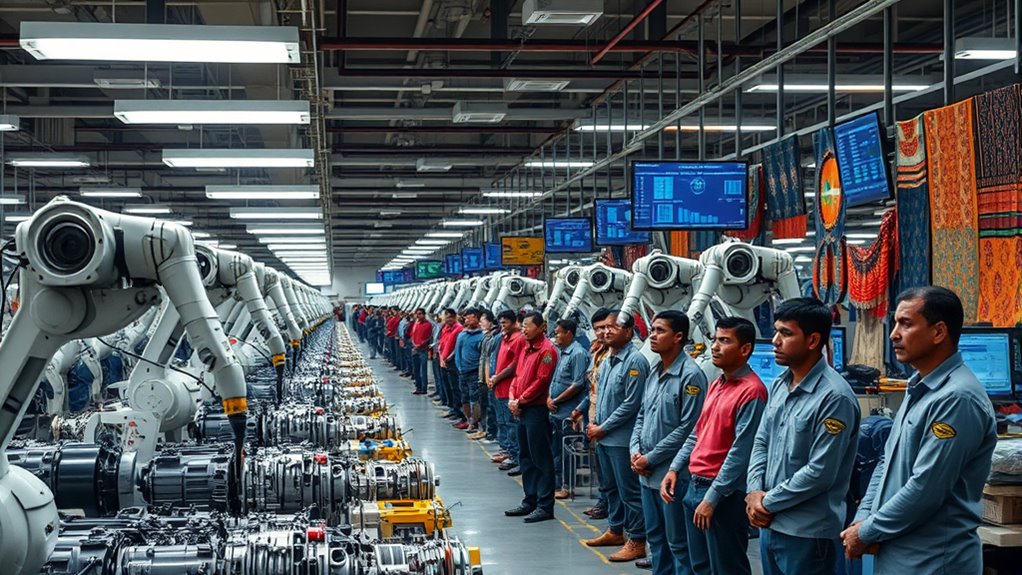
Automation is transforming traditional industries in developing countries by introducing advanced technologies like robotics, AI, and IoT, which streamline production processes and boost efficiency. In Kenya’s manufacturing sector, automation has increased productivity, lowered costs, and improved product quality, making exports more competitive. India’s textile industry reduces waste and labor costs while expanding capacity through automation. South Africa’s mining sector benefits from improved safety and productivity, optimizing operations and reducing expenses. Brazil’s agriculture sector uses automated irrigation to increase yields and conserve water. Globally, automation enhances efficiency and export potential across sectors. As these industries adopt smart factories, cloud computing, and data analytics, the workforce shifts toward high-skill roles. However, many workers face challenges due to skill gaps, requiring new training to adapt to this evolving landscape. Approximately 880 million people live in underdeveloped countries, and automation offers a pathway to address some of their economic challenges by fostering growth and job creation. Additionally, the integration of advanced technologies can help bridge the development gap by enabling developing nations to compete more effectively in global markets.
Policy Strategies for Managing AI Disruption

To effectively manage AI disruption, developing countries must rethink their industrial and innovation policies to prioritize technological advancement and local capacity building. Focus on developing indigenous AI capabilities instead of relying solely on imported technology. Create a resilient innovation ecosystem that supports AI research and development, aligning policies with comparative advantages and labor market impacts. Adopt dynamic, flexible policy frameworks that can evolve with rapid technological changes. Invest in upskilling and reskilling initiatives to prepare the workforce for AI-driven shifts, emphasizing lifelong learning and targeted programs for vulnerable groups. Establish agile regulatory environments that embed ethics, inclusivity, and data privacy considerations. Leverage international partnerships and invest in digital infrastructure to foster equitable AI access, ensuring a balanced and sustainable AI-driven transformation.
Opportunities for Innovation and Sustainable Growth

Developing countries can harness AI-driven innovations to open new pathways for sustainable growth across multiple sectors. Precision agriculture, guided by GPS and sensors, allows you to optimize water, fertilizer, and pesticide use, reducing waste and boosting crop yields for both smallholders and large farms. Churning techniques can be integrated with modern automation to enhance food processing efficiency, ensuring food security and reducing post-harvest losses. Automation increases industrial productivity, lowers costs, and enhances product quality, making exports more competitive. Integrating renewable energy through smart control systems cuts energy use and minimizes environmental impact. AI-driven analytics support sustainable resource management and energy efficiency. Additionally, access to advanced technology accelerates skill development, fostering innovation and higher wages for skilled workers. Automation’s role in improving productivity and resource efficiency further accelerates sustainable development and economic resilience in developing nations. Moreover, the adoption of technological infrastructure is crucial for maximizing the impact of automation and ensuring equitable growth. Building a robust digital infrastructure enables more effective deployment of automation solutions, bridging gaps in access and promoting inclusive progress. Embracing innovative solutions can also help mitigate potential disruptions caused by automation, ensuring a smoother transition for local industries. Developing a creative approach to problem-solving can help communities adapt and thrive amid technological changes, fostering resilience and continuous innovation.
Building Inclusive and Resilient Future Economies

To build inclusive and resilient economies, you need to guarantee equitable access to AI technologies so everyone can benefit. Strengthening your workforce’s resilience through skills development helps adapt to automation’s challenges. By focusing on these areas, you can create a future economy that is both fair and adaptable to change.
Promoting Equitable AI Access
Advances in AI technology are making it increasingly accessible, especially as costs for systems like inference models drop and hardware becomes more affordable. You can now leverage AI solutions tailored to local infrastructure and alternative data sources, helping developing countries accelerate adoption. Despite disparities, optimism about AI is rising in nations like China, Indonesia, and Thailand, while awareness grows globally, with legislative mentions increasing by 21.3% across 75 countries. Improvements in hardware efficiency and open-weight models reduce barriers, enabling more inclusive AI deployment. By adapting AI tools to local conditions and reducing costs, you can promote fair access and foster economic growth. As a result, the price of AI hardware and software is decreasing, making it more feasible for developing countries to implement AI solutions. This approach ensures that AI benefits are more evenly distributed, helping developing nations participate actively in the global AI-driven economy.
Strengthening Workforce Resilience
Building resilient economies in the face of AI-driven change requires countries to actively adapt their labour markets and invest in strategic policies. You must assess vulnerabilities and implement targeted measures to strengthen workforce resilience. Countries like the U.S., Singapore, and Sweden lead with strong policies and strategic AI investments, setting examples for others. Meanwhile, regions such as Sub-Saharan Africa remain vulnerable due to limited AI investment and high informal employment. To enhance resilience, focus on:
- Developing skills relevant to AI and digital transformation
- Strengthening labour protections and social safety nets
- Fostering innovation clusters and supportive business environments
Frequently Asked Questions
How Can Developing Countries Effectively Bridge the Digital Divide Caused by AI?
To bridge the digital divide caused by AI, you should focus on expanding infrastructure like broadband and reliable electricity, especially in rural areas. Make digital devices affordable and accessible, and create community access points. Tailor AI solutions to local needs and languages, provide digital literacy training, and foster multi-stakeholder partnerships. These steps will help guarantee everyone benefits from AI advancements, reducing disparities and promoting inclusive growth.
What Role Does International Cooperation Play in AI Adoption for Emerging Economies?
Oh, surely, international cooperation is just a fancy way for countries to share their secret AI recipes—because nothing says progress like pooled resources and shared standards. You benefit from coordinated investments, joint research, and policy harmonization that lower barriers and boost AI adoption. By working together, emerging economies gain access to cutting-edge infrastructure and expertise, speeding up their digital transformation while ensuring no one’s left behind in the AI race—except maybe the laggards.
How Might AI Influence Traditional Cultural Industries in Developing Nations?
You’ll see AI transforming traditional cultural industries in developing nations by boosting creativity, expanding access, and improving quality. It helps preserve heritage and introduces new ways for people to experience culture. However, you might face challenges like limited infrastructure, ethical concerns, and a lack of skilled talent. Embracing AI necessitates careful policy support and trust-building to guarantee it enriches your cultural sectors without eroding traditional values.
What Strategies Can Mitigate Job Losses in Labor-Intensive Sectors Due to AI?
You can mitigate job losses in labor-intensive sectors by creating thorough social safety nets, offering retraining programs, and promoting lifelong learning. Supporting industries less susceptible to automation and encouraging entrepreneurship helps diversify opportunities. Investing in AI research can spark new roles, while adaptive policies ensure ongoing support and regulation. Engaging stakeholders and tailoring strategies to local labor markets will help you protect workers and foster resilient, inclusive growth amid technological change.
How Can Policy Frameworks Ensure Equitable AI Benefits Across Different Social Groups?
Think of policy frameworks as the compass guiding us through uncharted waters. To guarantee equitable AI benefits, you need to engage diverse voices in policymaking, prioritize transparency, and protect vulnerable groups through ethical standards. Invest in digital skills and infrastructure, encourage inclusive innovation, and foster international cooperation. By doing so, you help steer AI development toward a future where all social groups can thrive, not just the privileged few.
Conclusion
Just as Icarus soared too close to the sun, embracing AI’s promise can lift your economy higher—but only if you heed its risks. By fostering inclusive policies and resilient innovation, you can avoid the pitfalls of widening inequality and stagnation. Remember, the future of developing nations hinges on your ability to harness AI wisely, turning the myth of hubris into a story of sustainable growth and shared prosperity. The choice is yours—rise wisely or fall short.
Halloween Picks
halloween
As an affiliate, we earn on qualifying purchases.