
TL;DR

Get business pricing on tech for your team
- Business-only prices and quantity discounts
- Tax-exempt purchasing
- Multiple users, one account, clear invoices
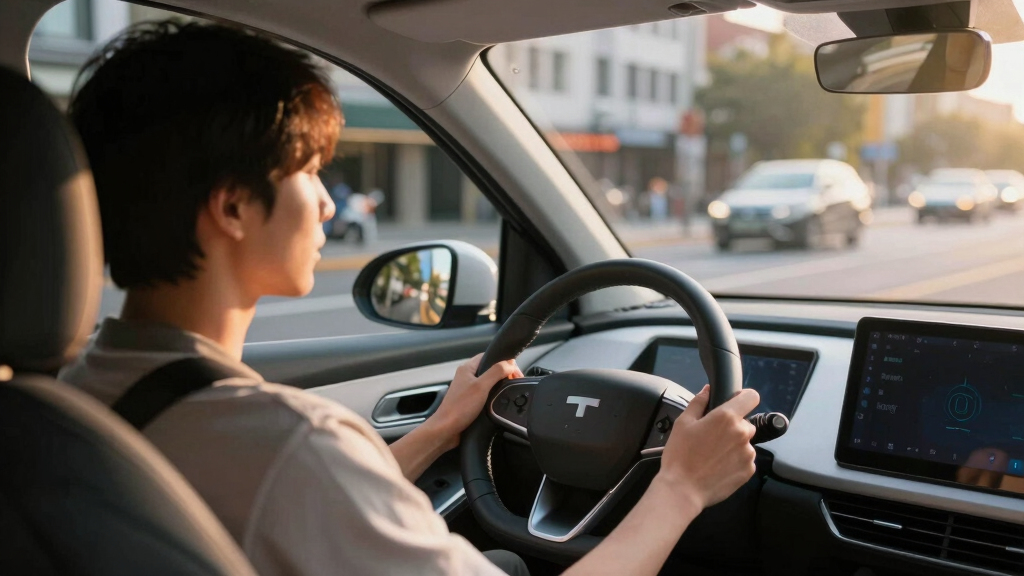
Robotaxis face significant hurdles in competing with traditional vehicles due to high operational costs, limited market size, and convenience issues. Experts suggest they will mainly displace human drivers rather than replace personal cars.
Recent industry analysis suggests that robotaxis will struggle to compete with personal vehicles and existing transportation options beyond the ride-hailing sector, primarily due to cost and convenience limitations.
Experts point out that the current cost of operating a robotaxi remains above the threshold needed for mass adoption, with estimates showing operating costs around $0.80 per mile or higher, which makes profitability difficult without significant technological breakthroughs.
Additionally, the market for robotaxis is expected to remain limited, primarily displacing human drivers rather than replacing personal car ownership. Industry voices argue that in the U.S., large-scale adoption is unlikely before 2035, with projections of fewer than 50,000 new robotaxis on the road annually.
Concerns about convenience also undermine the case for robotaxis. Unlike personal vehicles, robotaxis require users to wait for the vehicle’s arrival, and they cannot serve as storage or multi-purpose vehicles, adding to user inconvenience and operational costs.
Implications for Urban Transportation and Market Disruption
This analysis indicates that robotaxis are unlikely to revolutionize personal mobility in the near term, limiting their impact to niche ride-hailing markets and potentially displacing some human drivers. For consumers and policymakers, this suggests that expectations of a broad shift to autonomous personal vehicles may be premature, and infrastructure investments should consider these market realities.
As an affiliate, we earn on qualifying purchases.
Current State and Limitations of Robotaxi Technology
While companies like Waymo and Tesla are advancing autonomous vehicle technology, industry experts emphasize that operational costs remain high, and achieving the necessary cost reductions for mass market viability is still a challenge. The concept of robotaxis replacing personal cars hinges on significant cost savings, which current estimates suggest are unlikely in the near future.
Additionally, market analysis from sources such as CleanTechnica highlight that the U.S. market is unlikely to see large-scale adoption, with only modest growth expected due to economic, logistical, and infrastructural constraints. The focus remains on ride-hailing and displacement of human drivers rather than widespread personal vehicle replacement.
“Even if we cut taxi cost by 50%, it still wouldn’t be cheaper than owning a car, especially considering the convenience factor.”
— Matthew2312
ride-hailing app smartphone mount
As an affiliate, we earn on qualifying purchases.
As an affiliate, we earn on qualifying purchases.
Unclear Future of Cost Reductions and Market Expansion
It remains uncertain whether technological advances or regulatory changes will significantly lower operational costs of robotaxis to enable mass-market adoption. Additionally, the extent to which consumer preferences and urban infrastructure will adapt to autonomous vehicles is still developing.
As an affiliate, we earn on qualifying purchases.
Next Steps in Robotaxi Development and Market Testing
Industry players are likely to continue incremental deployment focused on niche markets and ride-hailing, while researchers and companies seek technological breakthroughs to reduce costs. Monitoring regulatory developments and urban infrastructure investments will be key to understanding future market potential.
As an affiliate, we earn on qualifying purchases.
Key Questions
Can robotaxis replace personal cars in the near future?
Current analysis suggests that widespread replacement of personal cars by robotaxis is unlikely before 2035, given high operational costs and convenience issues.
What are the main barriers preventing robotaxis from scaling up?
High operating costs, limited market size, logistical inefficiencies, and user convenience concerns are the primary barriers to large-scale deployment.
Will technological breakthroughs change the outlook for robotaxis?
Potential breakthroughs in AI, battery technology, and infrastructure could reduce costs, but their timing and impact remain uncertain.
How will traffic congestion affect robotaxi growth?
Increased traffic congestion, especially in US cities, may limit the efficiency and appeal of robotaxi services, further constraining growth.
Source: CleanTechnica
Fall Picks
fall essentials
As an affiliate, we earn on qualifying purchases.