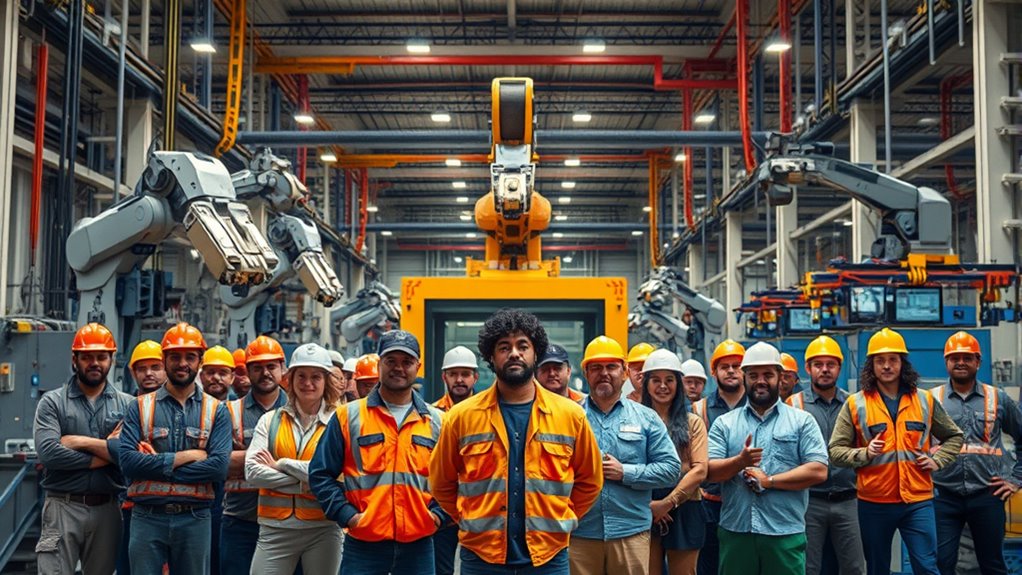

Unions are actively fighting to protect workers’ rights in the AI era by forming strong solidarity, engaging in responsible automation discussions, and lobbying for fair policies. They challenge the idea that automation is inevitable and push for transparency on its social impacts. By proposing retraining and advocating for ethical automation, they aim to guarantee technology benefits society without sacrificing jobs. To discover how these strategies are shaping the future of work, keep exploring these efforts further.

Get business pricing on tech for your team
- Business-only prices and quantity discounts
- Tax-exempt purchasing
- Multiple users, one account, clear invoices
Key Takeaways
- Workers unite beyond unions to advocate for ethical automation and protect jobs from unchecked AI-driven industry changes.
- Unions challenge automation inevitability, demanding transparency and emphasizing societal impacts over short-term profits.
- Legal actions, protests, and policy lobbying are used to hold companies accountable for responsible automation practices.
- Proactive measures include retraining programs and advocating for human-centered automation that complements workers.
- Collective worker solidarity influences industry strategies, promoting automation that benefits society and maintains human dignity.
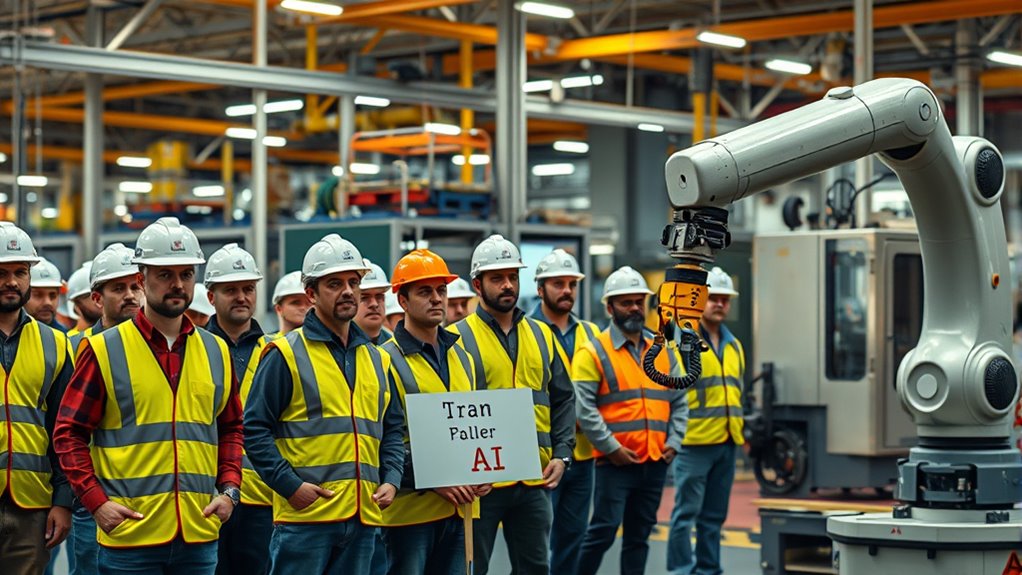
Have you ever wondered how workers and companies navigate the ongoing battle between unions and automation? In today’s rapidly evolving landscape, technology continues to reshape industries, often threatening jobs and worker rights. However, workers aren’t standing idly by. Instead, they’re banding together to foster worker solidarity, standing shoulder to shoulder to push back against automation’s unchecked expansion. This collective strength becomes vital as industries face questions about automation ethics—whether replacing human labor with machines truly benefits society or simply maximizes profits at workers’ expense. Worker solidarity isn’t just about union membership; it’s about creating a united front that can influence company policies and advocate for fair treatment. When workers unite, they send a powerful message: automation shouldn’t come at the cost of their livelihoods, and companies must consider the social impact of their technological advancements.
In this context, unions are playing an increasingly strategic role. They’re not merely negotiating wages or benefits anymore; they’re actively engaging in discussions about automation ethics. Instead of accepting automation as an inevitable force, unions challenge companies to think carefully about how new technologies are implemented. They push for transparency, demanding that companies assess the long-term effects on employment and community stability. This fight isn’t just about resisting layoffs; it’s about ensuring that technological progress doesn’t undermine human dignity or widen inequality. Workers are also leveraging legal and political channels, lobbying for regulations that hold corporations accountable for responsible automation. Through collective bargaining, protests, and legal challenges, they’re asserting their rights and emphasizing that technological advancement should serve society as a whole—not just shareholders.
Moreover, worker solidarity fuels innovation in how labor responds to automation. Instead of opposition alone, some unions are proposing retraining programs, advocating for new roles, or pushing for policies that guarantee job security amidst technological shifts. This proactive approach demonstrates that workers aren’t passive victims of automation, but active participants shaping its trajectory. They’re demanding that automation ethics be integrated into corporate decision-making, ensuring that technological progress aligns with societal values. Through solidarity, workers aim to influence company strategies, encouraging the development of AI and automation that augment human work rather than replace it wholesale. Ultimately, their collective voice acts as a counterbalance to corporate interests, highlighting that the fight against automation isn’t just about saving jobs—it’s about ensuring a fair and ethical future for all workers in the AI era.
employee retraining courses for automation
As an affiliate, we earn on qualifying purchases.
As an affiliate, we earn on qualifying purchases.
Frequently Asked Questions
How Effective Are Union Strategies Against Automation in the Long Term?
Your union strategies can be effective long-term if you emphasize worker solidarity and strong political lobbying. By uniting workers, you create a powerful voice that can push for policies protecting jobs. Consistent political lobbying can influence regulations and corporate practices, making automation less threatening. While challenges remain, these strategies help you adapt and resist automation’s impact, ensuring your collective strength persists over time.
What Industries Are Most Vulnerable to Automation Replacing Union Jobs?
Like Icarus flying too close to the sun, industries such as manufacturing and retail face the risk of automation replacing union jobs. Manufacturing automation streamlines production, reducing the need for manual labor, while retail automation, like self-checkouts, diminishes cashier roles. You should watch these sectors closely, as they’re most vulnerable to technological shifts, threatening traditional jobs and challenging unions to adapt or risk being left behind in the digital age.
How Do Union Negotiations Influence AI Development Policies?
You influence AI development policies through union negotiations by emphasizing collective bargaining and labor solidarity. By uniting members, you can advocate for regulations that protect jobs from automation and guarantee ethical AI use. Your collective voice can shape company policies and influence lawmakers, promoting fair treatment and job security. Strong union presence helps balance technological advancement with workers’ rights, ensuring AI benefits everyone without compromising employment stability.
Can Unions Collaborate Internationally to Combat Automation Threats?
You can definitely collaborate internationally to combat automation threats through global solidarity and cross-border alliances. While automation advances threaten jobs worldwide, unions linking forces across nations amplify their bargaining power. They share strategies, pool resources, and push for policies that protect workers globally. This united front not only strengthens negotiations but also creates a powerful message that automation’s risks are universal, urging policymakers to prioritize human labor over unchecked technological progress.
What Legal Challenges Do Unions Face When Opposing Automation Initiatives?
You face legal barriers when opposing automation initiatives, such as labor laws and contractual restrictions. These challenges can hinder your efforts and require careful navigation. To combat this, you should develop effective litigation strategies, like filing lawsuits or lobbying for policy changes. By understanding legal constraints and leveraging strategic legal actions, you can better defend workers’ rights and push back against automation threats.
ethical automation books for workers
As an affiliate, we earn on qualifying purchases.
As an affiliate, we earn on qualifying purchases.
Conclusion
As you see, while automation keeps pushing forward, unions prove that collective action can stand strong. Remember, “United we stand, divided we fall.” By banding together, workers can shape the future of work, ensuring technology serves us all—not replaces us. Stay vigilant, stay organized, and don’t underestimate the power of solidarity. In this AI era, your collective voice remains your greatest strength against the relentless march of automation.
worker advocacy and union support tools
As an affiliate, we earn on qualifying purchases.
As an affiliate, we earn on qualifying purchases.
AI and automation ethics training
As an affiliate, we earn on qualifying purchases.
As an affiliate, we earn on qualifying purchases.
Evergreen bestsellers Picks
bestsellers
As an affiliate, we earn on qualifying purchases.