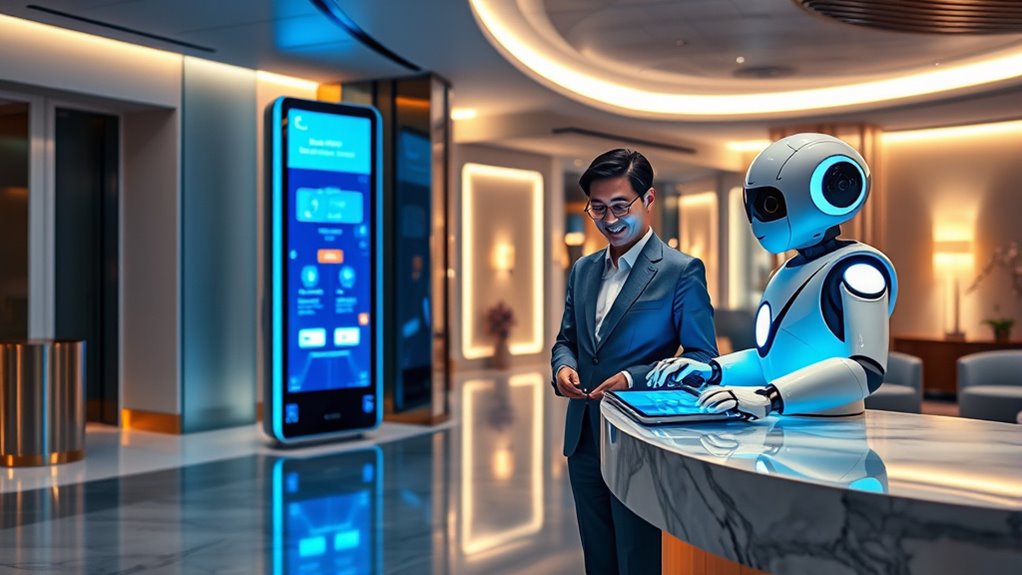

AI in travel and hospitality streamlines your experience from check-in to checkout, saving time and reducing stress. It uses facial recognition, mobile apps, and biometric scans to make arrivals smoother and minimize queues. During your stay, AI personalizes services, controls room settings, and offers real-time assistance. At checkout, automated billing and feedback improve efficiency. To discover how this smart technology transforms every step of your journey, continue exploring what AI can do for you.
Key Takeaways
- AI streamlines check-in and security with facial recognition and biometric scans, reducing wait times and enhancing security.
- Virtual guides and real-time assistance provide travelers with instant information, improving sightseeing and stay experiences.
- Smart room technology adapts settings to guest preferences, offering personalized comfort during hotel stays.
- AI automates billing, payments, and feedback processing during checkout, ensuring a seamless departure process.
- Overall, AI enhances travel efficiency, personalization, and convenience from check-in to checkout.
Artificial intelligence is transforming the travel and hospitality industries, making experiences more personalized, efficient, and seamless. When you plan your trips, AI tools can craft personalized itineraries that cater precisely to your interests, preferences, and schedule. Instead of sifting through endless options, AI analyzes your past travel behavior, preferred activities, and even your budget to generate a tailored plan. From recommending hidden gems to arranging the best local restaurants, these personalized itineraries save you time and elevate your trip experience.
Virtual tour guides are another breakthrough in AI-powered travel. Rather than relying solely on traditional guidebooks or human guides, AI-driven virtual tour guides can accompany you during your explorations, providing real-time information, translations, and historical context. As you walk through a museum, a virtual guide can highlight key exhibits, answer your questions instantly, and adapt its commentary based on your interests. This level of interactivity makes sightseeing more engaging and informative, especially when visiting unfamiliar destinations.
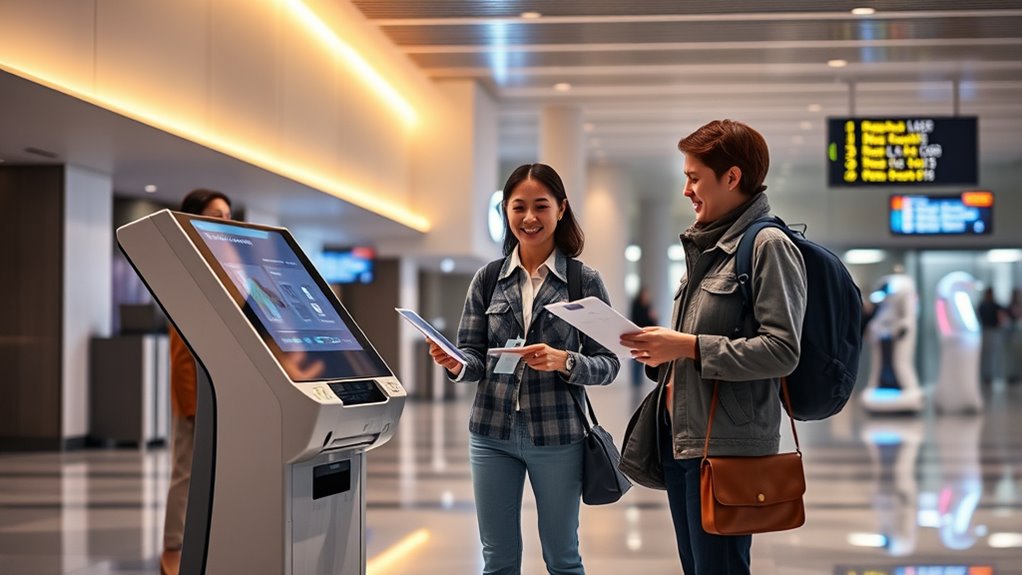
AI also streamlines check-in processes, reducing wait times and eliminating frustration. Many hotels now use facial recognition or mobile check-in apps that allow you to skip long lines at reception. As you arrive, your identity can be verified quickly and securely, letting you go straight to your room or concierge services. This seamless experience not only saves time but also sets a positive tone for your stay. Similarly, airports employ AI-powered kiosks and biometric scanning to expedite security checks and boarding procedures, ensuring you spend less time in queues and more time enjoying your journey.
During your stay, AI continues to enhance convenience. Smart room technology allows you to control lighting, temperature, and entertainment systems through voice commands or mobile apps. Some hotels even anticipate your needs by analyzing your preferences and adjusting settings automatically. When it’s time to check out, AI systems can generate your bill, process payments, and handle any feedback efficiently, minimizing the hassle often associated with departure.
Throughout your trip, AI’s ability to adapt and personalize makes travel smoother from start to finish. It helps you discover experiences aligned with your interests, guides you through unfamiliar environments, and accelerates routine tasks. This integration of AI into travel and hospitality is designed to make your journey more enjoyable, less stressful, and uniquely tailored to you. By leveraging these technologies, you gain more control over your travel experience while enjoying the convenience and personalization that AI offers. Moreover, understanding the science behind AI can help travelers make more informed decisions about the tools they use during their journeys.
Frequently Asked Questions
How Does AI Improve Personalized Travel Experiences?
AI enhances your travel experience by creating customized itineraries tailored to your preferences and interests. It analyzes your past trips and real-time data to suggest activities, restaurants, and sights you’ll love. During your journey, AI provides real-time assistance, answering questions or solving issues instantly. This personalized approach makes your trip smoother, more enjoyable, and uniquely suited to your tastes, ensuring you get the most out of every moment.
What Are the Privacy Concerns With AI in Hospitality?
You should be aware that using AI in hospitality raises privacy concerns related to data security and customer consent. Hotels collect personal information to personalize services, but if data isn’t properly protected, it can be vulnerable to breaches. Additionally, guests might not always give clear consent for data usage, risking privacy violations. It’s essential for hospitality providers to prioritize data security and guarantee transparent communication to build trust and protect your privacy.
Can AI Reduce the Costs of Hotel Operations?
AI can markedly reduce your hotel’s operational costs by boosting efficiency and streamlining processes. With AI, you save on labor costs through automation, optimize energy use, and improve resource management. These cost savings allow you to reallocate funds toward enhancing guest experiences or upgrading amenities. By implementing AI solutions, you make your operations more efficient, ultimately lowering expenses and increasing profitability without compromising service quality.
How Is AI Used in Predicting Travel Trends?
AI acts as a crystal ball, revealing travel trends before they unfold. You use predictive analytics and trend forecasting to analyze past data, social media buzz, and economic indicators. This helps you anticipate shifts in destinations, preferences, and travel seasons. By harnessing AI, you stay ahead of the curve, adapting offerings to meet future demand and ensuring your business remains competitive in an ever-changing travel landscape.
What Challenges Do Businesses Face When Implementing AI?
When implementing AI, you face challenges like ensuring data security and providing staff training. Protecting sensitive customer information is critical, so you need robust security measures. Additionally, your staff must understand how to use AI tools effectively, which requires ongoing training. Balancing technological updates with staff readiness can be tough, but addressing these issues helps you harness AI’s full potential and deliver better travel experiences.
Conclusion
As you navigate the evolving world of travel and hospitality, AI acts as your trusted compass, guiding you through seamless check-ins, personalized experiences, and effortless service. It’s transforming the industry from a simple journey into a smooth voyage, where technology and human touch blend like a perfect symphony. Embrace these innovations, and you’ll find your travel experience brighter, easier, and more connected—turning every trip into a memorable adventure, just waiting to unfold.