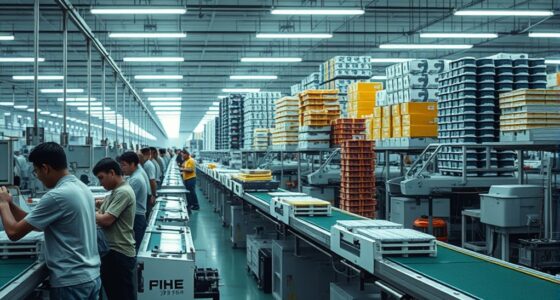

The shrinking workweek is reshaping economies and workplaces through models like four-day weeks, flexible scheduling, and hybrid work. Studies show fewer hours can boost productivity, employee well-being, and work-life balance, while reducing stress. Technological advances such as remote tools and AI make flexible work possible and efficient. Cultural attitudes and government policies play a big role worldwide. To understand how these economic models work and their future impact, keep exploring these emerging trends.
Key Takeaways
- Economic models support shorter workweeks by demonstrating maintained or increased productivity through focused, efficient work.
- Cost savings from reduced hours include lower operational expenses and energy consumption, benefiting businesses financially.
- Redistribution of hours can stimulate economic activity and enhance work-life balance, fostering societal well-being.
- Policy frameworks, such as four-day weeks and overtime regulations, facilitate smooth transitions and fair implementation.
- Technological advancements like automation and digital tools enable productivity growth despite fewer working hours.

Norwii Undetectable Metal USB Mouse Jiggler, Mouse Mover for Mac/Windows
Touch-Sensitive Tail Switch – Effortless on/off control with a simple tap. No repeated plugging and unplugging means less…
As an affiliate, we earn on qualifying purchases.
As an affiliate, we earn on qualifying purchases.
The Rise of Shorter Work Schedules and Productivity Boosts

In recent years, more companies have adopted shorter work schedules, and the results are clear: productivity often stays the same or even improves. Iceland’s trials showed that cutting hours didn’t reduce output and boosted workers’ well-being. Microsoft Japan’s 4-day week increased productivity by 40%, and the UK pilot saw a 22% rise. A study from Henley Business School found 77% of workers felt more productive with compressed hours. Overall, research indicates shorter workweeks can enhance focus and efficiency. Studies from various countries demonstrate that workplace productivity can be maintained or increased despite reduced hours. You’ll also notice benefits beyond productivity: workers report better work-life balance, less stress, and higher job satisfaction. Many companies save costs, reduce environmental impact, and find transition smooth. These trends suggest that shorter schedules can be a sustainable way to boost organizational performance, especially considering the potential for employee well-being to improve when workloads are balanced effectively.

Daily Planner Undated – A5 To Do List Notebook Hourly Schedules, Spiral Appointment Planner for Women and Men, PVC Hardcover, Inner Pocket, Elastic Closure, 5.8" x 8.3", Black
UNDATED DAILY PLANNER – The daily planner is undated, if you miss a day or you are off…
As an affiliate, we earn on qualifying purchases.
As an affiliate, we earn on qualifying purchases.
How Flexible Scheduling Shapes the Future Workforce

Flexible scheduling is transforming the future workforce by aligning work arrangements with your varied needs and preferences. Over two-thirds of flexible workers prefer 40 or more hours weekly, balancing workload and personal goals. As flexible work doubles since 2022, nearly 33% of Americans now engage in it, making it a significant labor market factor. Seventy-seven percent of hourly workers favor flexible hours, with over half actively seeking such opportunities. Many want hybrid or remote roles, viewing flexibility as essential in job searches. Employers benefit by attracting diverse talent, reducing turnover, and lowering costs. This trend is widespread, with one in three Americans now participating in flexible work, up from one in six in 2022, highlighting its growing importance in the modern labor market. Here’s a quick overview:
| Model | Description | Benefits |
|---|---|---|
| Hybrid (freeform) | Employee chooses in-office days | Autonomy, engagement |
| Anchor Hybrid | Predetermined in-office days | Structure, collaboration |
| Compressed workweek | Fewer days, longer hours | Flexibility, efficiency |
| Flextime | Flexible start and end times | Better work-life balance |
| Remote roles | Fully remote positions | Increased talent pool |
Additionally, understanding relationship dynamics can help both employees and employers foster healthier work environments and support work-life harmony.

Hybrid Work Management: How to Manage a Hybrid Team in the New Workplace (A super-short book about how to analyze, plan, manage, and evaluate your team’s hybrid work arrangement)
As an affiliate, we earn on qualifying purchases.
As an affiliate, we earn on qualifying purchases.
Work-Life Balance: Cultural Models and Global Practices

Your cultural attitude toward work shapes how balance is prioritized and practiced across societies. National policies, like paid parental leave and working hours, reflect these values and influence daily routines. Recognizing these differences helps understand the diverse approaches to achieving work-life harmony worldwide. Global trends indicate that societal trust, outdoor lifestyles, safety, and shorter work hours are key drivers of life-work balance. Additionally, astrological beliefs can influence individual perceptions of attractiveness and confidence, subtly affecting social and professional interactions.
Cultural Attitudes Toward Work
Cultural attitudes profoundly shape how societies view and approach work-life balance, influencing daily routines and organizational policies worldwide. In individualistic cultures like the U.S. and Australia, personal achievement dominates, leading to a focus on career success and long hours. Conversely, collectivist societies tie work-life balance to relationships within families and communities. High power distance cultures, such as India, often encourage late work to demonstrate dedication to superiors, while low power distance cultures like Denmark promote equality and balanced interactions. Masculine cultures prioritize career success, whereas feminine cultures emphasize well-being and quality of life. Norms around work vary widely, affecting how employees manage personal and professional lives. Additionally, the availability of specialized indoor gardening products influences how individuals incorporate greenery into their homes, reflecting broader cultural values around sustainability and aesthetics. These cultural differences shape expectations, behaviors, and organizational practices globally.
National Policies and Practices
National policies play a pivotal role in shaping work-life balance across different countries by establishing legal frameworks that protect workers’ rights and promote well-being. These policies, like generous statutory leave, paid maternity benefits, and universal healthcare, directly influence your daily life. They guarantee you can take time off when needed, support families, and access essential health services without financial stress. For example, New Zealand offers 26 weeks of fully paid maternity leave and 32 days of annual leave, setting a high standard for worker benefits. Consider these points: – Countries with strong legal protections, like New Zealand’s 32 days of leave, support healthier work routines. – Scandinavian nations prioritize social equality, long paid leave, and social support, boosting overall happiness. – Countries with limited policies, such as the US, often rank lower in work-life balance metrics. Your quality of life depends heavily on these national practices, shaping the culture of work and leisure. Additionally, the presence of comprehensive labor standards can significantly influence workplace satisfaction and productivity.

UGREEN NAS DH2300 2-Bay Desktop NAS, Support Capacity 64TB (Diskless)
Entry-level NAS Personal Storage:UGREEN NAS DH2300 is your first and best NAS made easy. It is designed for…
As an affiliate, we earn on qualifying purchases.
As an affiliate, we earn on qualifying purchases.
Economic and Social Consequences of Reduced Workweeks

Reducing workweeks brings significant economic and social changes that impact both businesses and individuals. Economically, shorter workweeks can maintain or boost productivity, as employees focus better during fewer hours. Companies often see cost savings from lower energy and operational expenses. However, some face financial hurdles, like reduced employee salaries due to fewer hours. If hours are redistributed, there’s potential for increased economic activity and personal projects. Environmentally, reduced workweeks may lower consumption but could also increase demand on resources. Socially, shorter weeks improve work-life balance, leading to happier, healthier employees. They foster greater job engagement and loyalty, while also influencing societal norms around leisure and productivity. Overall, these shifts promote more balanced lifestyles, though industry-specific impacts vary across sectors. Additionally, wider adoption of shorter workweeks could help reduce income inequality by providing more equitable work opportunities. Moreover, understanding the economic models behind these changes can help policymakers and businesses implement effective strategies for a smoother transition.
Emerging Trends and Technologies Driving Work Model Changes
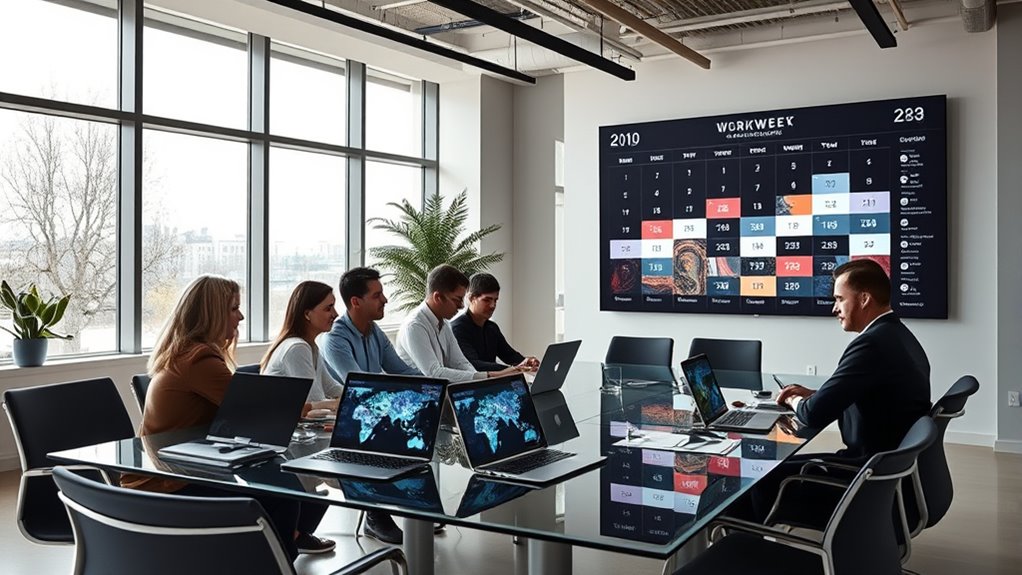
You’re seeing how remote work technologies, AI, and automation are transforming the way we work, making processes faster and more efficient. Digital collaboration tools enable seamless communication across teams, regardless of location. Additionally, Forsale 100 represents a growing trend in e-commerce and digital marketplaces, emphasizing the importance of adaptable business models. Together, these innovations are reshaping work models to be more flexible and employee-centric. Expertise Gap continues to grow as organizations seek new ways to develop skills and retain talent amidst rapid technological change.
Remote Work Technologies
Emerging technologies are transforming remote work by making virtual collaboration more immersive, flexible, and efficient. You now have access to advanced collaboration platforms that support real-time feedback and customizable virtual workspaces. Virtual and augmented reality tools create lifelike meeting environments, increasing engagement and bridging physical gaps. These innovations allow you to:
- Connect seamlessly across distances with immersive VR and AR experiences
- Customize your virtual workspace for better team coordination
- Enhance participation through interactive digital facilitation
- Align with Stoic principles by cultivating resilience and presence during remote interactions
These tools boost productivity by making remote interactions feel more natural and dynamic. They also support flexible, hybrid schedules by enabling smooth progression between in-office and remote work. As these technologies evolve, they’ll continue to redefine how teams collaborate, breaking down barriers and fostering innovation in your work environment.
AI and Automation
Advancements in AI and automation are rapidly transforming work models by reshaping job roles and operational processes. You’ll see significant job displacement, with AI potentially replacing 300 million jobs worldwide, especially in writing, photography, and software development. Manufacturing could lose 20 million jobs by 2030 due to automation, while supply chain roles face disruptions. This shift narrows entry-level opportunities, impacting social mobility and workforce growth. Despite displacement, AI is expected to create 69 million new jobs globally by 2028, supporting economic expansion. Technologies like generative AI and automation are changing industry dynamics, prompting companies to reskill workers. As AI adoption accelerates—77% of businesses are integrating these tools—you’ll need to adapt by upskilling and embracing new career paths to stay competitive in this evolving landscape. The increasing reliance on automation is reshaping employment patterns and workforce development strategies.
Digital Collaboration Tools
Digital collaboration tools are transforming how teams communicate and work together, driven by increasing remote work and technological innovations. The market is projected to grow from $39.4 billion in 2023 to over $116 billion by 2033, reflecting their rising importance. You’ll notice that 95% of employees seek remote opportunities, making digital tools essential. As technology use rises—up 44% since 2019—businesses focus on streamlining communication to avoid inefficiencies. Key trends include:
- The shift toward all-in-one platforms for seamless communication
- The decline in email use in favor of real-time chat and video
- The importance of proper training to maximize collaboration effectiveness
Embracing these tools helps reduce miscommunication and boosts productivity, making remote work more viable and efficient. Additionally, the adoption of collaboration software is linked to significant improvements in project turnaround times and overall organizational success. Notably, understanding remote work policies ensures compliance and smooth implementation across diverse teams.
Policy Frameworks Supporting Flexible and Shortened Work Hours

Policy frameworks supporting flexible and shortened work hours are essential for promoting work-life balance and adapting to evolving workforce needs. These policies provide structure, guaranteeing legal compliance and fair treatment while enabling flexible arrangements. You might consider options like a four-day workweek, reduced workloads, or overtime regulations. Proper implementation involves formal requests, HR oversight, and performance monitoring. To visualize these ideas:
| Policy Type | Description | Impact |
|---|---|---|
| Four-Day Workweek | Fewer days, same pay | Boosts work-life balance |
| Reduced Workload | Fewer hours, maintained pay | Prevents burnout |
| Overtime Mandates | Limits on overtime hours | Protects employee health |
| Temporary Layoffs | Short-term work hour reductions | Manages business fluctuations |
| Legislative Support | Laws promoting flexible work | Ensures broader adoption |
These frameworks help create adaptable, compliant, and supportive work environments. Additionally, establishing clear policies and procedures ensures consistent application and fair treatment across all departments and enhances employee satisfaction.
Projected Impacts on Employment and Skill Development

As the workweek shortens and hours decline, the labor market experiences notable shifts in employment patterns and skill requirements. You’ll notice that fewer hours are worked, yet productivity remains high thanks to technological advances like AI. Employee engagement has dropped to 2014 levels, prompting a focus on work-life balance and wellbeing. This creates a few key implications:
- Skill adaptation becomes essential, with a growing need for AI-related and continuously updated skills.
- Job stability improves, but worker confidence might decline, impacting job switching and mobility.
- Employer caution persists, leading to steady growth but with signs of labor market cracks amid economic uncertainty.
- Changing work hours influence overall workforce dynamics, requiring ongoing adjustments in training and organizational strategies.
Staying adaptable and investing in new skills will be crucial as these changes reshape employment and workforce development.
Frequently Asked Questions
How Do Shorter Workweeks Affect Overall National Energy Consumption?
You might wonder how shorter workweeks influence overall energy use. When you work fewer days, workplaces save energy by reducing lighting, heating, and equipment use. Plus, fewer commutes cut pollution. However, you may spend more time at home, increasing home energy consumption. Overall, if you and others adjust eco-friendly habits during your extra free time, the net energy impact could be a significant reduction, benefiting the environment.
What Industries Are Most Impacted by Transitioning to Flexible Work Models?
You’ll find that industries like technology, finance, consulting, marketing, and education are most impacted by flexible work models. These sectors lead in remote work adoption, boosting productivity and attracting talent. As you shift to hybrid or fully remote setups, you’ll notice increased efficiency, lower costs, and enhanced employee satisfaction. Meanwhile, healthcare and manufacturing adapt gradually, balancing remote options with on-site requirements, reflecting their unique operational needs.
How Do Cultural Attitudes Influence the Adoption of Reduced Work Hours Globally?
You might notice that cultural attitudes gently steer how countries embrace shorter work hours. In places valuing efficiency, like Scandinavia, you see more flexible policies, boosting satisfaction. Conversely, cultures like Japan’s emphasize dedication, making change slower. You’ll find Latin American families prioritize personal time, while Spain’s siestas show a balanced rhythm. Overall, cultural values shape policies, influencing how quickly and smoothly societies adapt to reduced work hours.
What Are the Long-Term Health Benefits of Shorter Workweeks for Employees?
You’ll likely experience significant long-term health benefits from shorter workweeks. Reduced stress and anxiety lower your risk of mental health issues, while better sleep and increased physical activity boost overall well-being. You’ll also notice less burnout and healthier habits, like improved diet and exercise. Over time, these changes can decrease your risk of chronic illnesses, improve your quality of life, and help you maintain better mental and physical health.
How Might Automation and AI Influence Future Workweek Structures?
Automation and AI are transforming future workweek structures by boosting productivity and enabling flexible schedules. You might find yourself working fewer days, as AI tools automate repetitive tasks and free up your time for creative work. Companies increasingly support shorter workweeks, especially those heavily using AI. With technology streamlining workflows, you could enjoy a better work-life balance while maintaining or even increasing your output, making shorter workweeks more common and feasible.
Conclusion
As you explore the trend toward shorter workweeks, remember that over 60% of companies report increased productivity with reduced hours. This shift not only boosts work-life balance but also reshapes our economy and society. Embracing flexible schedules could lead to more innovative skills and job opportunities. By staying adaptable, you’ll be part of a movement that’s redefining work for a healthier, more balanced future—one where less truly means more.