📊 Full opportunity report: Why Creators And Agencies Use Task-Based Social Media Workspaces on IdeaNavigator AI — validation score, market gap, and execution plan.

Get business pricing on tech for your team
- Business-only prices and quantity discounts
- Tax-exempt purchasing
- Multiple users, one account, clear invoices
TL;DR
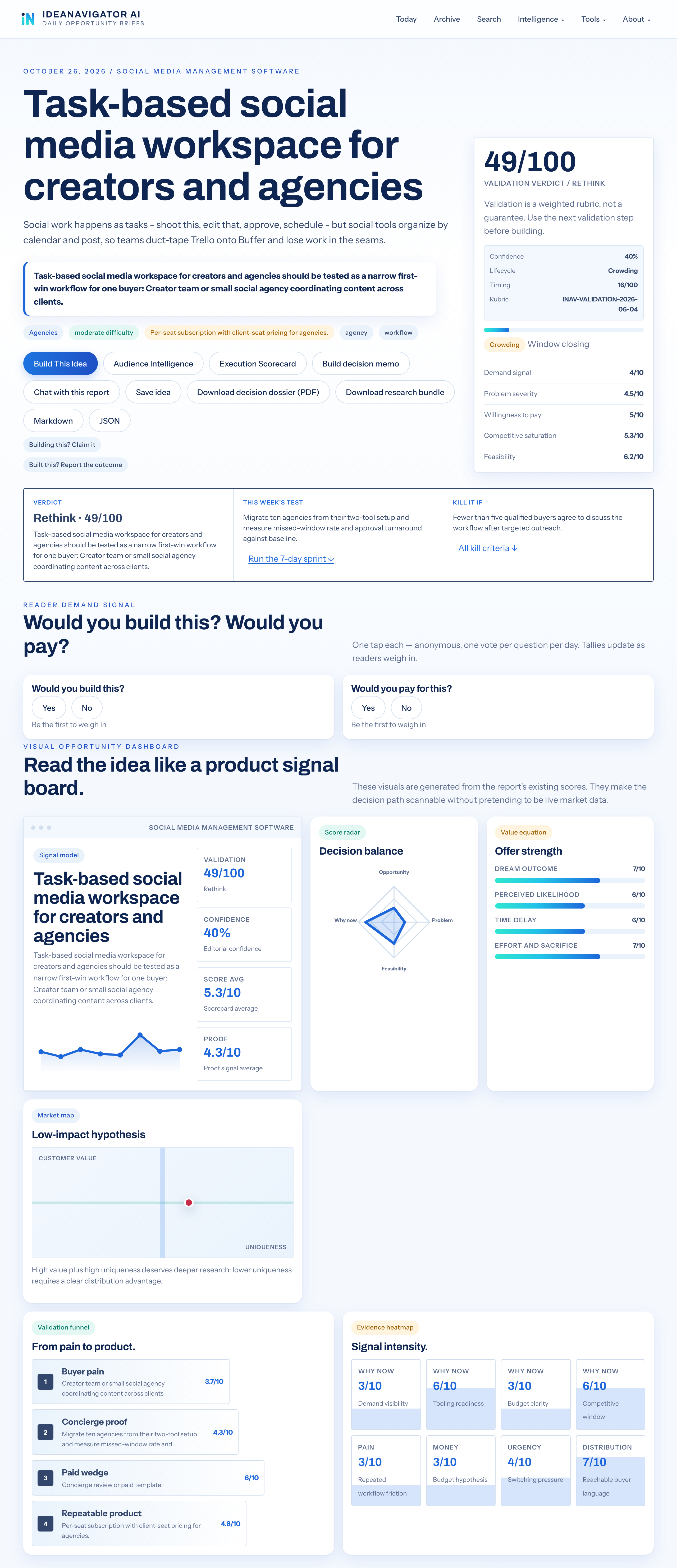
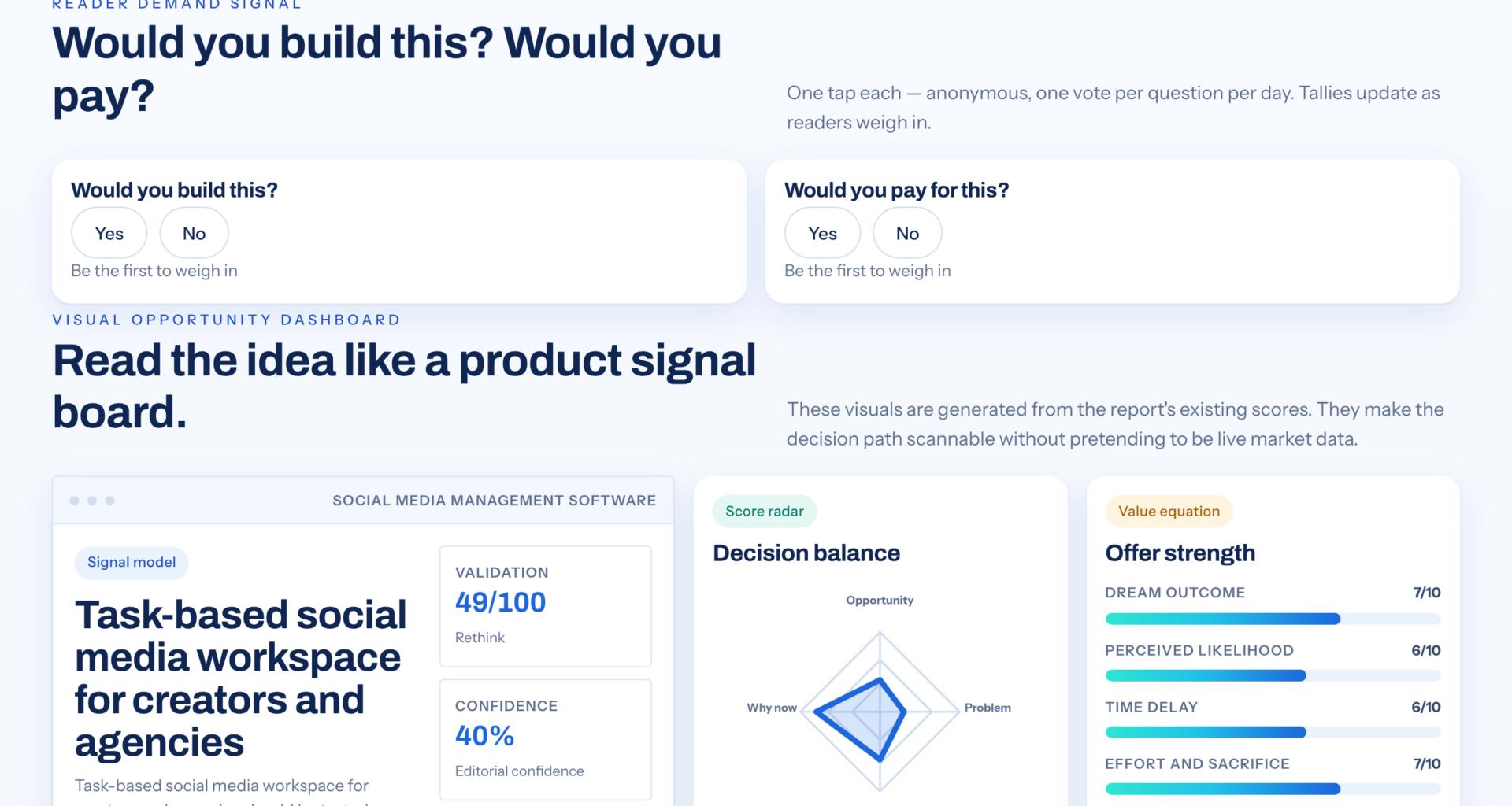
IdeaNavigator AI proposes testing a task-based workspace for creator teams and small social agencies that coordinate posts across clients. The concept would combine post tasks, approvals, asset versions and scheduling, but its benefits remain unverified until tested against teams’ existing workflows.
IdeaNavigator AI has proposed testing a task-based social-media workspace for creator teams and small agencies coordinating content for multiple clients. The concept would bring post briefs, assets, editing, approvals and scheduling into one workflow; it is a product opportunity, not an announced or validated service.
The proposal identifies a specific operational problem: social content work proceeds through tasks such as briefing, shooting, editing, approval and scheduling, while many social-media tools are organized around calendars and published posts. Teams may use a separate project-management tool to track the work, creating a gap between planning the post and getting it ready to publish.
The suggested minimum viable product would represent each post as a task with stages for a brief, asset creation, editing, approval and scheduling. It would also include client-facing approval links, asset versioning and scheduling that becomes available once a post is approved. The stated aim is a single pipeline from idea to publication.
For its proposed first test, IdeaNavigator AI recommends moving 10 agencies from their existing two-tool setups and comparing missed publishing windows and approval turnaround with a baseline. The proposal also suggests a per-seat subscription, with pricing for client seats. No pilot results, product release, pricing figures or customer commitments are provided.
Testing the Cost of Split Workflows
The proposal matters to creators and agencies because a post often involves more than the person who writes or schedules it. Editors, account managers and clients may need to work through revisions and sign-off before publication. When the status of a post is tracked separately from its assets and publishing calendar, teams can have difficulty seeing who owns the next step or whether a deadline is at risk.
A unified workflow could reduce the need to move information between separate tools, but that is a product hypothesis, not a demonstrated outcome. The proposed pilot points to two measurable tests: whether fewer planned posts miss their publishing windows, and whether clients approve work faster. Agencies would also need to weigh any gains against the effort and disruption of moving existing workflows.
Products Worth Considering

Apple iPad Air (2025) 13‑inch Wi‑Fi 256 GB – Space Gray (M3 chip)

Samsung 27 Odyssey OLED G5 (G50SF) QHD QD-OLED Gaming Monitor

DJI Osmo Mobile 8 Standard Combo Phone Gimbal Stabilizer
As an affiliate, we earn on qualifying purchases.
From Calendars to Post Pipelines
The concept is aimed at a narrow group: creator teams and small social agencies handling content across clients. It is not presented as a general-purpose replacement for all social-media management software or project-management platforms. That focus makes the suggested test more specific: compare a combined post workflow with the two-tool arrangements agencies already use.
IdeaNavigator AI says expectations for content volume have expanded team workflows, while scheduling products have left much of the work-management layer to general project tools. Those are the proposal’s stated reasons for exploring the product; no market-size figures or independent evidence for the trend are supplied. The proposal does not name particular incumbent products or quantify how frequently teams lose work between systems.
Product and Pilot Still Unconfirmed
The proposal does not establish that a product has been built, that agencies have agreed to test it, or that the described workflow improves performance. No baseline figures are given for missed publishing windows or approval times, so there is no measured comparison yet. The size of the potential customer base and willingness to pay are also unspecified.
Further details would be needed to assess how the workspace might connect to social platforms, handle permissions and client feedback, or manage changes to scheduled posts. The suggested seat-based pricing, including client seats, is a monetization approach rather than announced pricing. It is also unclear whether agencies would replace their existing tools or continue using some of them alongside a new workspace.
A Ten-Agency Pilot Would Test the Case
The next step described in the proposal is to recruit 10 agencies, move their work from existing two-tool setups and record missed-window rates and approval turnaround against each agency’s baseline. To make the comparison useful, a pilot would need to define how those measures are calculated and track the same kinds of posts and time periods before and after migration.
No launch schedule or pilot start date has been announced in the proposal. Until results or a product release are reported, the workspace should be treated as a testable product concept, not a proven way to improve social-media operations.
Source: IdeaNavigator AI
Key Questions
Is the task-based workspace available now?
The proposal does not announce a product launch or say that the workspace is available. It describes an idea and a suggested pilot.
Who is the concept designed for?
It targets creator teams and small social agencies coordinating content across clients, rather than all social-media users.
What would the workspace include?
The proposed features include post tasks with production stages, client approval links, asset versioning and scheduling after approval.
How would its effectiveness be tested?
The proposal recommends migrating 10 agencies from two-tool setups and comparing missed publishing windows and approval turnaround with a baseline. No results are reported.
How would the product charge customers?
IdeaNavigator AI suggests a per-seat subscription with client-seat pricing for agencies. Actual prices and a commercial launch have not been announced.
Source: IdeaNavigator AI