
Automation systems can unexpectedly shut down, leading to costly downtime, safety hazards, and operational chaos. Failures often happen due to hardware wear, software issues, human errors, or external factors like power surges and cybersecurity threats. These blackouts can halt production for hours or days, risking safety and financial loss. To understand what causes these failures and how to prevent them, keep exploring the factors behind these spectacular failures.
Key Takeaways
- System failures often result from hardware wear, control system issues, or human errors, causing unexpected robot blackouts.
- Unplanned downtime can lead to significant financial losses, safety hazards, and production delays.
- Cyberattacks and external disruptions like power outages or environmental factors can trigger automation failures.
- Inadequate maintenance, outdated software, and insufficient training increase the risk of spectacular robot failures.
- Future advancements in AI, IoT, and safety tech aim to reduce blackout incidents and improve system resilience.
The Reality of Robot System Failure Rates
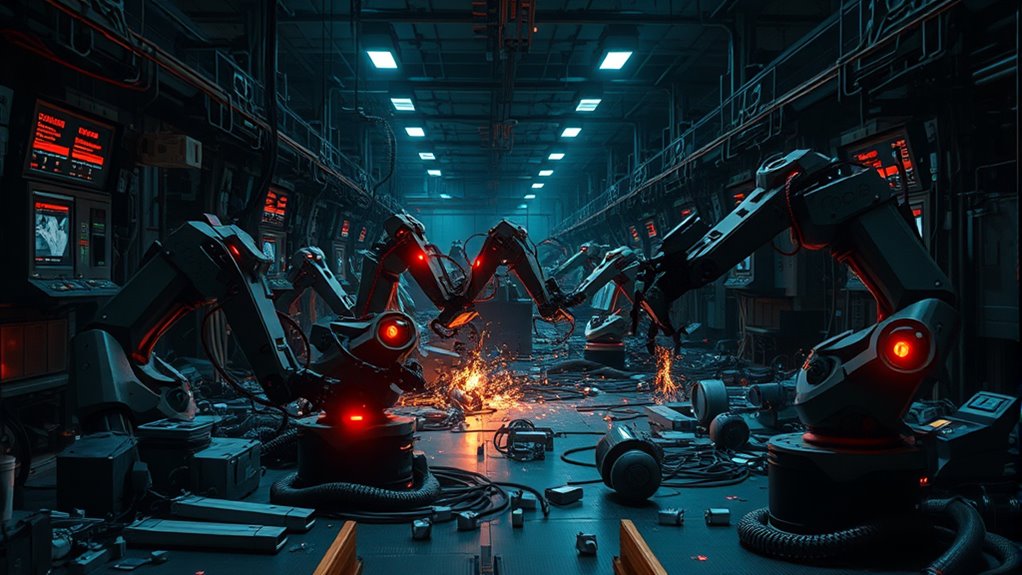
Understanding the reality of robot system failure rates reveals that, despite high claims of reliability, these systems often experience frequent interruptions. On average, a robot cell operates with about 88% reliability, meaning roughly 12% of the time, it’s down. Short failures are common, with the mean time to failure around 87 minutes, causing swift stoppages. Although manufacturers boast MTBF rates between 40,000 and 80,000 hours, actual failure rates can exceed 90% in some environments. About half of robot users actively monitor failure data, limiting full insight into reliability. Hardware failures happen roughly once every 24 hours, while human errors occur every 17 minutes. Control system issues account for nearly a third of failures, highlighting how frequent and unpredictable robot downtime can be in real-world scenarios.
Common Causes Behind Automation Breakdown
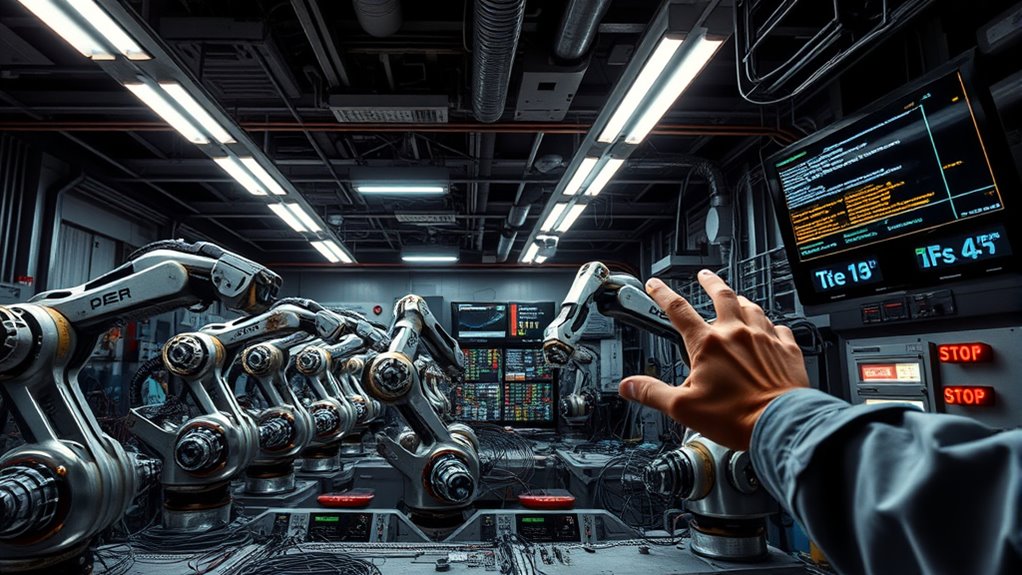
Automation breakdowns often stem from preventable issues that can be addressed through proper maintenance, vigilant monitoring, and operator training. Skipping routine checks or neglecting calibration causes hardware failures and software glitches, leading to unexpected shutdowns. Outdated software or incompatible updates can introduce bugs or crashes, while worn components like motors and sensors degrade system performance over time. Insufficient operator training results in mishandling, setup errors, or unsafe interventions that disrupt operations. External factors such as power surges, electromagnetic interference, or harsh environments accelerate equipment wear or cause communication failures. Without proactive maintenance, knowledgeable operators, and environmental controls, these issues compound, increasing the likelihood of automation failures. Regular maintenance and inspections are essential for early detection of issues before they escalate, thereby improving overall system reliability and minimizing downtime.
Financial and Operational Consequences of Failures

When automation systems fail, the financial impact can be staggering, with manufacturers losing up to $260,000 per hour in unplanned downtime. Prolonged stoppages may cost millions of euros, as seen in a nine-day food plant shutdown that lost over €2 million. Failures often hit highly integrated, costly systems, increasing repair expenses. Missed deadlines and contract cancellations erode revenue and customer trust, while repair and lost sales strain cash flow. The table below highlights key losses:
| Impact Area | Consequences | Examples |
|---|---|---|
| Financial Losses | Up to $260,000/hour, millions in total | €2 million in 9 days |
| Operational Disruptions | Production halts, workflow delays | Days or weeks of downtime |
| Reputational Damage | Customer attrition, market share loss | Missed deadlines, trust decline |
| Insurance Claims | Higher premiums, increased claims | 28% of claims from automation failures |
| Workforce Impact | Idle workers, manual interventions | Reduced productivity during outages |
Additionally, these failures can lead to safety hazards for workers and consumers if critical systems malfunction unexpectedly. System integration complexity often makes recovery and troubleshooting more difficult, further extending downtime and costs.
Cybersecurity Threats Targeting Industrial Automation

The convergence of IT and OT environments has markedly expanded the attack surface for industrial systems, making them more vulnerable to cyber threats. By integrating internet access and cloud platforms, you expose control systems that were once isolated, increasing the risk of cyberattacks. Third-party vendor connections and software supply chains add complex entry points for hackers, while greater network interconnectivity opens doors for ransomware and cyber-physical threats. Uncertainty about how systems interconnect can lead to unnecessary shutdowns, disrupting operations even without confirmed breaches. Cyber threats targeting industrial automation are rising rapidly, with ransomware surges and credential-stealing trojans increasing considerably. Attack vectors include internet resources, email, removable media, and network folders. These vulnerabilities demand continuous monitoring and robust security measures to protect critical infrastructure from evolving cyber risks. Cybersecurity vulnerabilities are often exacerbated during system outages, emphasizing the importance of resilient security protocols.
Safety Risks Arising From Automation Malfunctions

When automation malfunctions, unexpected machinery movements can cause serious injuries or equipment damage. Human-robot interactions become riskier if safety protocols aren’t properly maintained, increasing accident chances. Emergency response becomes more complicated during failures, making quick and effective action essential to prevent harm. Real-time monitoring systems can help detect anomalies early, reducing the severity of incidents.
Unexpected Machinery Movements
Unexpected machinery movements pose serious safety risks in automated environments, often resulting from malfunctions or design flaws. These sudden motions can cause crushing, shearing, or entanglement injuries, putting workers in danger. Outdated equipment lacking safety features increases the chance of unexpected shifts. Manufacturing defects like faulty safety switches or electrical flaws such as short circuits can trigger sudden movements. Poor maintenance leads to breakdowns that cause unpredictable actions. Uncontrolled energy release from moving parts heightens injury risks. Malfunctions can turn workplaces unsafe, especially in industries like construction, agriculture, and manufacturing. Regular inspection and maintenance are essential in preventing such failures and ensuring safety. Glycolic acid can be used to improve skin texture and reduce pore size, but it should be applied carefully to avoid irritation, especially in sensitive areas like the scalp or underarms.
Human-Robot Interaction Risks
Automation malfunctions in human-robot interactions introduce serious safety risks that can lead to injuries or even fatalities. Unexpected or unintended contact with robots, especially in shared workspaces, can cause severe harm. Miscommunication or unclear boundaries might cause workers to enter a robot’s operational zone, increasing collision chances. The 2015 Volkswagen incident, where a worker was fatally crushed by a robot arm, highlights these dangers. Even collaborative robots designed for close interaction pose risks if safety protocols aren’t followed. Despite sensors, rapid or unpredictable movements can outpace human reactions, resulting in injuries. Additionally, safety lapses due to inadequate standards and insufficient training amplify these risks. The use of safety features such as sensors and emergency stops can significantly reduce these hazards. Ensuring proper training and safety protocols is essential for minimizing accidents. As automation advances, understanding and mitigating these human-robot interaction hazards is vital to ensure worker safety and prevent tragic accidents.
Emergency Response Challenges
Have you considered how malfunctions in emergency response systems can jeopardize safety during crises? When automation fails, critical delays and errors occur, risking lives and property. Equipment breakdowns, such as damaged vehicles or faulty hardware, can halt response efforts. Human errors like incorrect inputs or oversight further compromise safety. Staffing issues, including insufficient trained personnel, worsen these risks. Identifying failure modes helps target prevention and reduce cascading failures. Communication breakdowns, like outdated tracking and slow updates, hinder situational awareness. Data reliability suffers when systems lose or distort information, impairing decision-making. Hardware and software downtime, especially during emergencies, can result in severe delays. Without proper maintenance and updated plans, emergency responses become unpredictable and less effective. Inadequate emergency planning can leave responders unprepared for system failures, amplifying risks during critical moments. Additionally, the reliability of data systems is crucial for accurate information flow, and its compromise can have dire consequences.
External Disruptions and Their Impact on Systems

External disruptions pose significant threats to automated systems, often causing sudden failures and operational delays. Cyberattacks target industrial control systems, exploiting vulnerabilities to disrupt processes and steal data—Eastern Europe’s 30.9% ICS compromise in 2023 highlights this risk. Power outages and electrical disturbances can abruptly halt operations, risking equipment damage. Environmental factors like temperature shifts, humidity, and dust impair sensors and machinery, leading to malfunctions. These conditions can also accelerate material degradation, affecting the longevity and reliability of equipment. Physical impacts, such as collisions or human interference, cause positioning errors and downtime, especially in robot cells. Communication network failures in IoT setups interrupt data flow, impairing control and safety. These external disruptions increase false alarms and misses, complicating error management and reducing system trust. Equipment downtime in manufacturing costs up to $260k per failure, and addressing these external threats is essential to maintain operational stability.
Strategies to Minimize and Manage Failures

To keep your robots running smoothly, you need to implement effective preventative maintenance practices and stay ahead of potential failures. Strengthening cybersecurity measures is also vital to protect against malicious threats that could cause system outages. Additionally, establishing clear safety protocols ensures quick response and minimizes damage when issues arise. Recognizing the importance of safety culture fosters proactive identification and mitigation of hazards, reducing the likelihood of catastrophic failures. Incorporating best practices in anime storytelling can also inspire innovative approaches to robotic design and programming, emphasizing the value of comprehensive planning.
Preventative Maintenance Practices
Implementing regular preventative maintenance is essential for minimizing robot failures and ensuring smooth operation. By routinely inspecting and servicing key components, you reduce the risk of unexpected breakdowns. Focus on mechanical checks, such as lubricating joints, tightening fasteners, and replacing worn belts or seals. Regularly clean sensors, cameras, and safety devices to keep them functioning accurately. Keep software and firmware up to date, and back up configurations before updates. Test power supplies, batteries, and cooling systems to prevent overheating or power failures. Data-driven strategies can help track maintenance effectiveness and predict potential issues before they occur.
Cybersecurity Enhancements Measures
Maintaining the physical health of your robots through regular preventative maintenance reduces the risk of mechanical failures, but safeguarding against cyber threats requires targeted security measures. You should adopt a Defense-In-Depth strategy, layering defenses like firewalls, intrusion detection, and encryption to defend against diverse attacks. Use secure design principles from the start to minimize vulnerabilities, and implement system hardening techniques such as secure coding, adversarial AI training, and input validation. Continuous monitoring with real-time anomaly detection helps identify threats early, while AI-driven tools can adapt to evolving cyber risks. Strengthen access controls by enforcing least privilege, multi-factor authentication, and role-based permissions. Regularly audit logs and update software to patch vulnerabilities, ensuring your robotic systems stay resilient against cyber breaches. Additionally, understanding Cookies and Privacy Policies can help you better manage your data security and user privacy.
Safety Protocol Implementation
Effective safety protocol implementation relies on thorough risk assessments and hazard identification to pinpoint potential issues before they escalate. You should conduct initial evaluations based on OSHA and ANSI standards, then update them regularly to detect new hazards. Assess the robot’s work envelope to prevent collisions with equipment or workers, and tailor safety measures to your specific workspace. Use your assessments to determine barrier placement, emergency procedures, and operational limits. Familiarity with safety standards such as ISO 10218 and ANSI/RIA R15.06 is essential to ensure comprehensive safety coverage.
Conduct regular hazard assessments to identify emerging risks and adapt your safety protocols accordingly. Install physical barriers like fencing or cages. Use light curtains and proximity sensors to stop robots automatically. Enforce access controls restricting zone entry to authorized personnel. Ensure safety interlocks and emergency stop buttons are within reach. Verify barriers are active through dual-check systems before operation.
Future Trends in Ensuring Automation Reliability

Future trends in ensuring automation reliability focus on integrating advanced technologies like AI, IoT, and robotics to create smarter, more resilient systems. AI-driven machines now adapt to changing conditions, minimizing downtime and boosting efficiency. The Industrial Internet of Things (IIoT) enables real-time connectivity between sensors and equipment, supporting proactive maintenance and better decision-making. Robotics handle repetitive, dangerous tasks, enhancing safety and quality, while no-code frameworks simplify deployment across various environments. As IIoT connections approach 37 billion by 2025, real-time data exchange improves monitoring, predictive maintenance, and operational costs. 5G and edge computing further reduce latency and support faster, more reliable communication between devices. Coupled with advanced cybersecurity measures, these technologies form a robust foundation for future-proof, dependable automation systems. This interconnected network of systems enhances overall reliability by allowing immediate response to potential issues before they escalate.
Frequently Asked Questions
How Can Small Businesses Afford Advanced Automation Safety Measures?
Small businesses can afford advanced automation safety measures by implementing phased rollouts, spreading out costs over time. You should consider usage-based pricing to avoid large upfront expenses and focus on high-risk areas for maximum impact. Evaluate your current infrastructure to guarantee seamless integration, and invest in employee training to reduce errors. Regular monitoring and targeted upgrades help you maintain safety without overwhelming your budget, ensuring a smart, scalable approach.
What Are the Signs of Impending Robot System Failures?
Like a modern-day oracle, you notice signs of impending robot failures. If your robot is idling too long, there’s likely a blockage or operational hiccup. Unexpected drops in productivity, increased defects, or erratic movements also signal trouble. Emergency stops, error messages, or fault codes point to control system issues. Mechanical wear, environmental interference, or power irregularities can cause unpredictable behavior. Staying alert to these signs helps prevent catastrophic system failures.
Can Automation Failures Be Fully Prevented With Current Technology?
You wonder if automation failures can be fully prevented with current technology. While advances like predictive maintenance, AI monitoring, and better cybersecurity help reduce risks, they can’t eliminate all failures. Unforeseen scenarios, cyberattacks, hardware wear, and human errors still pose threats. So, despite improvements, automation systems aren’t foolproof. You need ongoing vigilance, updates, and layered safeguards to manage risks effectively, even if total prevention remains out of reach.
How Do Cyberattacks Specifically Target Robotic Manufacturing Systems?
You might wonder how cybercriminals target robotic manufacturing systems. They exploit unsecured internet and IoT connections to gain remote control, bypass authentication with weak credentials, and manipulate vulnerable protocols. Attackers may also exploit outdated firmware or compromise supply chains. Once inside, they can cause physical damage, halt production, steal secrets, or encrypt data—turning your automated factory into a battleground where your systems can be taken down in an instant.
What Training Is Required for Staff to Handle Automation Failures Safely?
You need to complete targeted training on robot operation and automation systems to handle failures safely. This includes learning lockout/tagout procedures, troubleshooting, and emergency response protocols. You should also obtain certifications through assessments to prove your competence. Regular refresher courses and practical exercises keep your skills sharp, ensuring you can quickly recognize malfunctions, follow safety procedures, and perform maintenance or repairs effectively during automation failures.
Conclusion
As automation becomes more ingrained in our world, can you really afford to overlook its risks? Robot blackouts can cause costly shutdowns, safety hazards, and security breaches. By understanding the common causes and implementing robust strategies, you can better prepare for inevitable failures. Are you ready to take proactive steps to guarantee your systems stay resilient? Remember, in a rapidly evolving automation landscape, staying vigilant is your best defense against spectacular failures.