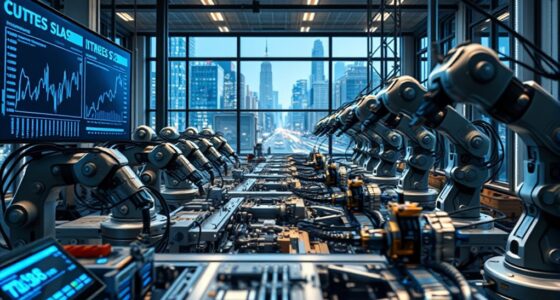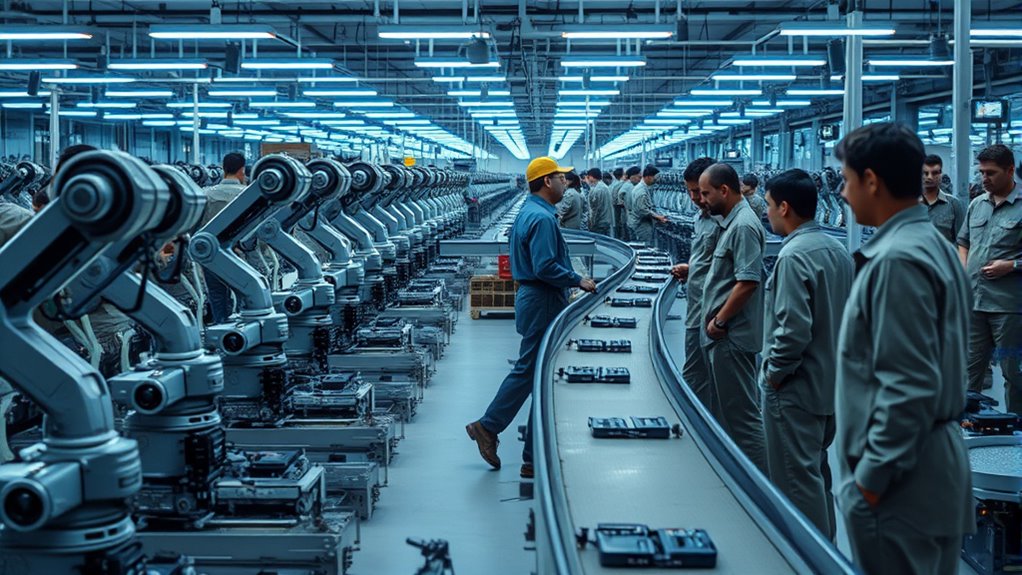

No, automation isn’t the sole factor behind job loss. While machines and AI replace routine tasks, broader forces also play a role. Economic downturns and cycles lead to layoffs, while globalization shifts manufacturing jobs overseas. These trends often combine with automation, amplifying their impact. If you want to understand how these forces work together and what can be done about it, there’s more to explore beyond just automation.
Key Takeaways
- Broader societal factors like globalization and economic cycles significantly contribute to job loss alongside automation.
- Automation accelerates existing economic trends, but is not the sole cause of employment shifts.
- Workforce displacement results from a combination of automation, globalization, and economic fluctuations.
- Economic downturns and global market changes can lead to layoffs independent of technological advancements.
- Addressing job loss requires multifaceted strategies beyond automation, including retraining and policy reforms.

Automation has transformed industries by replacing many manual tasks with machines and software, leading to significant shifts in the job market. While it’s easy to blame unemployment on automation alone, the reality is more complex. Other forces, like economic cycles, globalization, and policy changes, also play essential roles. Still, automation’s impact isn’t just about job elimination; it raises important questions about AI ethics and how we prepare workers for the future. As machines take over routine tasks, many workers find their skills becoming obsolete, which underscores the importance of workforce retraining programs. These initiatives help displaced workers gain new skills aligned with emerging job opportunities, ensuring they aren’t left behind in a rapidly changing landscape.
You might wonder if automation is solely responsible for job loss or if broader societal factors contribute equally. Economic downturns, for example, can lead to layoffs regardless of automation levels, while globalization can shift manufacturing jobs overseas, affecting employment in developed countries. But automation accelerates these trends, making it appear as if machines are the primary culprits. This creates a need for industries and governments to address AI ethics, ensuring that automation is implemented responsibly. Developing policies around AI ethics involves considering the societal impacts, including job displacement, and establishing guidelines that promote fair practices. This way, automation can be harnessed to boost productivity without disproportionately harming workers.
Workforce retraining becomes a critical response to automation’s challenges. Instead of resisting technological progress, you’re encouraged to view retraining programs as an investment in your future. These programs help you transition into roles that require more complex decision-making, creativity, or emotional intelligence—areas where machines still lag behind humans. Employers and policymakers have a responsibility to support this transition, providing accessible, ongoing education that keeps pace with technological advances. The goal isn’t just to replace jobs but to transform the workforce, enabling you to thrive alongside automation rather than be displaced by it. Recognizing the role of sound waves in influencing brain activity and healing can also inspire innovative approaches to workforce well-being and stress management during transitions.
Ultimately, automation’s role in job loss isn’t isolated from other economic forces. It’s intertwined with broader societal issues like AI ethics and workforce retraining. As you navigate this evolving landscape, understanding that automation is part of a larger picture helps you see opportunities for growth and adaptation. Embracing retraining and advocating for responsible AI practices can empower you to stay relevant and resilient, ensuring that technological progress benefits everyone, not just a select few. The key to addressing job loss lies in balancing technological innovation with thoughtful policies and proactive workforce development.
Frequently Asked Questions
How Do Economic Downturns Influence Employment Trends Beyond Automation?
Economic downturns directly impact your labor market by reducing job opportunities and increasing unemployment. During these times, wage dynamics often shift as employers cut costs, leading to lower wages or hiring freezes. You may find that job stability decreases, and competition for available roles intensifies. These effects go beyond automation, highlighting how economic conditions influence employment trends, making it harder for workers to secure and retain jobs during downturns.
What Role Do Globalization and Trade Policies Play in Job Displacement?
Globalization and trade policies critically impact job displacement. When trade liberalization occurs, companies often adopt outsourcing strategies to cut costs, which leads to job losses domestically. You might find that as borders open and tariffs decrease, businesses shift jobs overseas, reducing local employment opportunities. This process accelerates economic change, making it vital for workers and policymakers to adapt strategies for workforce resilience amid shifting trade dynamics.
Can Education and Retraining Mitigate Job Losses Caused by Automation?
You’re right to wonder if education and retraining can help. Studies show 65% of workers face a skills mismatch, making technological adaptation vital. By continuously updating your skills, you can stay ahead of automation’s impact, reducing job loss risks. Effective retraining programs empower you to shift into new roles, ensuring you remain relevant in an evolving job market. Embracing lifelong learning is your best defense against automation-driven displacement.
How Does Corporate Restructuring Impact Employment Levels?
Corporate restructuring, including management restructuring and corporate downsizing, directly impacts employment levels by reducing staff and changing organizational roles. When companies streamline operations or shift strategies, you might see layoffs or job reassignments. These changes often aim to increase efficiency but can create job insecurity. You should stay adaptable, develop new skills, and keep an eye on organizational updates to better navigate employment shifts during these restructuring processes.
Are Regulatory Changes Contributing to Shifts in Employment Sectors?
Think of the labor market as a shifting landscape, with regulatory changes acting like a gust of wind. These policy impacts can alter employment sectors, forcing some industries to adapt or shrink. You’ll notice job shifts as regulations tighten or loosen, signaling new opportunities or challenges. So, yes, regulatory changes profoundly contribute to employment shifts, guiding the flow of labor and reshaping the economic terrain you navigate daily.
Conclusion
So, next time you blame the robots for your empty paycheck, remember—they’re just the flashy culprits. Meanwhile, corporate giants sip champagne, cozy in their ivory towers, while outsourcing and economic shifts quietly sweep away jobs. It’s not just automation stealing your gig; it’s a perfect storm of greed, policy, and global trends. So, grab your tin foil hat and accept it: the real puppet masters are pulling the strings behind the scenes.