
Automation often gets blamed for widening inequality, but the reality is more nuanced. It primarily replaces routine jobs that many less-educated workers depend on, pushing them into insecurity. Meanwhile, those with strong skills and access to ongoing learning benefit from new opportunities, increasing the gap. Addressing this issue requires focusing on education and policy solutions. Keep exploring to understand how innovation can be harnessed for a more inclusive future.
Key Takeaways
- Automation tends to displace routine jobs but also creates new roles requiring advanced skills.
- Education disparities influence who benefits from automation, often widening economic inequality.
- Higher-educated workers typically secure better, more stable jobs amid technological change.
- Access to lifelong learning and skill development is crucial to mitigate automation-driven inequality.
- Policy efforts should focus on inclusive training programs to ensure broader economic benefits from automation.
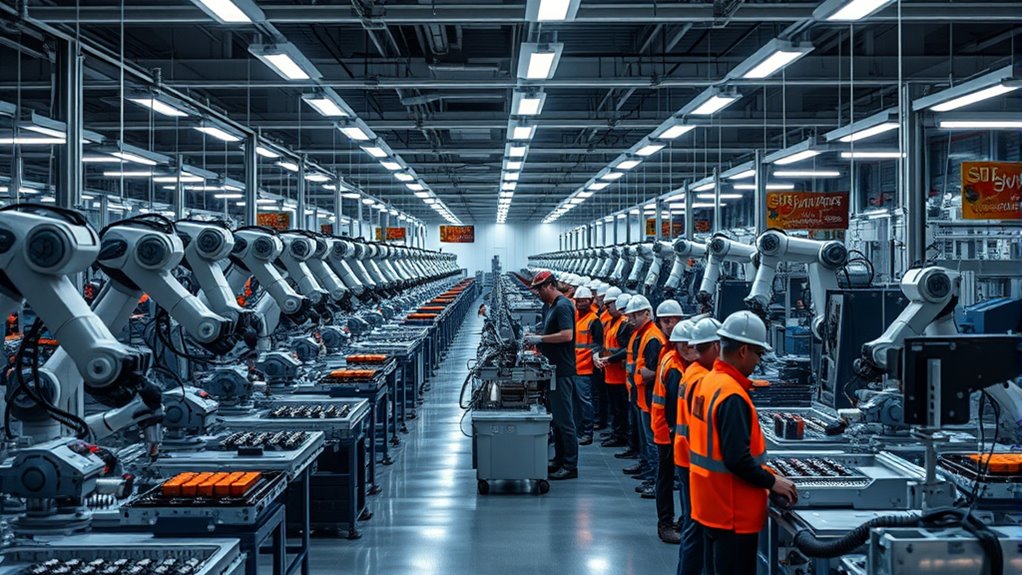
Automation is transforming workplaces worldwide, but it’s also widening the gap between those who benefit and those left behind. As machines and algorithms take over tasks once performed by humans, the labor market shifts dramatically. Jobs that require routine skills are vanishing, replaced by roles that demand advanced technical knowledge or creative problem-solving. This change favors workers with specialized training, leaving behind many who lack access to quality education. Education disparities become a critical factor in determining who thrives in this new economy and who struggles to keep up. If you’ve had limited opportunities to develop skills suited for automated environments, you may find yourself facing unemployment or underemployment, unable to compete with those who have invested in their education and training.
The impact of these labor market shifts isn’t just about losing jobs; it’s about the widening inequality gap. Workers with higher education levels often secure better-paying jobs with more stability, while those without access to continuous learning are pushed into low-wage, insecure work. For example, someone without a college degree might find their manufacturing job automated away, leaving them with few options. Meanwhile, those with technical skills or advanced degrees move into roles that leverage automation rather than compete against it. This creates a cycle where the rich get richer, while the less educated face increasing economic insecurity. You might feel this disparity personally if you’re trying to transition into a new career but lack the resources or training to do so.
Addressing these challenges requires more than just technological innovation; it calls for a focus on education. Bridging education disparities guarantees that more people can adapt to the evolving labor market. Investing in accessible, high-quality training programs and lifelong learning opportunities helps workers develop skills that are in demand. This not only benefits individuals but also strengthens the economy as a whole. Recognizing the importance of technological literacy is crucial for preparing workers for future job markets. If you’re concerned about your future in an automated world, pursuing continuous education and skill development becomes essential. It’s about staying relevant and resilient amid ongoing labor market shifts. Governments, businesses, and educational institutions all have roles to play in making this possible, ensuring that automation becomes a tool for reducing inequality rather than exacerbating it. Only through inclusive policies and proactive learning initiatives can we hope to create a future where the benefits of automation are shared more equally.
Frequently Asked Questions
How Does Automation Impact Job Quality and Worker Satisfaction?
Automation can improve your job quality and worker satisfaction by reducing tedious tasks, boosting your morale, and allowing you to focus on more meaningful work. When implemented well, it increases your job engagement, making your role more interesting and fulfilling. However, if automation leads to job insecurity or feels impersonal, it might decrease morale. Overall, automation’s impact depends on how it’s integrated and communicated to you.
What Role Do Government Policies Play in Mitigating Automation-Related Inequality?
Imagine a safety net woven through policies like universal basic income and tax incentives, catching those displaced by automation. Governments can play a key role by implementing these measures, ensuring no one falls through the gaps. By providing financial stability and encouraging fair wages, you help reduce inequality, making the transition smoother. Your support for such policies shapes a future where automation uplifts everyone, not just a few.
Can Automation Create New Job Opportunities in Emerging Industries?
Yes, automation can create new job opportunities in emerging industries, especially when you participate in reskilling initiatives. As automation transforms sectors, it opens pathways for roles in industry diversification, like technology, renewable energy, and healthcare. By staying adaptable and embracing continuous learning, you can position yourself to benefit from these shifts, helping to build a more resilient workforce and ensuring you’re prepared for the jobs of tomorrow.
How Does Automation Affect Income Distribution Across Different Socioeconomic Groups?
Like the shifting sands of a Rorschach inkblot, automation impacts income disparity unevenly. It often widens the gap, favoring high-skilled workers and limiting socioeconomic mobility for lower-income groups. You might notice that automation rewards those with advanced skills while leaving others behind, creating a polarized economy. To bridge this divide, policy changes and upskilling initiatives are essential, helping all socioeconomic groups benefit from technological progress rather than fall further behind.
What Are the Long-Term Societal Implications of Widespread Automation Adoption?
You’ll see that widespread automation can challenge societal resilience, requiring you to adapt quickly to technological changes. Long-term, this shift may lead to increased productivity but also widen inequalities if not managed well. Society needs to foster technological resilience and promote societal adaptation, ensuring everyone benefits from automation. If you actively support policies that encourage education and workforce retraining, you help create a more inclusive future amid rapid technological advancements.
Conclusion
As you consider automation’s impact, remember the story of a factory worker replaced by machines, feeling like a boat drifting away from shore. While automation can widen gaps, it also creates new opportunities if we adapt and invest in skills. Think of it as a river—sometimes it floods, but with proper dams and channels, it can nourish new life. Embrace change wisely, and you can help steer towards a future where technology uplifts everyone.