

Nearly 60% of routine knowledge tasks in retail could be handled by AI agents within five years, reshaping hiring, margins, and customer experience faster than many leaders expect.
You’re entering a moment where generative AI in retail moves beyond demos and into daily operations. Platforms like Lumi.new let you describe a storefront, landing page, or internal tool and receive a ready-made site with layouts, content, and components — all without coding. That speed matters because retail automation now runs from customer chat to inventory prompts, trimming repetitive work and accelerating time to market.
At the same time, broader economic forces change how your customers spend. Policy shifts that affect household costs, documented by organizations such as the Kaiser Family Foundation, can push consumers to hunt for value. That makes efficient, agent-driven experiences more than a convenience — they become a competitive necessity.
Local training programs, like hands-on agricultural and technical events tied to institutions such as Ohio State University’s Agricultural Technical Institute, show how community partnerships can prepare people for new roles. Your team’s shift from manual tasks to agent supervision will depend on similar practical upskilling and partnership strategies.
Key Takeaways
- AI agents accelerate retail automation by handling repetitive knowledge work, from content to customer support.
- Generative AI in retail platforms like Lumi.new cut build time and create reusable components for near-instant sites.
- The post-labor retail economy shifts focus from headcount to agent orchestration and higher-skilled oversight.
- Macro policy and household cost changes affect demand, increasing the business case for efficiency gains.
- Community training and partnerships are essential to reskill workers for agent supervisor roles.
Introduction: Why AI Agents Matter for Knowledge Work and Retail
You will see how AI agents reshape everyday work in stores, agencies, and back offices. This introduction gives a clear AI agents overview and frames why generative platforms are central to rapid change. Read on to learn how these tools affect tasks, teams, and strategy.

Overview of AI agents and generative platforms
AI agents can act like virtual staff that handle routine decisions, draft content, and run workflows. Generative platforms such as Lumi.new let nontechnical teams describe features in chat and produce working pages, forms, and interactions without code.
These systems use reusable components and templates to cut repetitive work. That reduces development time and lets you iterate campaign pages, product displays, and microsites in hours rather than weeks.
How you’ll use this roundup to understand retail transformation
This roundup maps practical use cases and vendor choices so you can evaluate projects by impact and cost. Expect concrete examples of customer support automation, content generation, and inventory prompts that shorten time-to-market.
We connect those examples to macroeconomic context so you can judge ROI under shifting demand. For instance, changes in U.S. policy that affect household budgets can alter launch timing and expected returns, so factor that into forecasts.
Relevance to US retailers, agencies, and knowledge workers
US retailers will gain faster experimentation and lower build costs when you adopt generative platforms. Agencies can deliver more campaigns with smaller teams by using agent-driven workflows.
Knowledge workers will shift toward oversight roles like prompt engineers and agent supervisors. Plan structured training, partner with community programs, and offer webinars to upskill staff for those new responsibilities.
How AI Agents Automate Repetitive Knowledge Work in Retail
You’re facing a steady stream of repeatable tasks that eat time and margin. AI agents let you cut cycles on routine work and shift staff toward higher-value roles. Examples span content, support, and inventory workflows where automation delivers clear gains.

Task automation examples: content creation, customer support, and inventory prompts
Automated content creation speeds landing-page production and marketing updates. Tools such as Lumi.new turn conversational prompts into layouts, components, and full pages so your team stops rebuilding the same assets.
AI customer support handles order status, returns, and common FAQs around the clock. That reduces wait times and frees agents to handle complex escalations.
Inventory automation links sales signals to stock prompts and reorder suggestions. This reduces stockouts and lowers manual reconciliation work.
Impact on headcount, speed, and error rates
You’ll see fewer repetitive FTE hours as agents take over routine duties. That doesn’t mean instant layoffs. Use automation to redeploy staff into supervision, QA, and customer-experience design.
Speed improves when page creation, ticket triage, and inventory updates move from manual steps to automated workflows. Pilots should measure time-to-complete, ticket resolution time, and page turnaround.
Error rates drop when prompts and templates replace copy-paste work. Track change requests and refund reasons to quantify quality gains.
Tools and platforms enabling these workflows
Platforms for task automation in retail include agent orchestration systems, headless CMSs, and conversational site builders. Lumi.new is a practical example for web and content automation that reduces manual design and dev steps.
Pair web builders with AI customer support platforms and inventory automation services to form end-to-end flows. That stack helps retailers respond faster when consumer spending tightens due to policy shifts or market pressure.
| Use Case | What an AI Agent Does | Key Benefit | Representative Tool |
|---|---|---|---|
| Landing-page creation | Generate layout, components, and copy from prompts | Reduce build time from days to minutes | Lumi.new |
| Customer support triage | Classify tickets, automate responses, escalate complex issues | Lower response time and handle volume spikes | Zendesk with AI workflows |
| Product inventory updates | Sync sales data, suggest reorders, create alerts | Cut stockouts and shrink manual reconciliation | Inventory automation platforms |
| Marketing copy and feeds | Produce variants for ads and product listings | Scale messaging with consistent brand voice | Automated content creation tools |
| Quality assurance | Run checks on pages, content, and transactions | Reduce human error and rework | CI pipelines with AI checks |
AI Agents & Knowledge Work: The Post-Labor Retail Economy
You are looking at a shift where software agents take on routine knowledge tasks inside retail. The core thesis is simple: tools such as Lumi.new let nontechnical staff build production-ready sites and components, moving many execution tasks from developers and designers to agent-driven services. That change reshapes workflows, decision rights, and the costs of delivering customer experiences.

Defining the phrase and core thesis
Post-labor retail describes a business model that relies on automation and AI agents to perform repetitive knowledge work. You should think of agents as persistent, scriptable workers that handle content, personalization, and dialogue at scale. The thesis: when agent-driven services handle high-volume tasks, you free people to focus on supervision, curation, and domain expertise.
How retail moves from labor-intensive to agent-driven services
Retail used to depend on staff for catalog edits, merchandising rules, and customer replies. Now platforms let teams spin up components and conversational flows without coding. That lowers time-to-market for promos, cuts cycle times for content changes, and reduces reliance on full-time execution roles.
What “post-labor” means for jobs, margins, and consumer prices
Job displacement will occur in roles tied to repetitive tasks. Expect fewer entry-level content editors and more roles like agent trainers, prompt engineers, and content curators. Reskilling programs from community colleges and employer partnerships help redeploy workers into oversight and higher-value functions.
Retail margins can improve because agent-driven services reduce hourly labor and speed up iterations. You will see savings in staffing, faster experimentation, and lower error rates. Those gains let retailers protect retail margins when external pressures tighten household budgets.
Consumer prices respond to multiple forces. If macro policy shifts shrink disposable income, retailers face pressure to avoid price hikes that cut volume. Using agents to squeeze operational waste helps you hold prices steady. In markets where margins are thin, agent-driven efficiency can be the difference between raising consumer prices and absorbing costs.
| Area | Before (Labor-Intensive) | After (Agent-Driven Services) |
|---|---|---|
| Content updates | Manual edits by developers or designers, slow cycles | Nontechnical staff use templates and agents for instant updates |
| Customer support | High headcount for routine queries | Automated triage with human escalation for complex issues |
| Cost structure | Higher wage bills; variable scheduling | Lower execution costs; higher platform and compute fees |
| Employment mix | Many execution roles, fewer specialists | More supervisors, trainers, and domain experts |
| Impact on consumer prices | Prices adjust to labor cost swings | Prices buffered by efficiency gains, but sensitive to macro shocks |
Generative AI Platforms That Let You Build Without Coding
You can use generative tools to create landing pages, blogs, e-commerce sites, and internal tools without hiring a full development team. These platforms speed up launches and give small retailers and agencies the freedom to iterate quickly.

The Lumi.new case study shows how chat-driven creation produces near-instant pages while preserving responsive design and form functionality. You get real-time styling and layout edits, a community template gallery, and the ability to duplicate builds to cut repetitive work.
Case study: Lumi.new and conversational site/app creation
In practice, you prompt a conversational site builder to scaffold a homepage or product page, then refine copy, images, and components in minutes. Agencies report faster time-to-market for promotions and simpler handoffs to designers and developers.
Benefits for small retailers and agencies: speed, templates, reusable components
Templates and components let you reuse proven patterns across clients, reducing design debt and lowering build costs. That means you can maintain marketing cadence during economic uncertainty and keep acquisition efforts active without large teams.
Security, deployment, and real-time editing considerations
Review deployment options to ensure compatibility with your authentication and backend systems. Prioritize website security features like secure data handling, access controls, and integration with your existing services before rolling out public-facing sites.
| Capability | What it helps you do | Why it matters |
|---|---|---|
| Chat-driven scaffolding | Generate pages and flows from prompts | Saves development hours and speeds A/B testing |
| Templates and components | Reuse layouts, CTAs, and forms | Reduces repetitive builds and ensures consistency |
| Real-time editing | Adjust styling and layout on the fly | Accelerates design approvals and launch cadence |
| Deployment integrations | Connect auth, analytics, and backends | Maintains security and operational continuity |
| Training and support | Docs, webinars, and live sessions | Speeds onboarding for teams and partners |
Customer Experience Transformation Through AI Agents
AI agents change how customers discover, buy, and return products. You can use generative tools to build near-instant landing pages and product experiences tailored by segment. These experiences support personalized recommendations that match shopper intent and boost conversion when budgets tighten.

Personalized recommendations and conversational commerce
When you combine data from purchase history, browsing signals, and quick surveys, the system crafts relevant offers in real time. That approach powers conversational commerce that feels natural on chat, SMS, or voice. Customers get helpful suggestions without digging through hundreds of SKUs.
24/7 virtual assistance and reduced friction at checkout
Virtual assistants answer questions instantly, handle returns, and apply coupons during the flow. This lowers checkout friction and shrinks cart abandonment. You can route high-value issues to agents trained for escalation while bots manage simple tasks.
Measuring CX improvements: retention, AOV, and NPS
Set up pilot A/B tests to measure lift before a full rollout. Track retention metrics alongside average order value and Net Promoter Score. Add response time and task completion rates to the scorecard to see where agents move the needle.
Run short experiments that compare personalized experiences versus generic funnels. Use the results to scale components that improve retention metrics and protect AOV when households cut spending on essentials.
Knowledge Work Redefined: From Subject Matter Experts to Agent Supervisors
You will move from hands-on execution to supervising collections of AI agents. Platforms like Lumi.new let your teams build and iterate without traditional coding, shifting needed talent toward oversight, prompt design, and component curation. This change creates demand for practical roles and clear training pathways.

New roles you’ll see: prompt engineers, agent trainers, and curators
Expect new job titles on your org chart. A prompt engineer writes and refines instructions that guide agents to produce accurate outputs. An agent trainer tests behaviors, tunes reward signals, and builds evaluation scenarios. Curator roles manage reusable content blocks, templates, and knowledge snippets so agents stay consistent across channels.
Skills transition: from manual execution to oversight and evaluation
Your team will trade repetitive tasks for evaluation work. Staff who once updated product pages may now validate agent outputs, audit for bias, and score performance against service standards. You should hire or promote people who can blend domain knowledge with clear criteria for assessment.
Training methods and resources for upskilling your team
Design hands-on, scored learning that mirrors successful models used by institutions like Ohio State University’s Agricultural Technical Institute. Use rotating labs, practical assessments, and progressive benchmarks to certify prompt engineers and agent trainers. Pair classroom sessions with live workshops and scorecards so upskilling retail staff is measurable and job-ready.
Cross-training is essential when economic shifts tighten consumer budgets. Prepare retail associates to step into curator roles or agent trainer positions through short, applied modules. Focus on practical metrics, like task accuracy and time-to-correct, so you can track improvement and redeploy talent rapidly.
Operational Efficiency Gains and Cost Shifts in Retail
You can cut repetitive work across marketing, storefront builds, and support by rethinking how teams deploy and reuse assets. Platforms like Lumi.new let you duplicate pages and assemble reusable components, which slashes manual builds and speeds new launches. That change shortens project timelines and lowers agency hours.

Near-zero latency sites remove the old trade-off between speed and customization. When sites load instantly, engineering time spent on optimization drops. You save hours that once went to performance tuning and can redirect that time to product improvements or customer experience work.
You should expect costs to shift as you adopt agent-driven workflows. Headcount for repetitive tasks falls while platform fees and AI compute costs rise. Plan budgets to absorb higher monthly platform fees and to cover AI compute costs for real-time agents and personalization.
Investing in reusable components reduces long-term maintenance. A single styled component reused across pages cuts duplication, makes updates predictable, and reduces bugs. That lowers support tickets and keeps your developer team focused on high-value features.
Training matters when roles move from doer to supervisor. Community training models and on-the-job upskilling reduce turnover expenses. You spend less on hiring and retraining when employees gain skills to manage agents, evaluate outputs, and optimize workflows.
Use a simple cost map to compare current spend on manual builds, hosting, and support against projected spend that includes platform fees, AI compute costs, and increased investment in higher-skilled labor. That view helps you see where operational efficiency retail gains compound over time.
Data, Privacy, and Compliance in an Agent-Driven Retail Stack
When agents handle customer interactions, you must map how information moves from the storefront to backend systems. Clear diagrams and documented flows limit surprises and reduce risk.
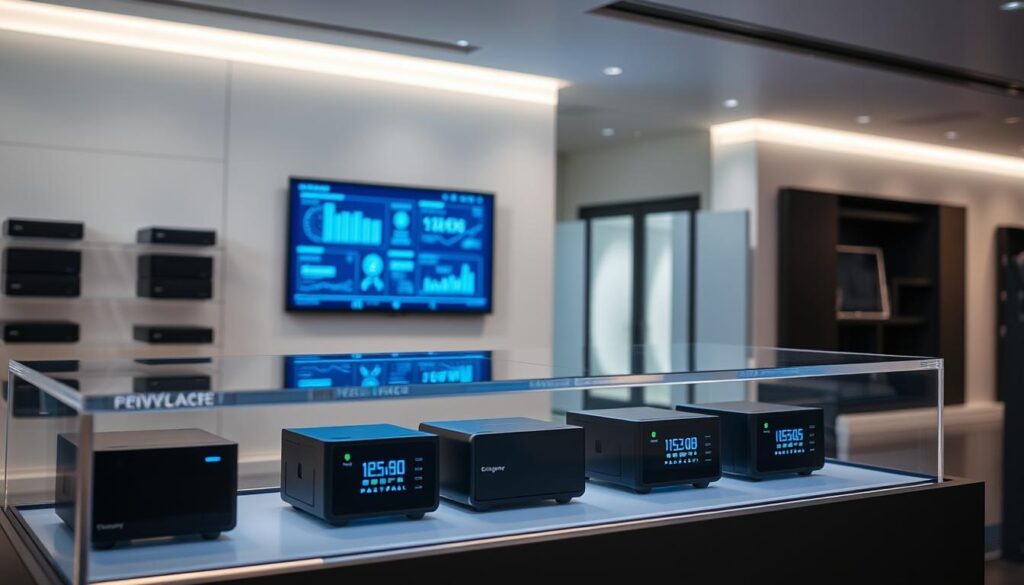
Customer data flows between agents and backend systems
Front-end agents collect inputs from customers and send them to CRMs, payment processors, and fulfillment services. Each hop increases exposure unless you encrypt data in transit and at rest.
Design your agent data flows so agents use short-lived tokens and purpose-limited scopes. This keeps access narrow and traceable.
Regulatory considerations in the United States
Federal statutes and state laws like California Consumer Privacy Act affect how you store and share personal data. Stay current on US regulatory compliance and build privacy into your agent features from day one.
Adopt established frameworks such as NIST and SOC reporting to make audits smoother and reduce legal risk when agents touch payment or identity data.
Practical steps to secure data and maintain compliance
Implement role-based access controls and maintain detailed audit logs for every agent action. Regular security reviews and third-party penetration tests catch drift before it becomes a breach.
Train staff on data practices, verify identity for sensitive requests, and require documented approval for agents that call external APIs. Secure agent integrations using mutual TLS, OAuth with least privilege, and strict vendor contracts.
Use automated monitoring to flag anomalous agent behavior and keep retention policies tight. These steps protect customers and make ongoing compliance easier as agent-driven features scale.
Integrations and Ecosystem: Connecting Agents to Retail Systems
To make AI agents useful in retail, you need a clear plan for connecting them to existing tools. Start with a map of your systems and the data flows between them. That map helps you see where retail integrations will add value and where you should avoid brittle, point-to-point wiring.

Common platforms to link
You will usually connect agents to e-commerce platforms like Shopify or BigCommerce, analytics systems such as Google Analytics or Amplitude, and your CRM. Prioritize an e-commerce CRM integration that keeps customer records and order history in sync with agent activity. Payment gateways and shipping partners must be part of the plan to complete checkout and fulfillment flows.
Patterns for inventory, personalization, and fulfillment
Design real-time inventory patterns so agents never promise stock that isn’t available. Use event-driven syncs or webhooks for fast updates. For personalization, link customer signals from CRM and analytics to agent prompts so recommendations reflect recent behavior. For fulfillment, tie agents to order management systems to trigger pick, pack, and ship steps without manual handoffs.
Vendor checklist for choosing tech partners
- Demonstrated integration capability with major platforms and standards.
- Clear deployment and security practices, including SOC or ISO controls.
- Template libraries and reusable components to reduce custom engineering.
- Predictable pricing and SLAs to handle demand shifts and economic shocks.
- Training resources: documentation, webinars, and live sessions for your team.
- Local partnership experience with schools or community groups for on-the-ground collaborations.
Use this vendor checklist to score candidates objectively. Focus on providers that shorten time to value and lower long-term maintenance risk. That approach reduces surprises when you scale agent-driven services across stores or channels.
Measuring ROI: Metrics That Prove Agent Value in Retail
You need clear, simple measures to show how ROI AI agents change retail outcomes. Start with short-cycle checks that act as leading indicators. Track developer hours saved by using reusable components and instant sites. Measure task completion rates, response times, and escalation frequency to compare agents with human workflows.

Use retail metrics that tie agent activity to revenue signals. Monitor conversion lift, average order value, cost per acquisition, retention, and churn across normal and stressed economic scenarios. Adjust windows for macro sensitivity, such as shifts in household spending, to see how conversion lift holds up when the market tightens.
Run pilot A/B tests before broad rollouts. Design pilots with scoring models that mirror contest-style progression: assign points for correct resolution, speed, and need for escalation. Compare agent scores to human baselines to gauge real-world impact on task completion and accuracy.
Structure pilots in phases so you can scale confidently. Start with controlled experiments on a subset of traffic, then expand to larger cohorts as you validate conversion lift and CPA improvements. Use A/B frameworks that log both short-term gains and downstream effects on retention and churn.
Create a compact results table to summarize what matters most. Include development time saved, task accuracy, average response time, conversion lift percentage, CPA change, and churn delta. This format helps stakeholders see how leading indicators translate into business metrics that prove ROI AI agents are delivering value.
Social and Economic Impacts: What Post-Labor Means for Communities

You need to understand how agent-driven automation reshapes local economies. As no-code generative platforms remove repetitive developer tasks, demand moves toward supervision, design, and prompt engineering. This employment shift will change the kinds of roles your community needs.
Start planning community reskilling now. Targeted education programs that teach prompt engineering, UX supervision, and system oversight help workers move into higher-value jobs. Short courses, apprenticeships, and certificate tracks make transitions faster and less risky for households.
Policymakers must consider US policy safety nets that smooth the transition. When subsidies and health-care rules change, household budgets are vulnerable. You should advocate for retraining funds and temporary income support that match the pace of automation-driven displacement.
Look to practical partnerships to scale training. Colleges such as Ohio State University’s Agricultural Technical Institute partner with local districts on hands-on events like soil judging to build skills and confidence. Similar models work for digital roles when employers, technical schools, and community groups align.
Use local pilots to measure impact. Run small programs that blend classroom learning with supervised agent work. Track placement rates, wage changes, and worker satisfaction to refine education programs and prove the value of community reskilling investments.
Align business incentives with public policy. Employers who fund transition training reduce churn and fill new roles faster. Governments that support these efforts through grants and tax incentives strengthen resilience and limit short-term harm from the employment shift.
Design your community strategy around tangible steps: map displaced roles, define adjacent skills, create stacked credentials, and fund bridge assistance. This mix reduces disruption and leverages social impact AI to create inclusive economic outcomes.
Risks, Bias, and Ethical Tradeoffs of Agent-Led Knowledge Work
You need clear sightlines into the harms that can appear when agents run retail tasks. Generative platforms often stitch content, UX templates, and component libraries into product pages and messages. That process can introduce AI bias retail problems that misrepresent products or customers. Set up review steps for generated copy and UI before anything goes live.

Sources of bias in training data and outputs
Training sets may over-represent certain demographics or supplier catalogs. When that happens, your personalization or search can push some groups to the margins. Audit data lineage, label sources, and sampling strategies to reduce AI bias retail effects. Use human review checkpoints to catch stereotyping or false product claims early.
Operational risks: hallucinations, degradation, and misuse
Agents can invent facts or pricing details, a core agent hallucination risk for commerce. Political shifts and subsidy changes make this worse when agents surface outdated or misleading offers. Add human-in-the-loop escalation paths and automated checks that flag price, inventory, and legal claims before publication.
Governance frameworks and accountability models you can implement
Design an AI governance plan that ties models, templates, and content sources to owners and audit logs. Include certification for agent supervisors modeled on mentored, scored training used in education. Those programs show the value of standardized evaluation and oversight to limit operational degradation over time.
Build clear accountability in AI roles and policies that cover liability, incident response, and consumer remediation. Require regular bias testing, performance decay reviews, and transparent reporting to stakeholders. When you combine technical controls with governance, you improve trust and support ethical AI retail practices.
Future Trends: What Comes Next for Retail and Knowledge Work
You should expect rapid change as the future of retail AI reshapes how teams work and how customers buy. New patterns will let you deploy technology faster, tailor experiences per segment, and test ideas without heavy engineering.

Composable stores and instant sites for fast personalization
Composable commerce will let you assemble storefronts from reusable parts. You can spin up instant sites for seasonal campaigns or niche audiences. Lumi.new and similar platforms show how templates and components let you personalize at scale while keeping costs low.
Agent-driven product discovery
Expect agents to guide discovery across channels. These systems mix conversational search, user signals, and real-time inventory to surface items that match context and intent. Your conversion rates will hinge on how well agents interpret preferences and present options.
Subscription agents and micro-agencies as new business models
Subscription agents will offer packaged AI capabilities on a recurring basis. Agencies will fragment into micro-agencies that sell focused agent services, like merchandising agents or CX bots. These models create predictable revenue and let retailers buy only the skills they need.
Agent marketplaces and talent flows
Agent marketplaces will connect buyers with ready-made agents and trainers. You can browse vetted agents for tasks like product tagging, campaign creation, or customer triage. Local education programs will feed these marketplaces with skilled supervisors and curators.
Long-term shifts in pricing, margins, and expectations
Macro pressures will push consumers to demand lower prices and faster service. Retailers will rely on AI to protect margins through automation and dynamic offers. Your pricing strategies will need to balance personalization-driven premium products with broad efficiency gains.
How you prepare
Start by experimenting with composable commerce building blocks and launching instant sites for small tests. Pilot subscription agents for routine tasks and evaluate agent marketplaces when you need specialized capabilities. Invest in upskilling so your staff can manage and measure these systems.
Conclusion
You can use AI agents to cut repetitive tasks and move your teams from routine work to strategic oversight. Generative platforms like Lumi.new show how you can build and iterate retail experiences without coding, which accelerates launches and lowers development costs. This AI agents conclusion emphasizes that speed and reuse are core drivers of the retail transformation summary.
Plan around real economic shifts when you model ROI. Changes to U.S. policy, including potential adjustments to healthcare subsidies, will affect consumer spending and timing. Use pilot programs, measurable KPIs, and governance frameworks so your rollout of agent-driven systems stays aligned with financial realities and compliance needs. These practices capture the main post-labor retail takeaways for your leadership team.
Finally, invest in people and partnerships to sustain change. Local technical institutes, FFA events, and community training programs offer practical paths to upskill staff into roles such as prompt engineers and agent supervisors. By combining measurable pilots, clear governance, and local workforce partnerships, you protect community resilience while reaping the benefits described in this retail transformation summary and AI agents conclusion.