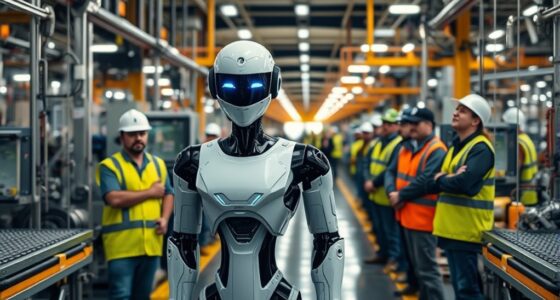
AI is transforming your job by enhancing your skills and automating repetitive tasks, allowing you to focus on creativity, strategy, and interpersonal work. It acts as a helpful assistant rather than a replacement, supporting your efforts and boosting productivity. Proper training and ethical implementation guarantee AI benefits you, fosters trust, and opens new opportunities for growth. If you continue exploring, you’ll discover how embracing AI can empower you and shape a sustainable future at work.
Key Takeaways
- AI enhances productivity by automating repetitive tasks, allowing humans to focus on creative and strategic work.
- Proper training enables workers to interpret AI insights, fostering collaboration rather than competition.
- Ethical AI deployment builds trust and ensures responsible use, supporting positive job transformation.
- Industry-specific AI applications improve performance without replacing human expertise, leading to augmentation.
- Human-AI collaboration drives innovation and skill development, ensuring jobs evolve rather than disappear.

Artificial intelligence is transforming workplaces in ways that enhance productivity rather than eliminate jobs. Instead of replacing workers, AI tools are acting as powerful assistants that help you do your tasks more efficiently. This shift means you can focus on the more creative, strategic, or interpersonal aspects of your role, while AI handles repetitive or data-heavy chores. But for this progression to be successful, organizations need to prioritize AI ethics, ensuring that AI deployment aligns with fairness, transparency, and accountability. Proper oversight helps prevent biases from creeping into decision-making processes and reassures employees that AI is a tool for augmentation, not replacement.
AI enhances productivity by acting as a helpful assistant, allowing workers to focus on creative and strategic tasks.
At the same time, workforce training becomes essential. As AI integrates into your daily work environment, continuous learning becomes the key to staying relevant and maximizing the benefits of these new tools. Employers who invest in training programs equip you with the skills to leverage AI effectively, whether that means understanding how to interpret AI-generated insights or managing new workflows. When you’re trained properly, AI becomes an empowering asset rather than a threat. It can automate mundane tasks, freeing up your time for more complex problem-solving, innovation, or customer engagement. This collaborative approach helps create a more dynamic, engaging work environment where human skills and AI capabilities complement each other.
The conversation around AI ethics also emphasizes the importance of responsible implementation. You’re more likely to trust AI systems if you see that organizations are mindful of their ethical implications. Transparent policies, clear communication about how AI is used, and open channels for feedback foster a culture of trust. When AI is deployed ethically, it supports you rather than undermines your role, boosting morale and job satisfaction. Workforce training plays a critical role here, too, by ensuring you understand not just how to operate AI tools but why certain ethical guidelines are in place. This knowledge helps you contribute to a workplace culture that values responsible AI use, reducing fears of job loss and emphasizing AI’s role as a collaborative partner. Additionally, understanding specialized AI applications like tuning vehicle systems demonstrates how AI can be integrated into specific industries to improve performance and efficiency.
In essence, AI’s impact on jobs isn’t about replacing you but about augmenting your abilities. When combined with strong AI ethics and ongoing workforce training, AI becomes a catalyst for growth and innovation. It opens pathways for you to develop new skills, take on more meaningful work, and adapt to an evolving digital landscape. By embracing these changes, you’re positioning yourself at the forefront of a future where humans and AI work together to achieve more than either could alone.
Frequently Asked Questions
How Can Workers Adapt to Ai-Driven Job Changes Effectively?
To adapt effectively to AI-driven job changes, you should focus on employee reskilling and building career resilience. Embrace continuous learning by taking online courses or workshops that enhance your skills. Stay open to new roles and responsibilities that leverage AI tools. Networking with colleagues and industry experts can offer insights and opportunities. By proactively developing your skills and mindset, you guarantee your value remains essential in an evolving workplace.
What Industries Are Most Positively Impacted by AI Augmentation?
You’ll find that industries like healthcare, manufacturing, and finance benefit most from AI augmentation. Automation benefits these sectors by streamlining processes, reducing errors, and increasing efficiency. Industry innovation accelerates as AI tools empower workers to focus on complex, creative tasks rather than repetitive ones. Embracing these changes helps you stay competitive, as AI enhances productivity and fosters new opportunities for growth and collaboration within these fields.
Are There Potential Long-Term Risks of Increased AI Integration in Workplaces?
Think of AI integration as sailing into uncharted waters—you might encounter hidden reefs like automation risks and ethical concerns. Long-term, these issues could threaten job security or create biases if unchecked. It’s vital you stay aware of potential pitfalls, advocate for transparent practices, and make certain AI complements your work ethically. Proper oversight can help you navigate these waters safely, avoiding storms that could disrupt your career and workplace harmony.
How Can Small Businesses Leverage AI Without Significant Costs?
You can leverage AI without breaking the bank by focusing on cost-effective solutions tailored to your business needs. Start with simple AI tools like chatbots for customer service or basic data analysis to boost efficiency. Look for affordable AI platforms or open-source options that require minimal upfront investment. By gradually implementing AI, you can improve operations without significant costs, making AI integration accessible and beneficial for your small business.
What Policies Support Workers Affected by AI Implementation?
Like a modern-day Robin Hood, you should support policies that strengthen regulatory frameworks and prioritize worker retraining. These policies guarantee that workers affected by AI can adapt, learn new skills, and stay relevant. Governments can offer incentives for companies investing in retraining programs, while establishing safety nets. This approach helps protect livelihoods, fosters innovation, and promotes a resilient workforce amid technological shifts.
Conclusion
Remember, AI is here to augment, not replace, your work—think of it as a helpful tool rather than a threat. Embrace the changes, and you’ll find new opportunities to grow and innovate. As the saying goes, “A rising tide lifts all boats.” By adapting alongside AI, you can stay ahead, enhance your skills, and thrive in this evolving landscape. The future isn’t about replacement; it’s about collaboration and growth.