

To stay competitive in the AI era, you need to focus on skills that machines can’t easily replicate. Develop your emotional intelligence to build trust and collaborate, sharpen your critical thinking and problem-solving abilities, and embrace continuous learning to adapt quickly. Cultivate AI literacy and ethical judgment to make responsible decisions. Strengthen your leadership, communication, and relationship skills to stand out. Keep building these human skills, and you’ll be better prepared for what’s ahead.
Key Takeaways
- Develop emotional intelligence to enhance teamwork, trust, and conflict resolution in AI-driven work environments.
- Strengthen critical thinking and creative problem-solving to analyze complex issues beyond AI capabilities.
- Gain AI literacy and understand ethical frameworks to ensure responsible and transparent AI integration.
- Invest in continuous learning and data literacy to adapt to rapid technological changes and future job shifts.
- Cultivate soft skills like communication, storytelling, and collaboration to complement AI outputs and foster innovation.
The Essential Human Skills for an AI-Driven World
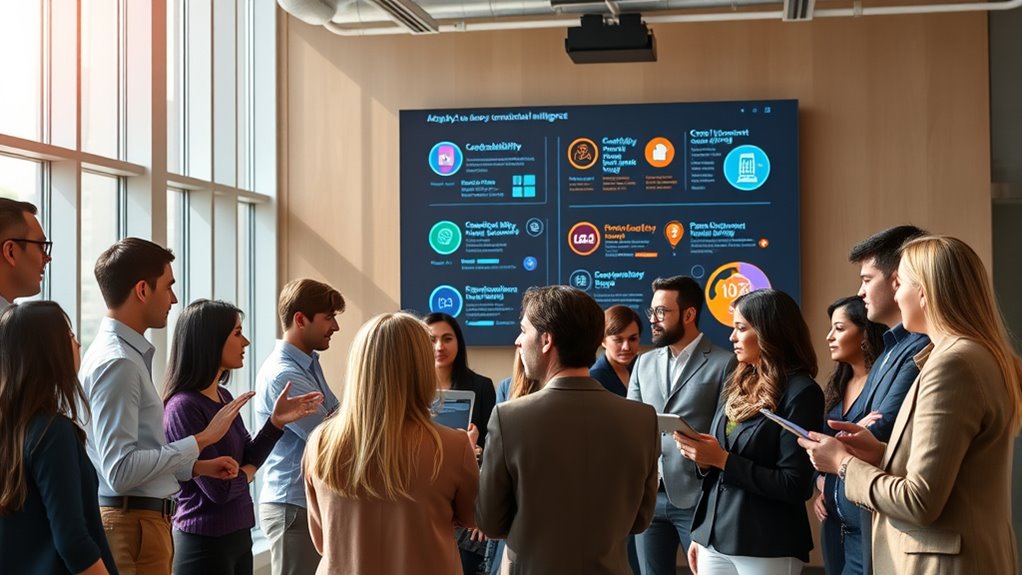
In an AI-driven world, human skills remain essential because machines can’t replicate qualities like emotional intelligence, adaptability, or leadership. Your ability to recognize, understand, and manage your emotions and those of others is *crucial* for effective teamwork and a psychologically safe environment. Emotional intelligence helps resolve conflicts and boost morale, making your leadership more impactful. Strong communication skills, both verbal and written, improve collaboration and client relations, often leading to faster promotions. Your capacity to adapt, learn quickly, and apply new knowledge keeps you resilient amid rapid technological changes. Additionally, leadership and decision-making—guided by ethical judgment and vision—set you apart from AI. Building trust and fostering relationships strengthens organizational culture, especially in remote or hybrid work settings. These skills are *vital* for thriving in an AI-enhanced workplace. Furthermore, developing these *human* skills enhances your ability to navigate complex human dynamics, which are increasingly critical as AI takes on more routine tasks. Recognizing the importance of emotional intelligence can significantly improve your effectiveness in any role. Cultivating interpersonal skills also enables better collaboration across diverse teams, further enhancing your value in an AI-integrated environment. Developing conflict resolution skills is also key to maintaining healthy workplace relationships and ensuring team cohesion. Being aware of technological changes and continuously updating your skill set ensures you stay relevant and adaptable in this evolving landscape. Incorporating practices like mindfulness can help you maintain focus and emotional balance amidst these rapid changes.
Building Critical Thinking and Creative Problem-Solving Abilities

As AI tools become more integrated into our daily work and learning environments, developing strong critical thinking and creative problem-solving skills becomes essential. Generative AI like ChatGPT helps you analyze complex issues by offering multiple perspectives, sharpening your evaluative abilities. AI-assisted assignments encourage bias detection and evidence assessment, key for nuanced reasoning. AI acts as a catalyst for interactive learning, prompting you to question, analyze, and create instead of just memorize. Thoughtful use of AI fosters reflective engagement, building resilience against misinformation and sharpening your analytical skills. Critical thinking, combined with human intuition and ethical judgment, remains crucial for steering through AI-driven disruptions. To stay ahead, focus on continuous learning, challenging assumptions, collaborating across disciplines, and practicing deliberate reflection to enhance your mastery in problem-solving. Understanding the role of AI in education is vital for adapting effectively to this evolving landscape and ensuring that technological advancements serve to augment, not diminish, human cognitive skills.
Cultivating Emotional and Social Intelligence in the Age of Automation

With automation transforming workplaces, developing emotional and social intelligence has become more essential than ever. Emotional intelligence (EI) involves recognizing, understanding, and managing your emotions while being attuned to others’ feelings. Key skills include self-awareness, empathy, motivation, and social skills—crucial for effective communication, teamwork, and leadership. As automation increases, social skills become even more valuable in fostering collaboration, adaptability, and innovation. Organizations now recognize EI’s importance, with 75% of HR managers valuing it over IQ, and demand for emotional skills expected to grow 26% by 2030. Attune Magazine highlights that high organizational EI correlates with increased trust, innovation, and improved performance, and cultivating EI is achievable through training and self-development, especially by focusing on empathy, communication, and self-awareness. Developing these skills enhances productivity, career growth, and workplace well-being amid rapid technological change. Additionally, understanding the role of social skills can help individuals navigate complex interpersonal dynamics more effectively in the evolving work environment. Incorporating insights from AI applications in learning can further support personalized development strategies for emotional intelligence, leveraging vetted methods to optimize training effectiveness.
Enhancing AI Literacy and Ethical Decision-Making

To succeed in an AI-driven workplace, you need to understand what AI can do and how to use it responsibly. Promoting responsible AI use guarantees fair, transparent, and ethical decision-making across your organization. Building these skills helps you stay adaptable and trustworthy in a rapidly evolving job market. AI’s transformative potential underscores the importance of developing a strong foundation in AI literacy and ethics. Additionally, understanding grocery store hours today can highlight how operational knowledge varies and influences daily decision-making in different industries. Recognizing AI vulnerabilities and biases is crucial for maintaining trustworthiness and ensuring safety in AI deployment. Developing expertise in Vetted tools and methods further enhances your ability to implement AI responsibly and securely, especially as automation of security protocols becomes more prevalent.
Understanding AI Capabilities
Understanding AI capabilities is essential for steering the rapidly evolving digital landscape. As AI adoption grows—55% of companies use it, and 89% of small businesses automate routine tasks—your awareness of its strengths and limits becomes critical. Generative AI’s use surged from 33% in 2023 to 71% in 2024, attracting over $33 billion in investment. To stay ahead, you must grasp how AI streamlines operations, enhances productivity, and influences diverse sectors like IT and marketing. The table below highlights key AI facts:
| Fact | Impact |
|---|---|
| 55% of companies use AI | Business integration |
| 89% of small businesses automate | Routine task efficiency |
| $391B market value in 2025 | Market growth |
| 97M workforce in AI | Job opportunities |
Moreover, AI’s rapid development and increasing performance capabilities, with benchmarks improving significantly in recent years, underscore the importance of staying informed about its technical progress and potential societal implications. AI’s advancements continue to shape industries and open new avenues for innovation. Staying current with AI capabilities enables individuals and organizations to adapt effectively and make informed ethical decisions in this transformative era. Being aware of the market growth potential can also help you identify emerging opportunities for career development and investment. Additionally, understanding the AI talent shortage can guide efforts to develop necessary skills and stay competitive. Recognizing the role of home furnishings and related technology can also inspire innovative applications and integrations in everyday living spaces.
Promoting Responsible AI Use
As AI becomes increasingly integrated into various industries, promoting responsible use is essential to guarantee ethical decision-making and maintain public trust. You must focus on enhancing AI literacy and ethical awareness through initiatives like the AI Literacy Framework (AILit), which develops critical engagement beyond coding. Recognize that:
- AI literacy is now a core skill across sectors, not just IT. AI’s pervasive influence reshapes how professionals approach problem-solving and innovation in their fields.
- Including ethical considerations helps prevent bias and misuse.
- Educating about AI’s limitations promotes transparency and fairness.
Developing Leadership and Collaboration for Future Success

Developing leadership and collaboration skills for the future requires a focus on emotional intelligence and adaptability. High EI helps you navigate complex interpersonal dynamics and build trust in AI-augmented environments. With strong emotional awareness, you can resolve conflicts effectively and foster empathetic leadership, boosting team morale. Understanding diverse perspectives through self-awareness and social awareness is critical in AI-driven workplaces. As a leader, you must integrate AI tools while encouraging human creativity and judgment, promoting cross-functional teamwork and transparent communication. Cultivating trust in AI capabilities reduces resistance and drives adoption. Additionally, mastering change management helps you guide your organization smoothly through AI transitions, addressing cultural impacts and ethical considerations. AI’s integration into workplaces enhances collaboration tools, making teamwork more seamless and inclusive. Emphasizing ongoing skills development ensures your team remains adaptable and innovative in an evolving AI era. Recognizing the importance of privacy policies and transparent data practices can further strengthen trust between leadership and teams. By developing these skills, you’ll position your team for success in an evolving AI era. Moreover, staying informed about emerging technologies allows leaders to anticipate future challenges and opportunities, ensuring sustained growth and competitiveness.
Adapting to New Technologies and Embracing Continuous Learning

In today’s rapidly evolving technological landscape, adapting to new tools and continuous learning are essential for staying competitive. To thrive, you need to embrace change and seek ongoing growth. Here’s why continuous learning matters:
- Over 76% of employees stay longer when employers support development.
- More than half of workers prioritize access to training as a top growth factor.
- Nearly 68% want to train during work, integrating learning into daily tasks.
Using technology helps you personalize training, with AI-driven recommendations and skills analytics identifying gaps. Microlearning and flexible courses fit busy schedules, enabling you to learn at your own pace or just when necessary. Leveraging these tools and adopting a mindset of continuous improvement keeps you adaptable and prepared for future challenges.
Strategies to Future-Proof Your Career Amid AI Advancements

To stay ahead in an AI-driven world, you need to embrace continuous learning and stay adaptable to change. Strengthening your soft skills, like emotional intelligence and communication, makes you more valuable in collaborative environments. By combining technical expertise with these human-centered skills, you can future-proof your career effectively.
Cultivate Adaptability and Learning
As AI continues to transform the workplace, staying adaptable and committed to continuous learning becomes essential for future-proofing your career. The rapid pace of technological change means you must proactively embrace new skills and roles. Focus on:
- Investing in AI training and emerging tech skills like data analytics and machine learning.
- Utilizing online courses and workshops to stay current with industry advancements.
- Developing data literacy to interpret and work effectively with AI systems.
Being open to shifting sectors and adapting your role within organizations enhances your resilience. Understanding how AI integrates with existing systems helps you stay relevant. Embracing change and continuously updating your skill set guarantee you remain competitive in an evolving job landscape.
Enhance Soft Skills
Developing strong soft skills is essential for future-proofing your career in the evolving AI landscape. Critical thinking helps you interpret complex data and identify trends AI might miss, while independent problem-solving allows you to handle novel or ambiguous situations that automation alone can’t resolve. AI can analyze data, but judgment calls still need your human insight. Regular practice with puzzles, simulations, and scenario analysis sharpens these skills. Emotional intelligence enables you to understand and respond to colleagues’ and clients’ emotions, building trust and enhancing team dynamics. Effective communication and storytelling remain indispensable, as AI-generated content often lacks persuasive nuance. Finally, cultivating collaboration and relationship-building skills boosts adaptability, helps navigate workplace politics, and strengthens your professional network—all essential for thriving in an AI-driven world.
Frequently Asked Questions
How Can I Effectively Balance AI Tools With Human Judgment?
To effectively balance AI tools with human judgment, you should clearly define objectives and understand AI’s capabilities. Use AI for data analysis and pattern recognition, but rely on your judgment for interpretation, ethical considerations, and contextual insights. Maintain oversight, ask critical questions, and guarantee transparency. Embrace collaboration, continuously learn about AI advancements, and recognize when human input is essential to make informed, responsible decisions.
What Soft Skills Are Most Valuable in an Ai-Dominated Workplace?
Think of your soft skills as the glue holding an AI-driven workplace together. Your effective communication and emotional intelligence are crucial for fostering teamwork and understanding. Empathy helps you connect deeply, even when AI handles routine tasks. Conflict resolution and leadership guide your team through change. By honing these skills, you guarantee your human touch remains essential, making collaboration smoother and more innovative in an AI-dominated environment.
How Do I Stay Updated on Rapidly Evolving AI Technologies?
To stay current on rapidly evolving AI technologies, you should regularly consult authoritative AI reports like the Stanford 2025 AI Index, follow industry news, and subscribe to expert blogs. Join AI communities, attend webinars, and participate in hackathons for hands-on experience. Enroll in online courses and certifications to deepen your knowledge. Staying active in these areas helps you keep pace with breakthroughs, trends, and practical applications in AI.
What Strategies Improve Adaptability to Ai-Driven Organizational Changes?
To improve your adaptability to AI-driven changes, focus on embracing continuous learning and staying open to new ways of working. Engage actively in training programs, experiment with AI tools, and share knowledge with colleagues. Maintain a flexible mindset, recognize AI as a supportive tool rather than a threat, and communicate openly with leadership. By doing so, you’ll better navigate organizational shifts and contribute to a culture of innovation and resilience.
How Can Emotional Intelligence Impact AI Implementation Success?
Emotional intelligence profoundly impacts AI implementation success by helping you manage change and foster acceptance. You can build trust, resolve conflicts, and support your team through shifts. High emotional intelligence enables you to understand and address concerns about AI, creating a positive culture that embraces technological advancements. By showing empathy and strong communication, you increase collaboration, reduce resistance, and guarantee smoother integration of AI, ultimately boosting organizational success.
Conclusion
As you navigate the AI landscape, think of yourself as a skilled gardener tending a vibrant, ever-changing garden. Your human skills—creativity, emotional intelligence, and adaptability—are the roots that keep you grounded and thriving. By continuously cultivating these strengths, you’ll stand tall amidst technological shifts, ensuring your career blossoms no matter how AI evolves. Embrace lifelong learning, and let your unique human touch be the guiding sunlight in this new era.