

TL;DR
Winners of the 2026 Commonwealth Short Story Prize are under scrutiny after some stories, notably Jamir Nazir’s ‘The Serpent in the Grove,’ are suspected of AI authorship. The allegations highlight ongoing challenges in verifying originality in literary awards amid AI advances.
Several winners of the 2026 Commonwealth Short Story Prize are facing serious allegations that their stories may have been generated by artificial intelligence, challenging the integrity of the prestigious award.
The controversy began when the story ‘The Serpent in the Grove’ by Jamir Nazir, awarded the Caribbean regional prize, was flagged by AI detection tools as 100% AI-generated. The story’s language and metaphors have been criticized as nonsensical, and analysis with the Pangram AI-detection software confirmed the suspicion. Nazir has not responded to requests for comment. The Commonwealth Foundation, which administers the prize, stated that their judging process is robust and does not currently use AI-detection tools, citing concerns over consent and artistic ownership. They emphasized that all shortlisted writers confirmed their work was original. Granta, the magazine that published the top stories, acknowledged that their review of the flagged story was inconclusive regarding AI authorship. The controversy raises questions about the verification of originality in literary competitions as AI-generated content becomes more sophisticated.
Why It Matters
This development signals a potential shift in how literary awards verify authenticity, highlighting the challenges of detecting AI-generated work and the risks to the credibility of major literary prizes. It also raises broader questions about authorship, originality, and the impact of AI on creative industries.
![MixPad Free Multitrack Recording Studio and Music Mixing Software [Download]](https://m.media-amazon.com/images/I/71ltIxIuz1L._SL500_.jpg)
MixPad Free Multitrack Recording Studio and Music Mixing Software [Download]
Create a mix using audio, music and voice tracks and recordings.
As an affiliate, we earn on qualifying purchases.
As an affiliate, we earn on qualifying purchases.
Background
The Commonwealth Short Story Prize has been a respected international award since 2012, awarding regional winners from Africa, Asia, Canada and Europe, the Caribbean, and the Pacific. The 2026 prize drew attention when one of its winners was suspected of using AI, amid increasing concerns about AI’s role in creative writing. The incident follows a broader pattern of AI-related debates in publishing and arts sectors, where detection tools are still evolving and often unreliable. The controversy underscores the tension between technological advances and traditional notions of authorship.
“We are aware of allegations and discussion regarding generative AI and our Short Story Prize. We take these claims seriously and are committed to responding to them with care and transparency.”
— Razmi Farook, Commonwealth Foundation
“The review of whether ‘The Serpent in the Grove’ was AI-generated using Anthropic’s Claude proved inconclusive. We may never know for certain if the story was AI-created.”
— Sigrid Rausing, Granta publisher
“‘The story exhibits telltale signs of AI writing, such as certain syntactic patterns and metaphors,'”
— Nabeel S. Qureshi, researcher
literary originality verification tools
As an affiliate, we earn on qualifying purchases.
As an affiliate, we earn on qualifying purchases.
What Remains Unclear
It remains unclear whether any of the shortlisted stories truly involved AI authorship, as detection tools are imperfect and some responses from involved parties have been non-committal. The actual authorship of Nazir’s story has not been definitively proven or disproven.
AI in Software Engineering: Enhancing Bug Detection and Automated Code Generation through Machine Learning Techniques
As an affiliate, we earn on qualifying purchases.
As an affiliate, we earn on qualifying purchases.
What’s Next
Investigations are ongoing, and the Commonwealth Foundation has indicated it will review its judging process and consider implementing more rigorous verification methods. The controversy may prompt broader discussions about AI’s role in creative awards and publishing.
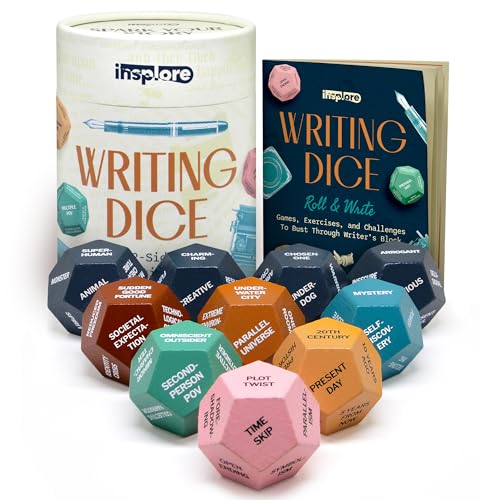
Insplore 12-Sided Writing Dice – Giftable Creative Writing Tool for Beating Writer's Block – 120 Inspiration Prompts Plus Fun Games and Challenges – Great Gift for Teen and Adult Authors
[Spark Your Story] – Stuck with writer's block? These writing dice are the ultimate breakthrough solution for beginner…
As an affiliate, we earn on qualifying purchases.
As an affiliate, we earn on qualifying purchases.
Key Questions
Could the allegations be false or mistaken?
Yes, given that current AI-detection tools are not infallible, some experts caution that false positives are possible. The true authorship remains unconfirmed pending further investigation.
Will the winners be disqualified?
There is no official indication that disqualifications are imminent. The Foundation has emphasized its reliance on trust and the absence of definitive proof at this stage.
How reliable are AI-detection tools like Pangram?
While Pangram is considered one of the most accurate available, experts acknowledge that no tool can perfectly identify AI-generated text, especially as AI writing becomes more sophisticated.
What does this mean for future literary awards?
The controversy highlights the need for developing more reliable verification methods and may lead to updated rules or policies to address AI-generated content in competitions.
Source: WIRED · Culture