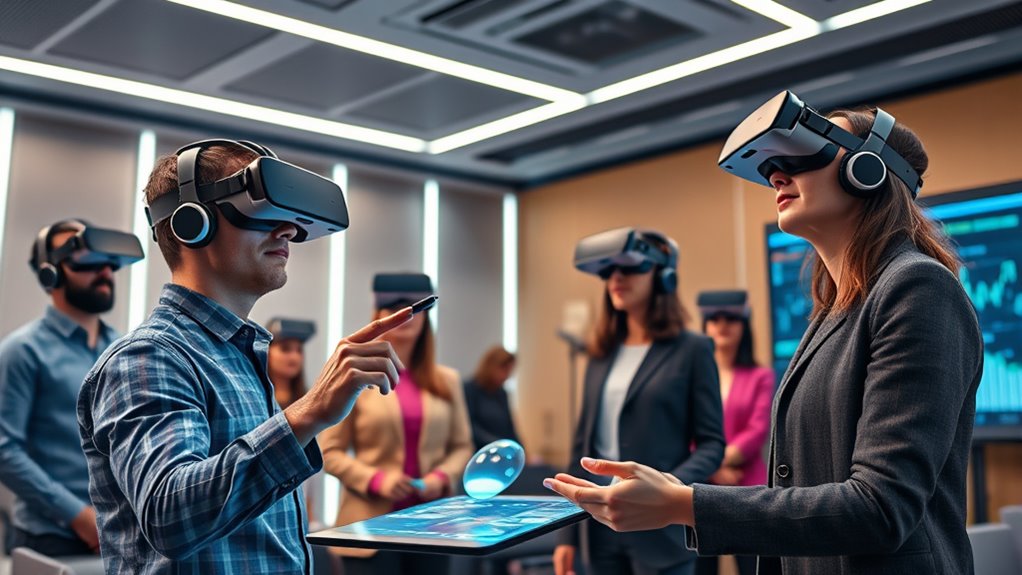

Using AI and VR in workforce upskilling makes training more engaging, personalized, and accessible for you. AI-powered coaching offers tailored feedback and guidance, while VR creates immersive simulations to practice real-world skills. These technologies remove traditional barriers like distance and boredom, making learning faster and more enjoyable. As you explore these tools, you’ll discover how they foster better retention and confidence. Keep going to find out how these innovations can transform your skill development journey.
Key Takeaways
- AI-powered coaching personalizes learning experiences, providing tailored feedback and support for individual skill development.
- Virtual reality creates immersive simulations that enhance hands-on training and real-world application of skills.
- Combining AI and VR breaks geographical and scheduling barriers, enabling accessible, flexible upskilling globally.
- Gamified tech tools increase engagement and motivation, making continuous learning more effective and enjoyable.
- These technologies accelerate skill acquisition, fostering confident, adaptable, and future-ready workforces.
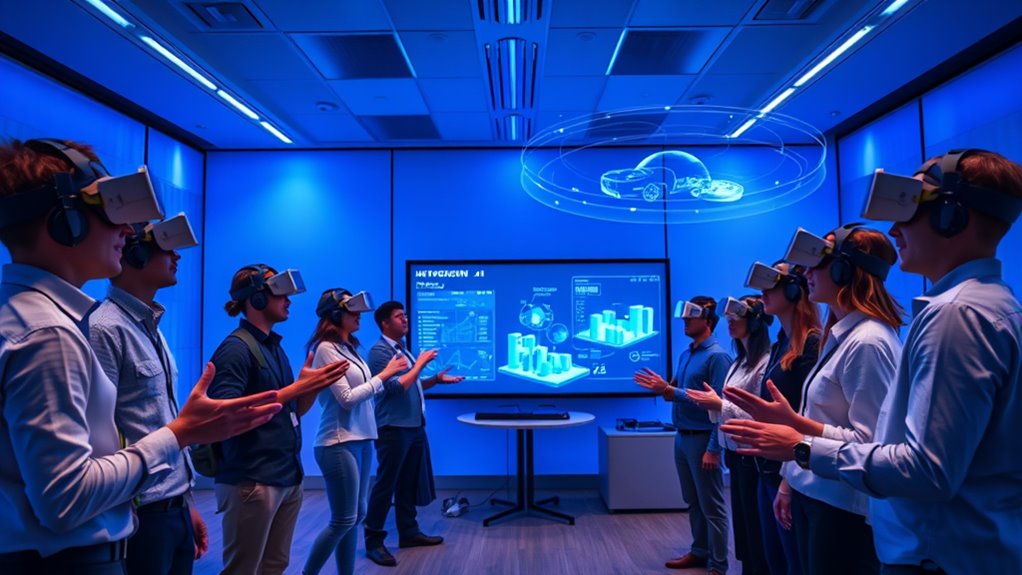
Have you ever wondered how technology is transforming the way we train and develop skills? Today, innovative tools like virtual mentorship and gamified learning are reshaping traditional training methods, making upskilling more engaging and accessible than ever before. Virtual mentorship connects you with industry experts and mentors around the globe through digital platforms, eliminating geographic barriers. Instead of in-person meetings, you can schedule video chats, participate in virtual workshops, or exchange messages at your convenience. This personalized guidance accelerates learning, providing you with tailored feedback and support that might be hard to find through conventional training programs. It’s like having a mentor right at your fingertips, available whenever you need advice or motivation. Meanwhile, gamified learning injects a fun, competitive element into skill development. By turning training modules into interactive games, quizzes, or simulations, you stay motivated and engaged. These gamified experiences often include rewards, badges, or leaderboards that foster a sense of achievement and healthy competition. This approach taps into your natural desire for challenge and recognition, making it easier to retain complex information and develop new skills faster. Incorporating these tech-driven methods into your upskilling journey means you’re not just passively absorbing content—you’re actively participating in your growth process. Virtual mentorship allows you to learn from seasoned professionals without the constraints of location or busy schedules, providing flexible, real-world insights that are directly applicable to your work. Gamified learning, on the other hand, transforms mundane training sessions into immersive experiences that keep you coming back for more. Additionally, understanding toilet flushing mechanisms and efficiency can be an important part of workplace facility management, ensuring water conservation and cost savings. Together, these approaches make learning more personalized, interactive, and effective. You’re empowered to take charge of your development, exploring new concepts at your own pace and receiving immediate feedback. This synergy of human connection and interactive technology creates a dynamic environment where skills are built more quickly and with greater confidence. As these tools continue to evolve, they promise even more innovative ways to enhance your training experience, from virtual reality simulations to AI-powered coaching. But at their core, virtual mentorship and gamified learning are about making upskilling enjoyable, flexible, and impactful. They break down barriers of distance and boredom, giving you the tools to adapt and thrive in a rapidly changing workforce. By embracing these tech-driven strategies, you’re not just keeping up—you’re staying ahead, continuously sharpening your skills in ways that are both effective and enjoyable.

Qualified Isn't Enough: Develop Your Story. Land the Interview. Win the Job.
As an affiliate, we earn on qualifying purchases.
As an affiliate, we earn on qualifying purchases.
Frequently Asked Questions
How Cost-Effective Is Implementing AI and VR Training Programs?
Implementing AI and VR training programs can be highly cost-effective when you conduct ROI evaluation and plan your budget allocation carefully. By investing in these technologies, you reduce long-term training costs, minimize downtime, and improve skill retention. Although initial expenses may seem high, the efficiency gains and faster upskilling often lead to a strong return on investment, making these tools a smart choice for workforce development.
What Are the Cybersecurity Risks Associated With VR and AI Training Tools?
Sure, diving into VR and AI training might seem like a sci-fi dream, but beware—cybersecurity risks lurk. You expose sensitive data privacy, risking leaks, and open yourself to cyber attack risks, where hackers could hijack your immersive sessions or steal proprietary info. It’s like giving cyber villains a backstage pass to your training programs. So, stay vigilant, encrypt your data, and fortify your defenses before your virtual world becomes a hacker’s playground.
How Do Smaller Companies Access Advanced Training Technologies?
You can access advanced training technologies by starting with a skill gap analysis to identify your needs and prioritize investments. Look for affordable solutions like cloud-based platforms or partnerships with tech providers that offer scalable options. Embrace technology adoption gradually, focusing on tools that fit your budget. This way, you stay competitive, upskill effectively, and bridge the skill gap without overwhelming your resources.
What Metrics Are Best for Measuring Training Effectiveness in VR?
Imagine you’re in a 1920s speakeasy, but in the virtual world—VR makes training immersive. To measure its effectiveness, track learner engagement and skill retention through real-time analytics and post-training assessments. These metrics reveal how involved your team is and how well they retain skills. You can then fine-tune the experience, ensuring your workforce gets the most out of VR training and stays ahead of the curve.
How Can Organizations Ensure Inclusivity in Tech-Based Training?
To guarantee inclusivity in tech-based training, you should address accessibility barriers by providing adaptable content, such as subtitles, audio descriptions, and adjustable interfaces. Additionally, you need to incorporate cultural sensitivity by designing diverse scenarios and training materials that respect different backgrounds. Regularly gather feedback from varied participants, and continuously refine your approach to create an inclusive environment where everyone feels valued and supported in their learning journey.

DPVR E3S Softstrap Virtual Reality Headset, VR Set for Business of Egg Seats Headset, VR Simulator Riders, Moto, Time Machine 6 Seats and VR Flying, VR Headsets Not for Personal User
Unmatched Performance: The DPVR E3S Virtual Reality Headset delivers an immersive visual experience with a 360° view, 110°…
As an affiliate, we earn on qualifying purchases.
As an affiliate, we earn on qualifying purchases.
Conclusion
Embracing AI and VR in training isn’t just a trend; it’s your ticket to staying ahead in a rapidly evolving world. Imagine harnessing these tools as your secret weapons, transforming challenges into opportunities. As the saying goes, “The future belongs to those who prepare today.” So, don’t wait—step into the tech-driven training revolution now, and watch your skills soar like a phoenix rising from the ashes of outdated methods.
gamified learning platform subscription
As an affiliate, we earn on qualifying purchases.
As an affiliate, we earn on qualifying purchases.

Mentor Me Please: Building a Mentorship Community for Doctoral Success
As an affiliate, we earn on qualifying purchases.
As an affiliate, we earn on qualifying purchases.