

TL;DR
Access to the most advanced AI models is increasingly restricted due to security risks and government policies. Companies are limiting access to high-capability models, signaling a shift from open availability to controlled distribution. The trend poses challenges for global AI development and competition.
Major AI developers, including Anthropic and OpenAI, are now restricting access to their most advanced models, citing security and national interests. This shift signals a move away from broad, open access toward selective, controlled distribution, with significant implications for global AI development and competition.
In early April, Anthropic announced it would only provide its cybersecurity-focused model, Mythos, to a limited set of trusted partners, primarily U.S.-based firms. Similarly, OpenAI’s Daybreak initiative confirmed it would restrict access to its latest models, such as GPT-5.5-Cyber, to select clients, contradicting earlier expectations of broader release.
Experts attribute these restrictions to multiple factors: security concerns over misuse, risks of model theft and espionage, and geopolitical considerations, especially regarding U.S.-China competition. The U.S. government is reportedly contemplating measures to further restrict access, though details remain unclear. These developments reflect a broader trend where access to frontier AI is becoming a zero-sum game, with limited availability for most users.
Why It Matters
This shift matters because it could slow the global proliferation of advanced AI capabilities, impacting innovation, competition, and the ability of smaller players to develop or defend against powerful AI tools. It also raises concerns about the future of open AI research and the potential for increased geopolitical tensions over AI dominance.

Access Control Systems: Security, Identity Management and Trust Models
As an affiliate, we earn on qualifying purchases.
As an affiliate, we earn on qualifying purchases.
Background
For years, industry analysts believed that market forces and the high costs of AI R&D would ensure broad access to frontier models. However, recent events, including the restricted rollout of Mythos and GPT-5.5-Cyber, challenge this view. Governments, especially the U.S., are increasingly involved in regulating AI access, motivated by security and economic interests. These trends have accelerated in recent months, with restrictions becoming more prevalent and formalized.
“The move toward restricted access reflects growing security and geopolitical concerns, not just market considerations.”
— AI industry analyst
“We are actively exploring measures to ensure AI capabilities are used responsibly and securely.”
— U.S. government official

Train It. Tame It. Teach It.: Build Your Personal AI Team and Get Every Model to Work Your Way
As an affiliate, we earn on qualifying purchases.
As an affiliate, we earn on qualifying purchases.
What Remains Unclear
It remains unclear exactly what specific policies or regulations the U.S. government will implement, or how other nations will respond. The timeline for broader restrictions and their impact on global AI development is also uncertain.

KALI LINUX LLMs SECURITY: Develop Security Methods in AI Models with High-Performance Tools (KALI LINUX & Frameworks USA)
As an affiliate, we earn on qualifying purchases.
As an affiliate, we earn on qualifying purchases.
What’s Next
Expect further announcements from AI developers regarding access restrictions. Policymakers may introduce new regulations aimed at controlling AI capabilities, and international responses could shape the future landscape of AI innovation and competition.
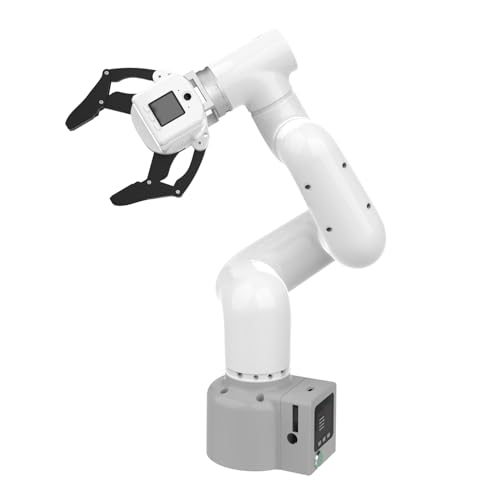
Yahboom Robotic Arm ROS Industrial Grade 1kg Payload 7 DOF AI Collaboration MyCobot 320 M5 for Education and Research
Enhance your project capabilities with myCobot: The M5 version of the robot arm uses Esp32 as the core…
As an affiliate, we earn on qualifying purchases.
As an affiliate, we earn on qualifying purchases.
Key Questions
Why are AI companies limiting access to their models?
They cite security concerns, risks of misuse, model theft, espionage, and geopolitical considerations as primary reasons for restricting access.
How might this affect AI development worldwide?
Restricted access could slow innovation, limit competition, and reinforce geopolitical divides in AI capabilities.
Will this lead to a more secure or more divided AI landscape?
It could do both: enhance security but also deepen divides between nations and companies with different levels of access.
What role will governments play in future AI access policies?
Governments, especially the U.S., are likely to implement regulations that restrict or control AI model distribution, citing security and economic interests.