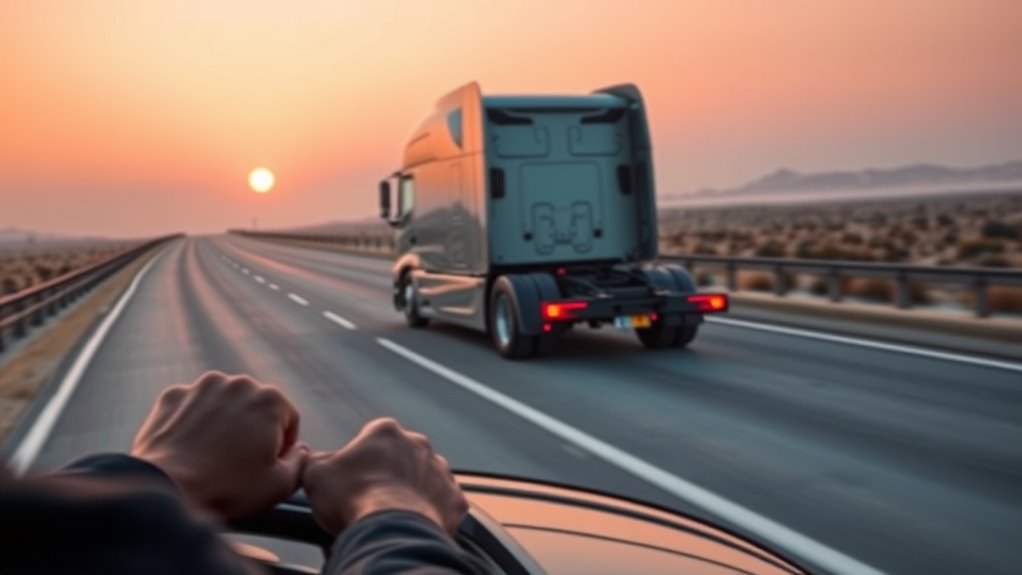

Self-driving trucks have generated lots of hype, but reality shows many hurdles remain. Legal frameworks are slow to adapt, and regulatory challenges can delay deployment. Ethical dilemmas, like accident decisions and job loss concerns, also complicate acceptance. Society needs time to adjust, especially around safety, privacy, and economic impacts. If you want to understand how these issues shape the future of autonomous trucking, keep exploring the complexities involved behind the scenes.
Key Takeaways
- Autonomous trucking promises efficiency but faces significant regulatory, ethical, and societal challenges that slow widespread adoption.
- Legal frameworks are lagging behind technology, creating uncertainties around safety, liability, and cross-border operations.
- Ethical dilemmas include moral decision-making in unavoidable accidents and balancing cargo safety with pedestrian protection.
- Job displacement concerns and societal impacts require careful management to ensure economic stability and public trust.
- Full integration of self-driving trucks depends on resolving legal, ethical, and societal issues alongside technological advancements.

Have you ever wondered how cars can drive themselves? It’s a question many people ask as autonomous vehicle technology rapidly advances. In the trucking industry, self-driving trucks promise to revolutionize freight transport by increasing efficiency and reducing costs. But before these vehicles become a common sight on highways, several hurdles stand in the way. Regulatory challenges are among the biggest obstacles. Governments and transportation agencies are still figuring out how to regulate autonomous trucks safely and fairly. They need to establish standards for safety testing, liability, and road sharing with human drivers. Developing extensive policies takes time and careful consideration, which slows down deployment. Plus, there’s the concern of how existing laws adapt to this new technology, especially when it comes to cross-border shipping and interstate commerce. Without clear regulations, companies hesitate to invest heavily in autonomous trucks, fearing legal complications or penalties.
Alongside these regulatory issues, ethical dilemmas also weigh heavily on the industry’s future. Imagine a self-driving truck faced with an unavoidable accident: should it prioritize the safety of its cargo or the lives of pedestrians? These kinds of moral questions aren’t easy to answer and often require complex programming decisions. There’s also the question of job displacement—will autonomous trucks eliminate thousands of driving jobs? Many drivers are understandably worried about their livelihoods, and this creates social and economic tension. Companies and regulators need to consider how to balance innovation with societal impact, ensuring that progress doesn’t come at the expense of workers’ well-being. Ethical considerations extend to data privacy, cybersecurity, and accountability. Who’s responsible when an autonomous truck causes an accident—the manufacturer, the software developer, or the fleet owner? These questions are still being debated, and until they’re resolved, full adoption remains uncertain. Additionally, understanding financial management principles, such as cost-benefit analysis, can help companies evaluate the long-term value of investing in autonomous vehicle technology.
Despite the hype surrounding self-driving trucks, reality shows us that technological capabilities must be matched with societal readiness. The industry is making strides, but the path forward is complex. Regulatory frameworks need to evolve quickly to keep pace with technological advancements, and ethical challenges must be thoughtfully addressed to gain public trust. Without these critical components, autonomous trucks may remain a promising but limited solution for now. If you’re watching this space closely, you’ll see that the shift isn’t just about perfecting AI or sensors; it’s about maneuvering a web of legal, moral, and social issues that could shape the future of trucking for decades to come.
Frequently Asked Questions
How Do Legal Regulations Vary Across Different Regions?
You’ll find regional differences considerably impact self-driving car regulations, creating varying legal landscapes. Some areas have clear rules, while others face regulatory challenges that delay deployment. In certain regions, authorities prioritize safety and strict testing, whereas others adopt a more relaxed approach. These regional differences influence how quickly self-driving technology can be integrated into the trucking industry, making understanding local regulations essential for smooth implementation and compliance.
What Are the Safety Concerns Specific to Autonomous Trucks?
Think of autonomous trucks as tightrope walkers; one slip and everything falls apart. Your safety concerns center on sensor reliability, which must be impeccable to prevent accidents, and cyber security risks that could hijack the vehicle. If sensors fail or cyber threats breach the system, it jeopardizes everyone’s safety on the road. You need robust safeguards and constant monitoring to ensure these trucks stay balanced and secure during their journey.
How Does AI Handle Unpredictable Road Conditions?
AI handles unpredictable road conditions by relying on sensor reliability and weather adaptation. You can trust that the system constantly monitors surroundings with cameras, lidar, and radar, adjusting for weather changes like rain or fog. When sensors detect uncertainties, the AI slows down or pulls over, prioritizing safety. This adaptive approach helps autonomous trucks navigate complex, unpredictable environments more effectively, but it still faces challenges in extreme conditions.
What Is the Cost Comparison Between Autonomous and Traditional Trucks?
You’ll find that autonomous trucks often have higher upfront costs, primarily due to advanced technology and sensors. However, their lower maintenance expenses and reduced driver wages can balance the investment over time. A thorough cost analysis reveals that, while traditional trucks may be cheaper initially, autonomous vehicles offer savings in operational expenses, efficiency, and safety, making them a compelling option as technology advances and costs decrease.
How Will Employment in Trucking Be Affected Long-Term?
Long-term, your trucking employment may decline as autonomous trucks become more prevalent, but opportunities will shift. You’ll need driver training to adapt to new roles, like overseeing automated systems, and understand insurance implications related to autonomous vehicle policies. While some jobs might diminish, new positions focused on technology management and safety could emerge, so staying adaptable and informed will be key to maintaining your role in the evolving industry.
Conclusion
As you picture endless highways filled with sleek, humming self-driving trucks, it’s tempting to believe the future is here. But behind the scenes, reality paints a different picture—technology still wrestles with complex roads and unpredictable weather. While autonomous trucks might someday transform trucking, for now, they’re more about promise than everyday roads. Keep your eyes open; the journey from hype to reality is still unfolding, and the road ahead is full of surprises.